
Goddess Bagalamukhi is one of the most powerful forms of the Divine Mother in Hinduism. Devotees worship her as the goddess who destroys evil forces, protects her followers, and grants victory over enemies and obstacles. She is the eighth Mahavidya among the ten Mahavidyas, the powerful manifestations of Adi Shakti.
Unlike many other deities, Bagalamukhi represents a unique spiritual force. She possesses the ability to immobilize negative energies and silence harmful speech. Because of this special power, devotees seek her blessings when facing conflicts, court cases, or serious life challenges.
People also know her as Pitambara Devi, which means “the goddess dressed in yellow.” The color yellow plays a significant role in her worship and symbolizes knowledge, prosperity, and divine power.
Who is Goddess Bagalamukhi?
In Hindu spiritual traditions, Bagalamukhi represents the divine energy that controls destructive forces and protects righteousness. Devotees believe she can stop negativity and neutralize enemies.
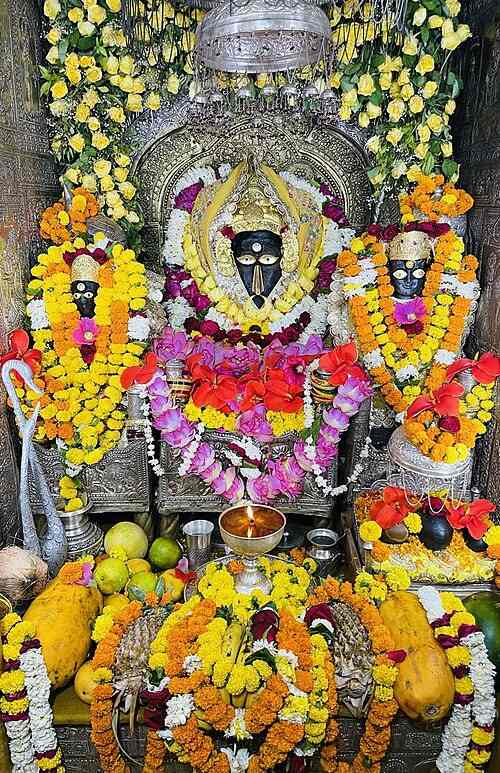
Artists usually depict the goddess wearing bright yellow clothes and ornaments. She sits on a golden throne and displays two powerful symbolic actions. In one hand, she holds a club (gada), while with the other hand she grasps the tongue of a demon.
This image carries deep spiritual meaning. The act of holding the demon’s tongue represents the ability to control harmful speech, silence lies, and destroy negative intentions. Meanwhile, the mace symbolizes the strength to defeat evil and restore justice.
Because of these qualities, many devotees worship Bagalamukhi for the following reasons:
- Protection from enemies
- Victory in legal disputes
- Removal of negative energies
- Success in leadership or politics
- Mental strength during difficult situations
Therefore, people often turn to her during challenging periods in life.
Entrance of Bagalamukhi Mata Temple in Kolkata where devotees worship Goddess Bagalamukhi.
Meaning of the Name Bagalamukhi
The name Bagalamukhi has several interpretations in Sanskrit traditions.
Many scholars believe that the word “Bagala” comes from “Valga,” meaning to restrain or control. The word “Mukhi” refers to face or power. Together, the name describes the goddess who has the power to control or paralyze enemies.
Another explanation links the name to the word “Bagula,” which means crane. The crane remains still and focused while hunting. Because of this quality, the bird symbolizes concentration, control, and patience.
In the same way, Bagalamukhi represents the power to stop chaos and restore stability.
Mythological Origin of Goddess Bagalamukhi
Ancient Hindu legends describe the dramatic origin of this powerful goddess.
According to traditional stories, a massive storm once threatened the entire universe. The destructive winds created fear among the gods and sages. As a result, they prayed to the Divine Mother for protection.
In response, the goddess manifested from a sacred lake known as Haridra Sarovar, which is associated with turmeric. From this divine place emerged Bagalamukhi, glowing with golden-yellow radiance.
At that time, a powerful demon named Madanasura caused chaos across the universe. He possessed extraordinary powers and misused them to trouble the gods and sages.
Bagalamukhi confronted the demon and used her divine ability known as Stambhana Shakti, the power to immobilize. She grabbed the demon’s tongue and struck him with her mace. As a result, the demon lost his ability to speak or fight.
This powerful story symbolizes the victory of truth over deception and divine power over evil forces.
Symbolism in Bagalamukhi Iconography
Every element in Bagalamukhi’s image carries deep spiritual meaning.
Importance of Yellow
Yellow is the most sacred color associated with the goddess. Devotees often wear yellow clothes while performing her worship.
The color represents:
- Wisdom
- Prosperity
- Spiritual illumination
- Positive energy
For this reason, devotees offer turmeric, yellow flowers, bananas, and chickpeas during her rituals.
The Demon’s Tongue
One of the most striking features of Bagalamukhi’s iconography is her act of holding a demon’s tongue.
This powerful symbol represents:
- Control over speech
- Destruction of lies
- Silence of enemies
Therefore, devotees believe that the goddess can stop harmful words and false accusations.
The Mace (Gada)
The mace symbolizes authority and strength. Through this weapon, the goddess destroys ignorance and protects righteousness.
Bagalamukhi Mantra
Devotees chant the sacred Bagalamukhi Beej Mantra to invoke the goddess’s blessings.
Mantra:
Om Hleem Bagalamukhi Sarva Dushtanam
Vacham Mukham Padam Stambhaya
Jivham Keelay Buddheem Vinashaya
Hleem Om Swaha
This powerful mantra seeks the goddess’s help to silence enemies, remove obstacles, and destroy harmful intentions.
Regular chanting with devotion can bring protection, courage, and spiritual strength.
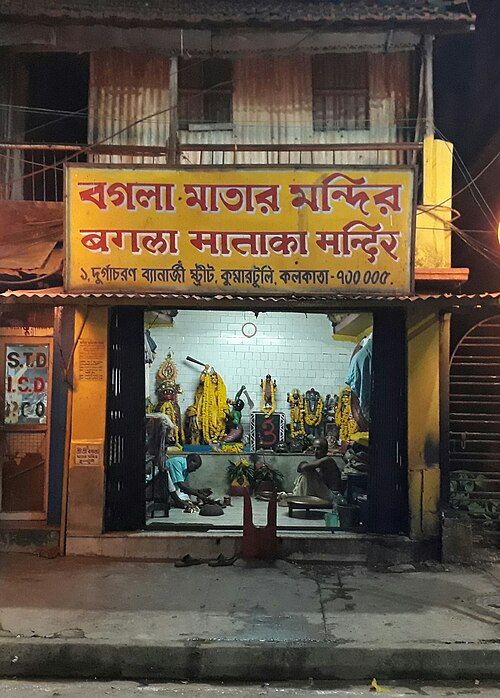
Entrance of Bagalamukhi Mata Temple in Kolkata where devotees worship Goddess Bagalamukhi.
Bagalamukhi Puja and Worship Practices
Devotees perform several rituals to seek the blessings of Goddess Bagalamukhi. These practices often focus on removing negativity and gaining victory.
Bagalamukhi Havan
A sacred fire ritual known as Bagalamukhi Havan invokes the goddess’s protective energy. Priests chant mantras while offering sacred items into the fire.
Stambhan Puja
This ritual aims to neutralize enemies and stop harmful influences.
Yellow Offerings
During the worship, devotees usually offer:
- Turmeric
- Yellow flowers
- Yellow sweets
- Gram (chickpeas)
- Bananas
Auspicious Days for Worship
Certain days are especially powerful for Bagalamukhi worship. These include:
- Tuesdays
- Thursdays
- Navratri festival
- Bagalamukhi Jayanti
On these days, devotees perform special prayers and rituals.
Famous Bagalamukhi Temples in India
Several temples dedicated to Goddess Bagalamukhi attract devotees from across India.
Bagalamukhi Temple, Datia (Madhya Pradesh)
This temple is one of the most important shrines of the goddess and is known for its powerful spiritual atmosphere.
Bagalamukhi Temple, Kangra (Himachal Pradesh)
Located in the Himalayan region, this temple holds great significance in tantric worship.
Bagalamukhi Temple, Nalkheda (Madhya Pradesh)
Many devotees visit this temple seeking protection, success, and victory in life.
Benefits of Worshipping Goddess Bagalamukhi
Devotees believe that sincere worship of Bagalamukhi brings many benefits.
First, the goddess protects devotees from enemies and harmful influences.
Second, many people perform her puja to gain victory in legal matters and disputes.
Additionally, her blessings help remove negative energies and black magic.
Moreover, regular worship strengthens confidence, courage, and mental clarity.
Finally, Bagalamukhi worship encourages discipline, devotion, and spiritual growth.
Frequently Asked Questions (FAQs)
1. Who is Goddess Bagalamukhi?
Goddess Bagalamukhi is the eighth Mahavidya and represents the divine power that controls enemies and removes negative forces.
2. Why is yellow important in Bagalamukhi worship?
Yellow symbolizes knowledge, prosperity, and divine energy, which are closely connected with the goddess.
3. What is the Bagalamukhi mantra used for?
Devotees chant the mantra to stop enemies, remove obstacles, and gain protection from negativity.
4. When should Bagalamukhi puja be performed?
Tuesdays, Thursdays, Navratri, and Bagalamukhi Jayanti are considered the most auspicious times.
5. Which are the famous Bagalamukhi temples?
Some well-known temples are located in Datia, Kangra, and Nalkheda.
Conclusion
Goddess Bagalamukhi represents the divine power that controls negativity, silences evil forces, and protects devotees from harm. As one of the ten Mahavidyas, she holds a unique place in Hindu spiritual traditions.
Through devotion, mantra chanting, and disciplined worship, devotees seek her blessings for victory, protection, and inner strength. Ultimately, the worship of Bagalamukhi reminds believers that divine power can overcome even the strongest obstacles in life.

Leave A Comment