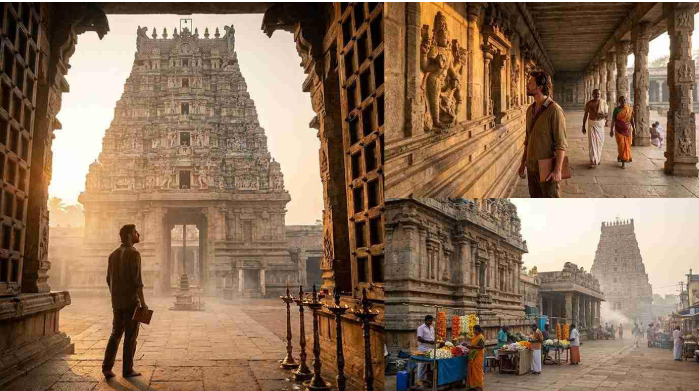
A devotee scrolling through Instagram or YouTube today sees dozens of temple updates, darshan alerts, and pilgrimage guides in the same few minutes, and most of them get scrolled past without a second look. The temple, the information, and the intent to help are usually genuine on both sides. What decides whether the content actually gets seen is the thumbnail, the cover photo, or the first frame someone glances at before deciding to tap. That is exactly the gap an AI Image Generator like the one built by Higgsfield is built to close, and it matters more for temple and pilgrimage content than most creators realize.
Why Are Devotees Scrolling Past Temple Content They’d Actually Want to See?
Most temple and travel accounts are not competing with each other so much as they are competing with everything else on the same feed, reels, tourism reels, festival clips, and unrelated entertainment content all fighting for the same half second of attention. A devotee genuinely interested in visiting a Hanuman temple in Shimla or checking Tirumala darshan timings will still scroll past a flat, low contrast photo of a temple gate if nothing in the image makes them pause. The information being accurate does not matter if the visual never earns the tap in the first place.
This is not a criticism of the content itself. Temple guides, darshan updates, and travel tips genuinely help people plan meaningful trips. The problem is purely visual, and it is fixable.
How Much Does a Thumbnail or Cover Image Actually Affect Clicks in 2026?
The data on this is consistent across niches. Custom, well designed thumbnails can increase click-through rates by up to 154 percent compared to auto-generated alternatives on YouTube, and that gap tends to widen as competition on a platform grows. One well documented example involved a creator who changed nothing about their video content or editing, only their thumbnail approach, and saw click-through rates roughly double as a result. Since click-through rate is one of the strongest signals platforms use to decide who to show content to next, a weak thumbnail does not just cost clicks today, it costs future reach as the algorithm learns the content underperforms.
For temple and pilgrimage content specifically, this matters even more because the audience is often searching with intent, planning an actual trip, checking timings, deciding which temple to visit next, which means the content competing for their attention is unusually crowded with similar informational posts. Standing out visually is not vanity, it is what determines whether genuinely useful information reaches the person who needs it.
What Makes Visual Content Different for Temple and Pilgrimage Channels Specifically?
Unlike a product review or a comedy skit, temple content carries an added responsibility: the visuals generated through AI Image Generator need to feel respectful and accurate, not just eye-catching. A thumbnail for a Hanuman temple guide cannot rely on the same shocked-face, high-drama style that works for entertainment content, since that tone would feel out of place, even disrespectful, against a spiritual subject. What works instead is clean, high contrast imagery that highlights the temple’s architecture, the deity’s presence, or the scale of a festival crowd, paired with minimal, legible text.
This narrower creative lane is actually where a lot of small temple and travel accounts struggle. The visual standard for grabbing attention keeps rising, but the acceptable tone for religious content is much narrower than for general entertainment, which leaves less room for error.
What Do Most Temple and Travel Pages Get Wrong With Visuals?
The most common issue is not a bad photo, it is an inconsistent one. A temple guide account might post a beautifully lit photo one week and a dim, low resolution phone snapshot the next, with no consistent color treatment, framing, or text style tying the two together. Viewers build trust through consistency, and a channel that looks different every post has a harder time being recognized in a crowded feed.
The second common issue is resolution and cropping. A photo taken for a WhatsApp broadcast rarely works cleanly as a YouTube thumbnail, an Instagram square post, and a Reels cover without cropping something important out of frame, yet many small teams reuse the same single image across every format without adjusting it.
Manual Options for Improving Temple Content Visuals?
The traditional fix is hiring a graphic designer, either full time or per project, to handle thumbnails, festival posters, and social graphics. This works, and plenty of larger temple boards and tourism accounts do exactly this. A skilled designer brings a consistent visual language and understands how to balance devotional tone with modern design trends but that is where a platform with sharp advanced features integrated inside an AI Image Generator saves your time and expenses.
Where Does Hiring a Designer or Editor Fall Short for Small Temple/Travel Channels?
The constraint is almost always volume and turnaround. A temple update account posting daily darshan information, festival alerts, and travel tips needs new visuals constantly, not once a month. Paying a designer for that cadence is expensive relative to what most small pilgrimage or travel content accounts earn from ad revenue or affiliate bookings. Waiting days for a designer to turn around a graphic also does not work for time sensitive content like a last minute darshan timing change or a festival update that needs to go out same day.
This is the exact gap pushing smaller creators and local content teams toward AI generated visuals, not as a replacement for design sense, but as a way to close the volume and speed problem a single designer cannot solve alone.
Larger tourism boards and well funded temple trusts often solve this by keeping a small in-house design team on retainer, which works when the budget supports it. For a solo devotee-run Instagram page, a small travel blog covering multiple temples, or a local content team managing several WhatsApp and YouTube channels at once, that same retainer cost is simply out of reach, which is exactly the audience this shift toward AI-assisted visuals is helping most.
How Does an AI Image Generator Help Solve This Gap?
Higgsfield’s AI Image Generator gives access to more than 15 leading image models, including Nano Banana Pro, GPT Image, Seedream, and FLUX, from a single workspace, with native output at up to 4K resolution that does not rely on upscaling to look sharp. For a temple content creator, this means a single photo of a temple gopuram or a festival scene can be turned into a polished, high contrast thumbnail, an Instagram square post, and a Reels cover, all sized correctly, without needing three separate design skill sets or three separate tools.
Nano Banana Pro specifically handles text rendering accurately inside generated images, which solves a problem most AI image tools still struggle with: legible, correctly spelled overlay text for temple names, timings, or festival dates directly inside the visual itself. That single feature removes a step that used to require opening a separate editing app just to add readable text on top of a generated or edited photo.
What Can You Actually Create With an AI Image Generator for Temple Content?
Beyond thumbnails, the same workspace supports a much wider range of what a temple or pilgrimage content account actually needs. Festival posters for Hanuman Jayanti or Sri Rama Navami can be generated with consistent branding applied automatically, since brand colors can be set using exact hex or RGB codes so every graphic stays visually aligned with a channel’s established look. A feature called Soul ID keeps a character or presenter’s appearance consistent across multiple generations, which matters for accounts that use a recurring host or narrator across their darshan updates and travel guides.
Generated images can also be pushed directly into video, since any image created in the workspace can be animated using video models like Sora 2, Kling, or Seedance without leaving the same editor, which is useful for turning a single festival photo into a short devotional reel without a separate video tool.
This is worth stating plainly, since Higgsfield is sometimes assumed to be a single purpose tool. Higgsfield AI is a native AI creative suite, which offers advanced AI image, video, and voice generation, editing, and upscaling tools, meaning a temple or travel content team working across photos, short videos, and social graphics has one workspace rather than three separate subscriptions and three separate learning curves.
How Do You Keep AI Generated Visuals From Looking Generic or Disrespectful?
This is the part worth being careful about, and it is a fair concern for anyone producing content around a sacred subject. The safest approach is to treat AI generated visuals as an enhancement to real photography, not a replacement for it. Using an AI Image Generator to clean up, reframe, upscale, or add text to an actual photo of a real temple keeps the content grounded in something authentic, rather than generating an entirely fabricated scene that could misrepresent the deity, the architecture, or the actual site.
It also helps to review every generated visual against the same standard a human editor would apply: does this feel respectful, does it accurately represent the temple or the tradition, and would a devotee who has actually visited recognize it as genuine. AI speeds up the mechanical part of production, resizing, upscaling, text placement, consistent branding, but the judgment about what is appropriate for a devotional audience still has to come from the person creating the content. Higgsfield’s own workspace supports this approach directly, since the same editor used to generate new visuals can also edit and enhance real photographs rather than only producing fabricated scenes from scratch.
What Should a Temple or Pilgrimage Content Creator Look for in a Visual Tool?
A few features matter more for this niche than for general content creation. Accurate text rendering matters because temple names, Sanskrit or regional language terms, and timings need to be spelled correctly inside the visual itself, not garbled the way many AI tools still render text. Multiple aspect ratio support matters because the same festival photo usually needs to become a YouTube thumbnail, an Instagram post, and a WhatsApp broadcast image in one sitting. Consistent branding support matters because a temple update channel builds trust through a recognizable visual identity over time, not through a different look every single post.
It is also worth checking whether a platform supports team collaboration, since many temple and travel content operations involve more than one person managing photos, captions, and scheduling, and a shared workspace where credits and assets are organized together saves real coordination time compared to everyone working from their own separate tool.
What Are the Key Takeaways for Temple and Travel Content Creators?
- Visual quality directly affects whether accurate, useful temple and pilgrimage content actually reaches the people searching for it.
- The visual bar for religious content is narrower than general entertainment content, tone and respect matter as much as attention grabbing design.
- Hiring a designer works for larger accounts but rarely scales to the volume and turnaround small temple and travel channels actually need.
- An AI Image Generator closes that gap by producing consistent, on-brand, correctly sized visuals quickly, without replacing the human judgment needed for respectful, accurate content.
What Are Some Frequently Asked Questions About Visuals for Temple and Travel Content?
- Does using AI generated visuals for temple content look disrespectful to devotees?
It does not, as long as the visuals are treated as an enhancement to real photography rather than a replacement for it. Editing, upscaling, resizing, and adding accurate text to genuine photos keeps content grounded and authentic.
- Do I need design experience to use an AI Image Generator for a temple or travel channel?
No. Tools built for this kind of workflow are designed so a solo creator or small content team can produce consistent, professional looking visuals without prior graphic design training.
- How often should a temple or pilgrimage content account update its visual style?
Consistency matters more than frequent change. A recognizable color palette, text style, and framing approach, applied consistently across every post, builds more trust than occasional dramatic redesigns.
- Can AI tools help with festival posters and not just thumbnails?
Yes. The same workspace used for thumbnails typically supports branded festival posters, social graphics, and even short devotional video clips generated from a single starting photo. Higgsfield’s image and video tools sit inside the same subscription, so a festival poster and its matching short-form video teaser can both come from one workflow rather than two separate platforms.
If you are researching temple guides to understand what a well structured, visually consistent post actually looks like, the Karmanghat Hanuman Temple Hyderabad guide is a solid example of the kind of detailed, photo supported content that benefits most from the visual consistency described above.

Leave A Comment