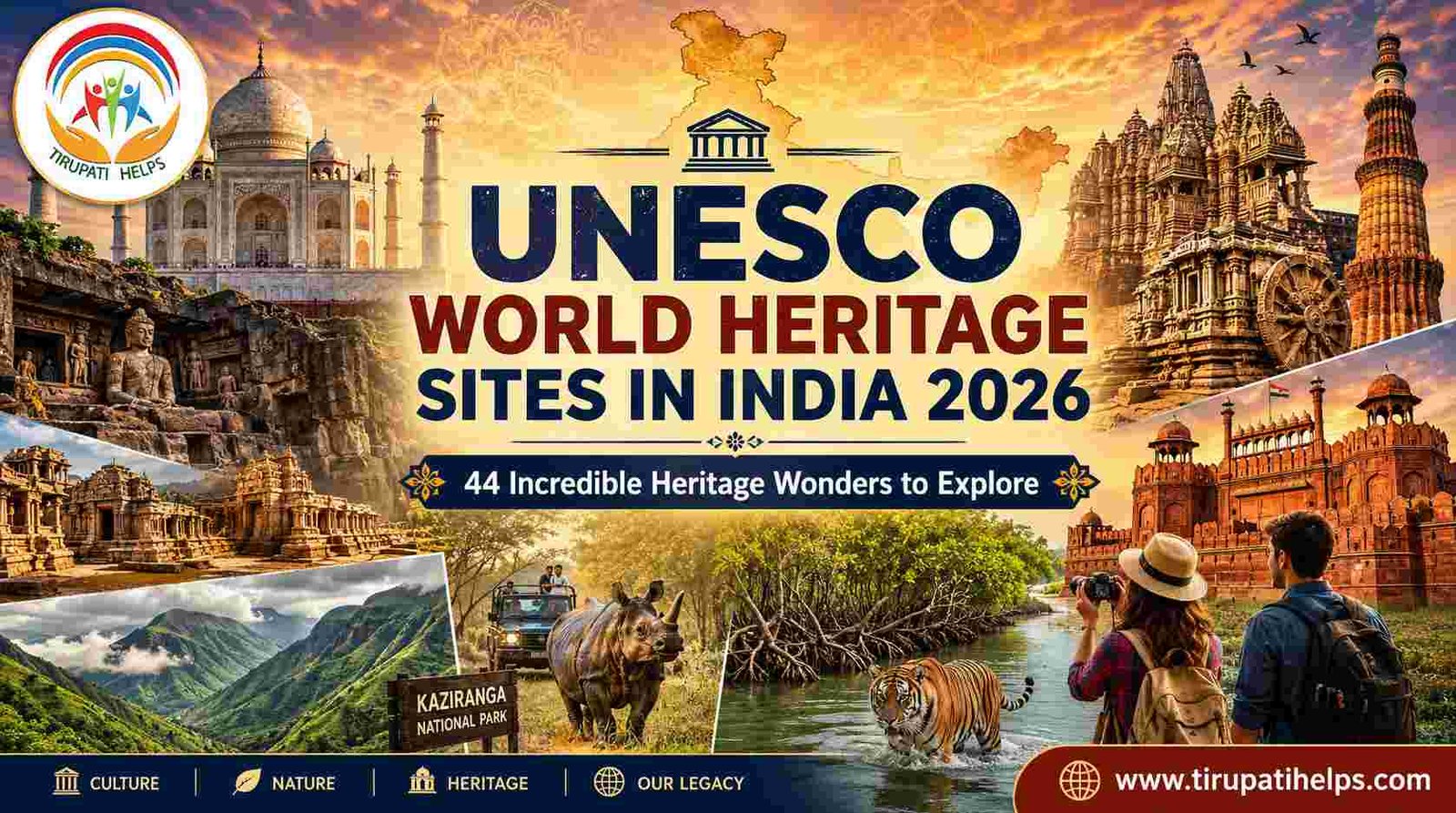
India’s heritage is a fascinating blend of ancient traditions, architectural masterpieces, sacred landscapes, and ecological wonders. Across the country, there are places that tell stories of powerful kingdoms, spiritual movements, artistic achievements, and unique biodiversity. To preserve these extraordinary locations, many have been recognized by UNESCO as World Heritage Sites.
In 2026, India proudly holds 44 UNESCO World Heritage Site inscriptions. These destinations are not only symbols of national pride but also important assets for global heritage conservation. Every site reflects a different chapter of India’s journey through history and nature.
Understanding UNESCO World Heritage Status
The World Heritage program was established to identify and protect locations that possess exceptional value to humanity. UNESCO evaluates sites based on strict criteria related to culture, history, architecture, science, ecology, and human achievement.
When a site receives World Heritage status, it gains international recognition and greater opportunities for preservation and sustainable tourism development.
India’s Position in Global Heritage Conservation
India ranks among the world’s leading countries in terms of UNESCO-recognized locations. The nation’s heritage list includes ancient cave complexes, historic cities, royal forts, temples, national parks, mountain ecosystems, and sacred landscapes.
The diversity of these sites highlights India’s role as one of the oldest continuously inhabited civilizations in the world.
Categories of UNESCO Heritage Sites in India
The recognized locations in India fall into three major groups:
Cultural Heritage
These sites showcase human creativity, architecture, religion, urban planning, and historical achievements. Examples include temples, forts, archaeological remains, and historic cities.
Natural Heritage
Natural sites are selected because of their ecological importance, biodiversity, or exceptional landscapes. National parks and wildlife reserves form the majority of this category.
Mixed Heritage
A mixed site combines both cultural and natural significance. India currently has one such site, reflecting the connection between nature and traditional beliefs.
Heritage Landmarks That Define India
Among India’s World Heritage Sites, several are globally recognized symbols of the country.
The Taj Mahal remains one of the most admired monuments on Earth. Its elegant white-marble design continues to attract visitors from every continent.
The Ajanta and Ellora cave complexes demonstrate the artistic brilliance of ancient craftsmen who transformed solid rock into magnificent places of worship.
Hampi reveals the grandeur of the Vijayanagara Empire through its sprawling ruins, temples, and marketplaces.
The Sun Temple at Konark stands as a masterpiece of medieval engineering, while Khajuraho’s temples showcase extraordinary artistic expression through stone carvings.
Together, these monuments reflect centuries of cultural evolution and architectural innovation.
India’s Remarkable Natural Heritage
UNESCO recognition is not limited to monuments and historic structures. India also possesses landscapes of immense ecological importance.
Kaziranga National Park has become synonymous with the conservation of the one-horned rhinoceros. The park demonstrates how effective wildlife protection can help endangered species recover.
The Sundarbans represent one of the planet’s most unique ecosystems, where dense mangrove forests meet tidal waterways and support the famous Royal Bengal Tiger.
The Western Ghats stretch across several states and contain countless plant and animal species found nowhere else in the world.
Meanwhile, the Great Himalayan National Park safeguards fragile mountain ecosystems and contributes significantly to biodiversity conservation.
The Significance of Heritage Recognition
World Heritage status offers benefits that extend beyond tourism.
First, it encourages governments and communities to protect important historical and environmental resources.
Second, it creates educational opportunities by helping people understand the value of preserving the past.
Third, it supports local economies through responsible tourism and related employment.
Finally, UNESCO recognition brings global attention to places that might otherwise remain overlooked.
Recent Growth of India’s Heritage List
India’s World Heritage portfolio has expanded considerably during the last decade. New inscriptions have highlighted lesser-known but historically important destinations, ensuring that a broader range of India’s heritage receives international attention.
Recent additions demonstrate that heritage is not limited to famous monuments. Educational institutions, traditional burial systems, temple complexes, and military landscapes have also earned recognition for their contribution to human history.
Why These Sites Matter for Future Generations
The importance of heritage preservation extends beyond the present day. Monuments, archaeological remains, forests, and sacred landscapes provide valuable lessons about human achievement, environmental stewardship, and cultural diversity.
Protecting these sites ensures that future generations can continue to learn from them, appreciate their beauty, and understand the stories they represent.
Conclusion
India’s 44 UNESCO World Heritage Sites serve as a living record of the country’s remarkable cultural depth and natural richness. They represent centuries of artistic excellence, spiritual traditions, scientific knowledge, and environmental diversity.
Whether someone is interested in history, architecture, wildlife, or travel, these heritage sites offer unforgettable experiences and deeper insights into India’s identity. Their preservation remains essential not only for India but also for humanity as a whole.
Frequently Asked Questions
How many UNESCO World Heritage Sites does India have in 2026?
India has 44 UNESCO World Heritage Sites in 2026.
Which categories are used by UNESCO?
UNESCO recognizes Cultural, Natural, and Mixed Heritage Sites.
What is India’s only mixed World Heritage Site?
Khangchendzonga National Park in Sikkim is India’s only mixed heritage site.
Why are UNESCO sites important?
They help preserve locations of outstanding cultural, historical, and environmental value.
Which Indian monument is the most famous UNESCO site?
The Taj Mahal is widely regarded as India’s most internationally recognized UNESCO World Heritage Site.
Do UNESCO sites help tourism?
Yes. UNESCO recognition often increases visitor interest and supports local economies.
Can more Indian sites be added in the future?
Yes. India continues to nominate eligible locations for UNESCO consideration.

Leave A Comment