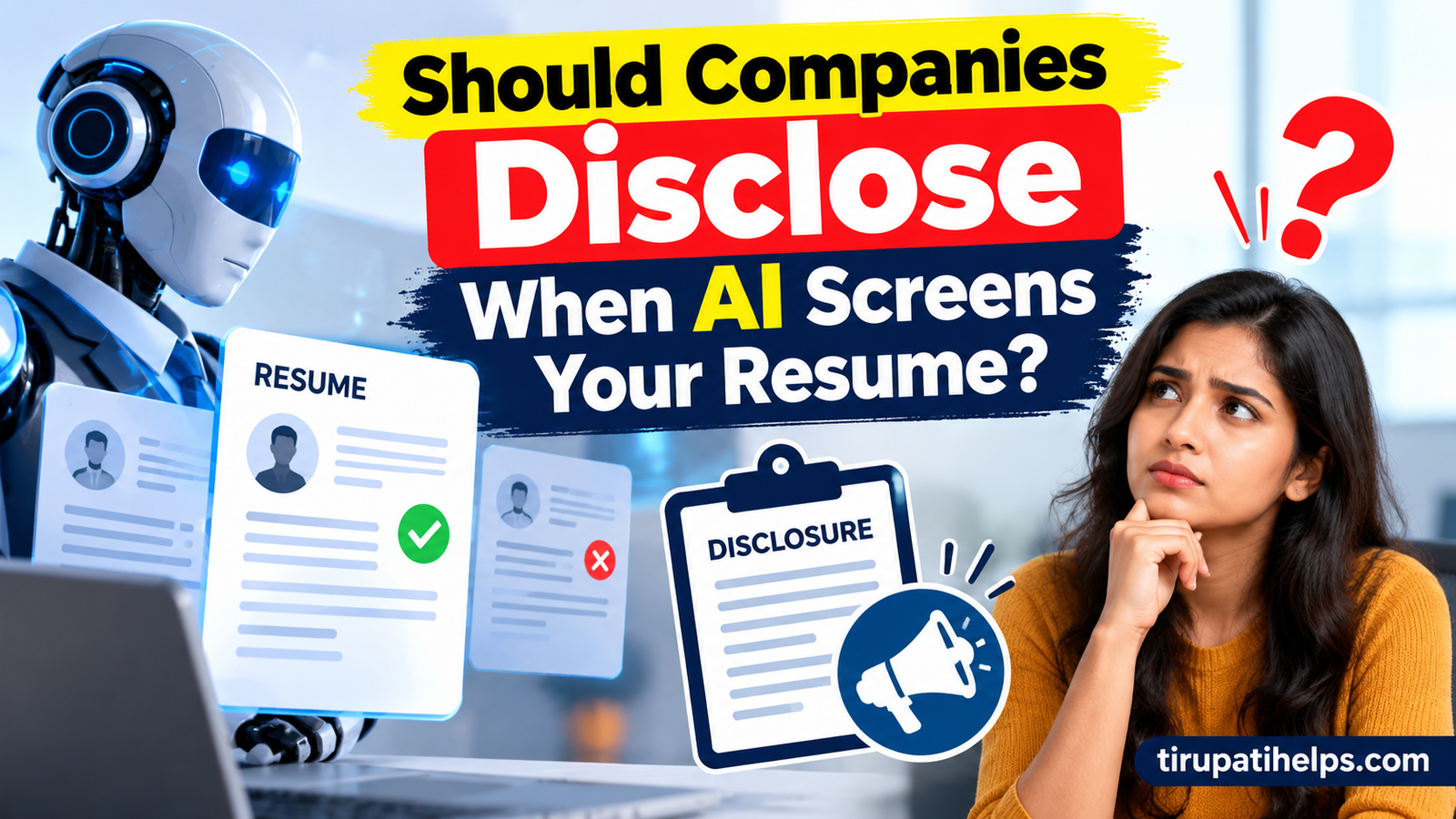
You spend an hour working on your resume, confirming dates, and matching your experience to the role. Then you upload the file, answer a few questions and hit submit. Then the process can get quite murky. Your application may be evaluated by a recruiter in person or it may be reviewed by automation before a human gets involved.
This difference is becoming more important for jobseekers. The UK Information Commissioner’s Office says 70% of employers expect greater use of AI and automation in recruitment during the next five years. If software can influence who reaches an interview – candidates should know when it enters the process.
What Does AI Screening Actually Do?
AI screening can mean several different things in recruitment. Some systems scan your resume for skills connected with the role. Others compare your work history against requirements chosen by the hiring team.
A different system may score or rank applications before recruiters begin their review. This can help hiring teams handle hundreds of applications – especially when one role receives a large response.
Problems start when applicants have no idea how much influence the software has. Software that helps a recruiter order applications is one thing but software that automatically rejects candidates is something else.
Imagine conducting a project management job for 5 years but your final business had a different title. The recruiter may make the link the moment they read your responsibilities. The title itself could weigh heavier on software – making your application rank worse. Understanding screening helps you get some useful context before you apply.
Candidates Should Know When Software Can Affect Rejection
Companies don’t have to create a lengthy technical manual for every hiring tool. A brief description may be all the prospects truly require.
For example – an employer could explain that software checks applications against several job requirements. It could also state if recruiters review low scores before making a rejection decision.
A simple notice might cover these points:
- Software checks selected information from your resume.
- Your application may receive a score or ranking.
- A recruiter reviews the result before any final rejection.
- Candidates can request further information about automated decisions.
This kind of disclosure would make the hiring process easier to understand. It would also reduce the guessing that happens after an application disappears without explanation.
UK Jobseekers Already Have Some Protection
Automated recruitment has already caught the attention of regulators. During 2026 – the ICO spoke with more than 30 employers about automated recruitment decisions. It has also written to 16 organizations whom it believes are utilizing automated decision-making on jobseekers.
The agency argues that candidates should be advised when automated choices affect their application. Employers should also explain how these systems affect the recruitment process.
Some automatic decisions can be contested too. If there was no relevant human engagement – you may be entitled to ask for an explanation or request a human review. This matters when a rejection arrives almost immediately. If your experience closely matches the role – you should be able to ask how the decision was made.
What Happens When an AI Detector Checks Your Application?
It gets harder to use AI screening when businesses begin to verify how application text was created. An AI detector could be used to assess whether generative software helped write a cover letter or part of a resume.
This is a different kind of challenge than standard candidate screening.
You can still get a good grade from the machine if you create your own cover letter. Another candidate can employ grammar software or translation support before submitting the final version. These tools can rewrite sentences without creating the whole program.
It would be dangerous to use a detection score as automatic proof. An applicant should not be penalized in an interview because some software thinks a paragraph looks like created writing.
Employers who utilize an AI detector in recruitment must be transparent about this practice. Applicants need to know what is checked and how it may impact their application.
This is where human inspection is very crucial. Detection software can be an additional clue but should never be used as a covert test of honesty.
Transparency Can Make Hiring Better for Everyone
Recruiters have a tough job when there are hundreds of applications for one vacancy. Software can help to classify simple information more quickly, and reduce recurrent screening.
The candidates do not necessarily have to be anti-automation either. Most individuals simply want to know what happens to the information they provide.
Picture two hiring procedures.
The first company says software verifies five role requirements before a recruiter analyzes each application. The second company does not mention anything about its screening method.
The first process provides candidates a lot more context. At least you can see the guidelines, even if you’re against automated screening.
Employers already ask a lot of information from applicants. Before speaking to anyone you can give employment history, qualifications, pay expectations and personal contact data.
It seems a fair trade-off to let candidates know some basic information regarding the automated screening.
Europe Is Taking Recruitment AI Seriously
The EU AI Act also indicates how seriously regulators are taking automated hiring. Certain recruitment systems might be quite risky in the selection process in terms of screening candidates or ranking candidates.
And the reason is simple. Recruitment decisions impact your income and future job chances. Also, poorly built systems can continue discrimination.
European guidance points to possible risks involving gender and disability among other protected characteristics.
The high risk requirements covering certain employment systems are currently expected to apply from December 2, 2027.
For jobseekers, this means questions about hiring technology are completely reasonable. Asking how automated screening works is no longer an unusual concern.
What Can You Do Before Sending Your Resume?
Not all the tools used behind an application page are under your control. But there are ways to make your CV more readable for both software and recruiters.
Use familiar headings such as Experience and Education. Clearly state your prior tasks with relevant examples. Avoid copying whole phrases from the job description to get in keywords.
Please read the recruitment privacy notice before you submit any personal information. Search for mentions of automated decision-making, candidate scoring, or application screening.
If the explanation is unclear, it’s perfectly appropriate to approach the recruiter directly. One basic question might be:
“If I get through automated screening, will my application go to a recruiter?”
A clear answer tells you a lot more than guessing how the system works.
Disclosure Does Not Need to Be Complicated
Firms do not have to explain all the algorithms behind their hiring software. The main thing for candidates to comprehend is how automation would affect their application.
What if software scans your resume? Explain this too if the method ranks candidates. Make that apparent too when a recruiter looks at the outcome before rejection.
Candidates also should know how to challenge an automatic choice when something doesn’t make sense.
Employers can use automation to handle applications more quickly. Recruitment should be more understandable for jobseekers.
You have wasted time already on portraying your career correctly. It’s a fair question to ask, “After you hit submit, what happens?”


Leave A Comment