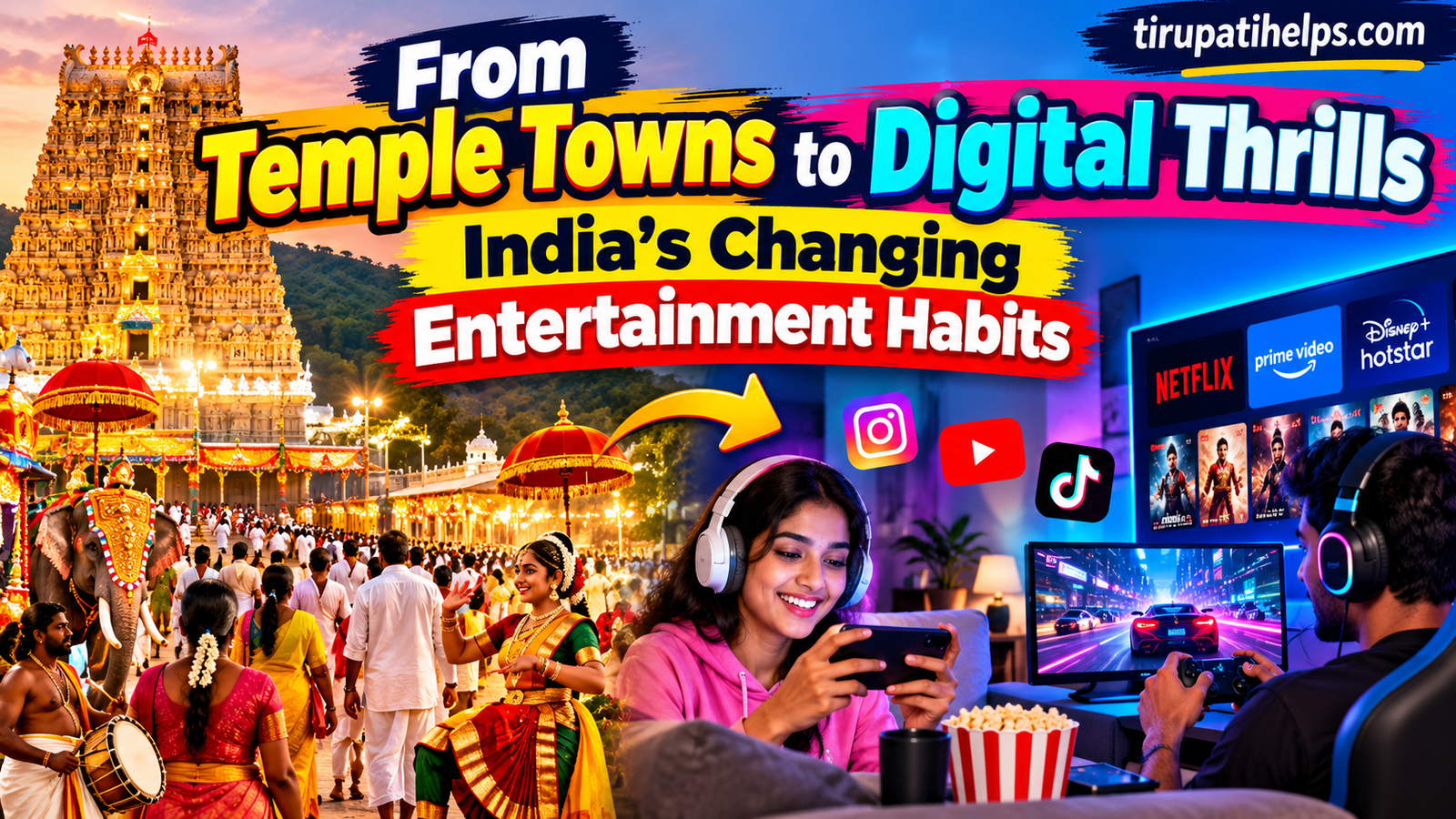
How Entertainment Habits Are Evolving Across India’s Cities And Towns
In the past, traditional television was the primary leisure activity in Indian homes. In 2008, BIGFlix emerged as the first OTT platform, followed by the first mobile app, nexGTv in 2010. The Digital India Initiative in 2015 focused on improving the digital infrastructure across the country.
Over the past decade, easy access to affordable data plans and smartphones has driven an evolution in how audiences connect with and consume content across India’s cities and towns, shifting from passive viewing to participation.
Modern digital entertainment users engage by actively participating in experiences that provide feedback in real time. Modern audiences enjoy fragmented microbreaks throughout the day, interacting with content that provides social interactions, short games, videos, and micro content across different devices.
The Shift From Community-Based Leisure To Personal Digital Entertainment In India
Platforms such as Jeet Boost are part of India’s ongoing shift from community-based leisure to personalised digital entertainment experiences. This transformation is driven by increased accessibility to reasonably priced smartphones, and the ongoing expansion of 5G now means that high-quality entertainment can be accessed in tier-2 and tier – 3 cities, and remote villages, which has expanded the reach of content creators and entertainment platforms to the over one billion citizens connected to the internet.
Smartphones have revolutionised how players access gaming by removing the need for expensive hardware such as consoles or PCs. Online gaming platforms are optimising their offerings for more than ninety percent of mobile-first users who can access casual, competitive, and fantasy gaming formats along with other types of interactive entertainment that can be enjoyed in small bites that fit well into fragmented daily leisure routines.
The endless flow and choice of digital content mean that individuals can easily create personalised entertainment routines, which are particularly dominant in towns and cities. Digital leisure complements rather than replacing existing social activities such as attending a concert or having dinner at a restaurant.
Digital entertainment not only provides relaxation, but it also provides important social interactions, and often after a long day of work or an evening out, individuals enjoy OTT content, play a multiplayer game, or catch up with friends in an online community.
How Platforms Are Making Online Gaming Accessible Even in Smaller Indian Cities and Towns
The Indian gaming market has lowered the entry barriers democratising access to all players regardless of geographical region, age, and gender which is helping to diversify the online gaming scene that is no longer predominantly young gamers from urban areas; rather, now, gaming is enjoyed across all age groups, social classes, and linguistic backgrounds due to easy access to reasonably priced data plans and smartphones.
Gamers can access a vast range of games that range from free casual experiences to high-level competition. Modern platforms have realised the importance of providing localised experiences and are increasing their focus on providing mobile first optimised entertainment with localised content in regional languages that makes entertainment accessible to non-English-speaking audiences.
Online gamers all have different levels of digital literacy, and operators that provide clear, familiar interfaces, intuitive navigation, and secure payment gateways that enable gamers to pay using UPI, e-wallets, and other local payments facilitate in-app purchases and are helping to increase the number of microtransactions even in free games where players can buy digital assets or other perks that enhance their gaming experiences.
What Players From Towns Like Tirupati Are Discovering in India’s Digital Gaming World
Digital entertainment has recently become an integral part of daily lives among Indians of all ages. Tirupati is an important destination for religious pilgrims. However, locals enjoy the convenience that modern digital infrastructure provides.
Technology has created a blend of traditional and digital culture where both are coexisting in harmony. There is a greater diversification of digital entertainment that was not available to earlier generations, and now there is a vibrant gaming community that ranges from casual to competitive gaming.
Despite the increase in online gaming, it does not replace the importance of the local identity of the region. It is not necessary to give up cultural traditions and social life in Tirupati in order to enjoy the benefits of India’s rapidly expanding digital culture. Digital accessibility can also help to share the cultural traditions of the town.
Temples in Tirupati have embraced the digital ecosystem by live streaming darshans and other rituals, which is creating new opportunities for devoted followers who are unable to physically travel to the town, either for health or financial reasons, to book puras and priests who can perform rituals remotely.
Embracing Digital Entertainment While Staying Rooted in Community Values
One of the biggest misconceptions among modern digital audiences is that in order to embrace a digital lifestyle, they must abandon community values. Interactions with digital communities remove geographical and social barriers, as well as provide experiences that are hyper personalised but for some individuals also pose a risk of isolation and less participation in shared cultural experiences.
Audiences should prioritise the importance of maintaining community values and choose digital entertainment options that foster mental well being, inclusivity, and provide social engagement experiences that are meaningful and positive with spaces that embrace traditional values in safe spaces where all participants are respectful of the needs of every other person on the platform.
Audiences can enjoy healthy, balanced lifestyles that embrace community values and responsible digital consumption that provides meaningful interaction with content that is relevant, high quality, and authentic. Screen time should be limited and complement rather than replace important non-digital activities such as participation in local events, engaging in real-world relationships, spending time with family, pursuing education, creating a successful professional career, and engaging in physical activities.
As in the example of the Tirupati temples, when digital technology is leveraged to benefit users through the preservation of cultural values, provide social learning, and educate, it helps to represent the diversity of different voices among the population and reinforces the importance of staying rooted in community values while still enjoying the advantages that the digital ecosystem provides.
From Local Indian Communities To Connected Digital Communities
Local communities play a vital role in preserving cultural identity, providing education and professional opportunities, and knowledge and language, as well as creating a sense of belonging and self determination. Festivals, local governance, and religious rituals are key activities that help to bond individuals together; however, in physical settings, there are still restrictions such as the caste system that dictate who can and cannot interact with each other.
Digital entertainment has led to the creation of many online communities through multiplayer games, livestreams, social platforms, and online discussions that, unlike local physical communities, transcend geographical and social barriers, which has democratised access for individuals regardless of their background or geographical location.
Though access to entertainment has become more personalised, individuals can choose communities that align with their beliefs and values to engage in debates, share cultural values, support each other, and create safe online spaces where individuals are valued and feel a sense of belonging.
Conclusion
As the digital revolution continues to sweep across India, there is growing concern that traditional values are being abandoned in favour of digital experiences. Towns such as Tirupati have effectively demonstrated that traditional cultural values and digital entertainment can successfully coexist without destroying the long-term community values and cultural values that are the very foundation of Indian society.
As more Indians integrate digital activities into their daily lives, platforms have realised the importance that regional languages, localised content, preservation of traditions, and staying rooted in community values represent for local populations ensuring that the success of Indian entertainment going into the future will not be a choice between tradition and technology but finding a way that old and new can be enjoyed together.

Leave A Comment