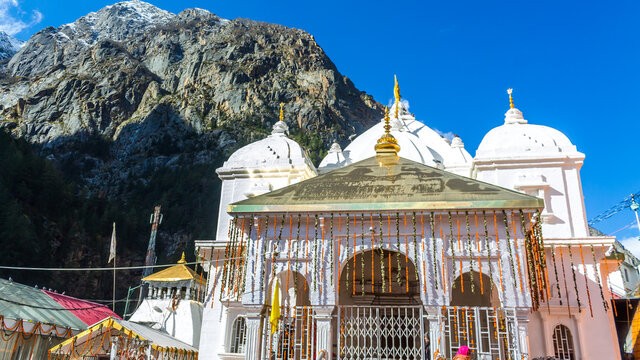
The Gangotri Temple is one of Hinduism’s most revered pilgrimage destinations and a vital part of the Char Dham Yatra. Located in the Uttarkashi district of Uttarakhand, this sacred shrine marks the spiritual source of River Ganga, India’s most venerated river. Set against the breathtaking backdrop of the Garhwal Himalayas, Gangotri is not just a place of worship—it is a journey into faith, mythology, and divine nature.
Spiritual Significance of Gangotri Temple
Gangotri holds immense spiritual importance as the place where River Ganga descended from heaven to earth. Devotees believe that visiting Gangotri and taking a holy dip in the river purifies the soul and washes away sins.
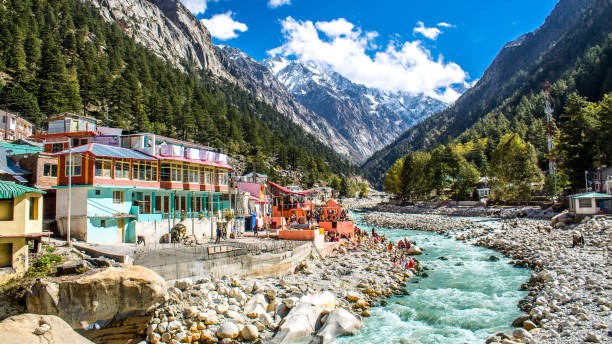
Although the actual source of the Ganga is Gaumukh Glacier, about 18 km from Gangotri, the temple represents the symbolic and ritual origin of the river. Pilgrims begin their Ganga worship here before proceeding to other sacred sites.
Gangotri is also the starting point of the Chota Char Dham Yatra, which includes Yamunotri, Kedarnath, and Badrinath.
Mythological Background
According to Hindu mythology, King Bhagiratha performed intense penance to bring the celestial river Ganga to earth to liberate the souls of his ancestors. Lord Shiva agreed to bear the force of the river in his matted locks to prevent destruction. Ganga then gently flowed onto earth at Gangotri.
This divine event makes Gangotri a powerful symbol of devotion, sacrifice, and divine grace. The river is worshipped here as Ganga Maa, the life-giving mother.
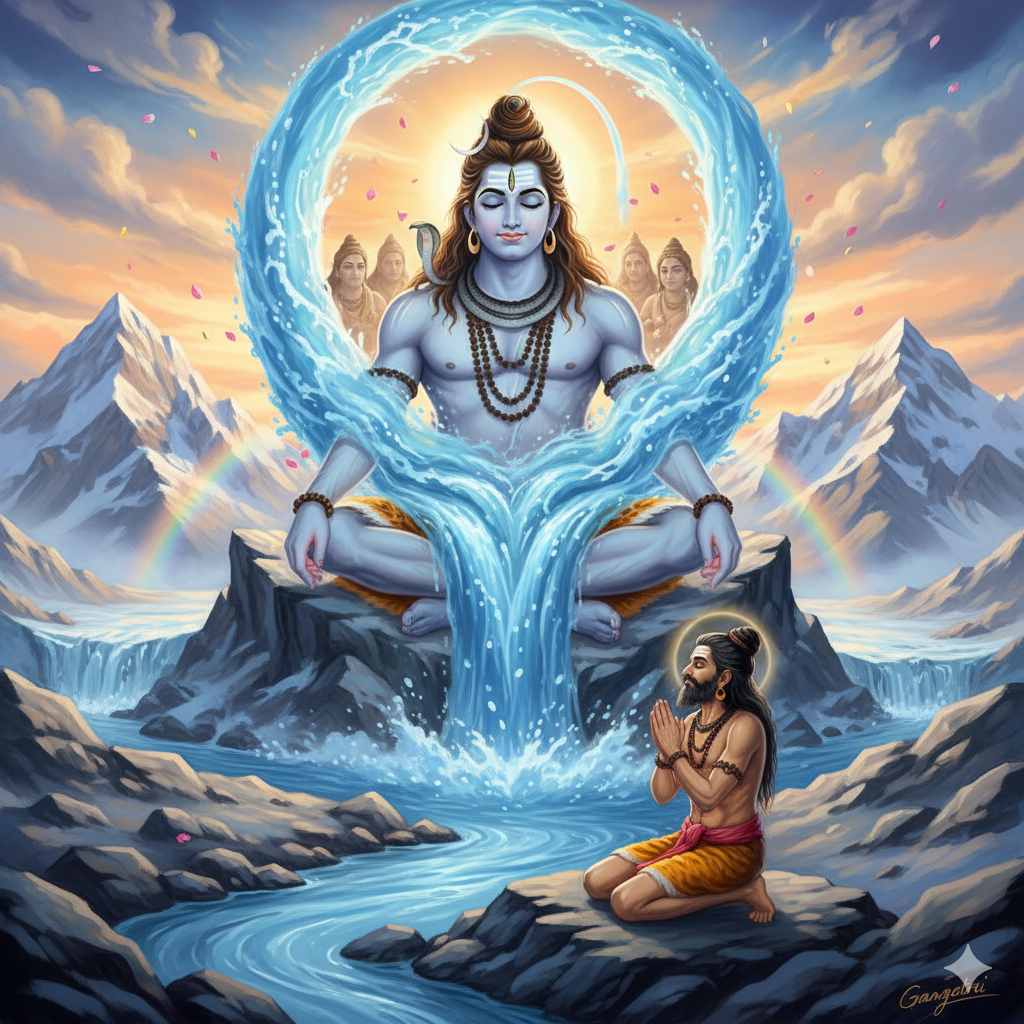
The sacred descent of River Ganga as Lord Shiva blesses King Bhagiratha
History of Gangotri Temple
The present Gangotri Temple was built in the early 18th century by Amar Singh Thapa, a Gorkha commander. Constructed with white granite stone, the temple stands as a fine example of simple yet graceful Himalayan architecture.
Over centuries, the temple has been maintained and revered by saints, pilgrims, and local communities, preserving its sacred traditions and rituals.
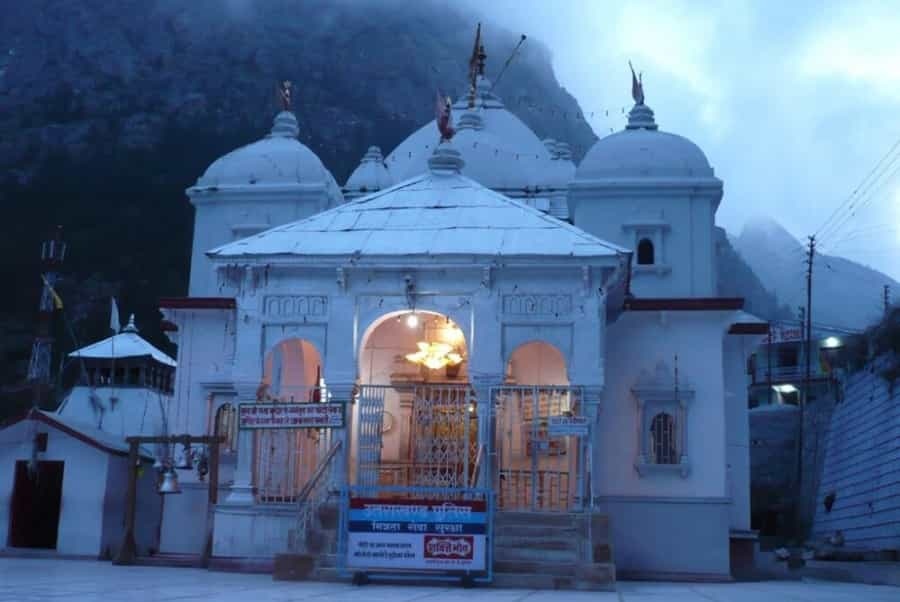
Gangotri Temple glowing at dawn, marking the sacred origin of the River Ganga
Architecture and Temple Structure
Gangotri Temple features a modest yet elegant design that reflects its spiritual purpose. Built at an altitude of approximately 3,100 meters, the temple has:
- A white stone façade
- A sanctum housing the idol of Goddess Ganga
- Carved pillars and arched entrances
- A peaceful courtyard for prayers
Nearby sacred spots include Bhagirathi Shila, where King Bhagiratha is believed to have meditated, and Pandava Gufa, associated with the Pandavas from the Mahabharata.
Gangotri Temple Opening and Closing Dates
Due to extreme winter conditions, Gangotri Temple remains open only for part of the year.
Temple Schedule
- Opening: Akshaya Tritiya (April–May)
- Closing: Bhai Dooj (October–November)
During winter, the idol of Goddess Ganga is shifted to Mukhba village, where worship continues until the temple reopens.
Best Time to Visit Gangotri
The ideal time to visit Gangotri is:
- May to June: Pleasant weather and clear routes
- September to October: Fewer crowds and scenic beauty
Avoid visiting during the monsoon months (July–August) due to landslides and road closures.
How to Reach Gangotri Temple
By Air
The nearest airport is Jolly Grant Airport, Dehradun, about 250 km away.
By Train
The closest railway stations are Rishikesh and Haridwar.
By Road
Gangotri is well connected by road via Uttarkashi. Regular buses and taxis operate from Rishikesh, Haridwar, and Dehradun.
Nearby Places to Visit
- Gaumukh Glacier: The physical source of River Ganga
- Uttarkashi: A spiritual town with ancient temples
- Harsil Valley: Known for apple orchards and scenic views
- Bhaironghati: A serene stop en route to Gangotri
Festivals Celebrated at Gangotri
- Ganga Dussehra: Celebrates the descent of Ganga
- Akshaya Tritiya: Marks temple opening
- Diwali & Bhai Dooj: Winter closing ceremonies
These festivals attract thousands of devotees from across India.
Important Travel Tips
- Carry warm clothing even in summer
- Walk slowly to avoid altitude sickness
- Respect temple customs and local traditions
- Avoid plastic to preserve the fragile ecosystem
FAQs About Gangotri Temple
1. Who is worshipped at Gangotri Temple?
Goddess Ganga is worshipped in her purest spiritual form.
2. Is Gangotri part of the Char Dham Yatra?
Yes, Gangotri is one of the four sacred destinations of the Chota Char Dham.
3. Can senior citizens visit Gangotri?
Yes, with proper medical preparation and gradual travel.
4. Is Gaumukh accessible from Gangotri?
Yes, Gaumukh is reachable via a guided trek with permits.
5. Why does the temple close in winter?
Heavy snowfall and extreme cold make the region inaccessible.
Conclusion
The Gangotri Temple is more than a pilgrimage site—it is a spiritual gateway to understanding faith, purity, and devotion. Surrounded by majestic mountains and flowing sacred waters, Gangotri offers pilgrims a profound connection with nature and divinity. Whether you visit as part of the Char Dham Yatra or as a seeker of peace, Gangotri leaves a lasting spiritual imprint on every soul.
Har Har Gange!

Leave A Comment