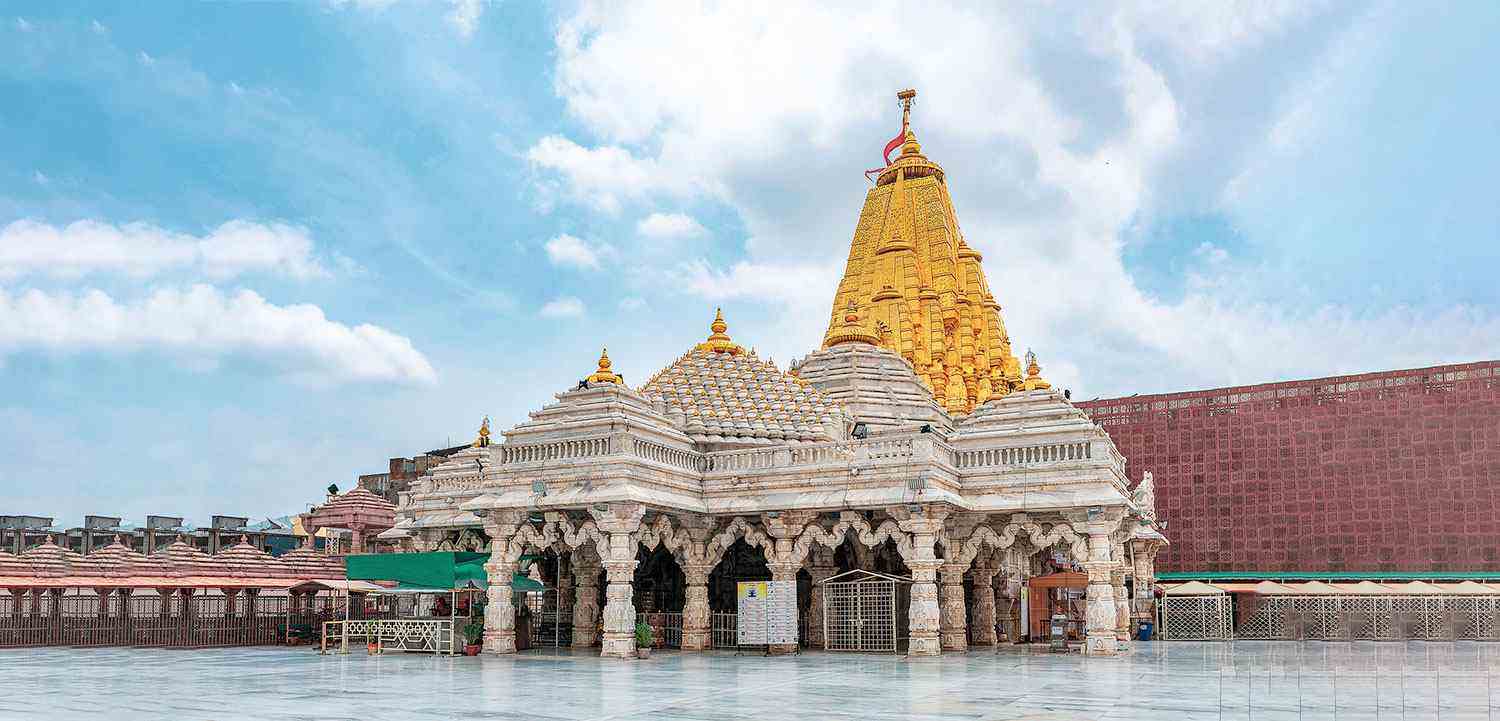
The sacred Ambaji Temple is one of the most important pilgrimage sites dedicated to Goddess Amba. Located in the Banaskantha District, this temple attracts millions of devotees every year. Pilgrims from Gujarat, Rajasthan, and other parts of India visit this holy shrine to seek blessings.
Ambaji Temple is also one of the 51 Shakti Peethas, which makes it a powerful spiritual destination for devotees of the divine feminine energy. Unlike many Hindu temples, the sanctum of Ambaji Temple does not contain a traditional idol. Instead, devotees worship the sacred Shree Visa Yantra, which represents the presence of Goddess Amba.
Because of its religious importance, rich mythology, and peaceful surroundings, Ambaji Temple has become one of the most visited temples in western India.
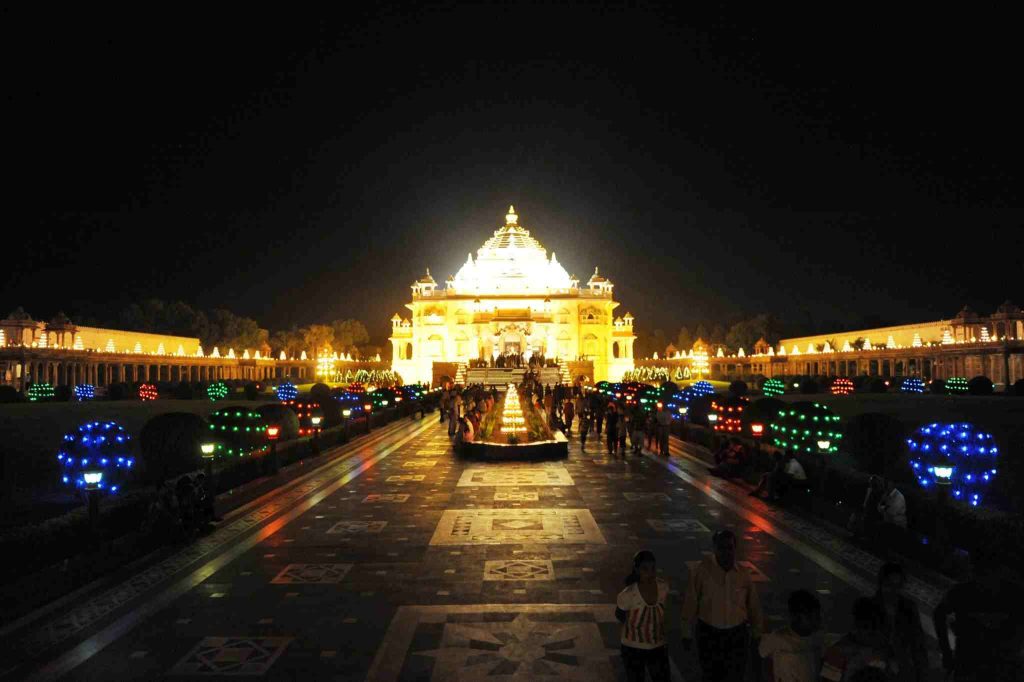
Ambaji Temple beautifully illuminated during the night.
History of Ambaji Temple
Ambaji Temple has deep roots in Hindu mythology and ancient traditions. According to sacred texts such as the Devi Bhagavata Purana, the temple is one of the important Shakti Peethas of India.
The origin of the temple is connected to the story of Sati and Lord Shiva. When Sati sacrificed herself during the Daksha Yajna, Lord Shiva carried her body in deep sorrow. To restore balance in the universe, Lord Vishnu used his Sudarshan Chakra to divide her body into several parts. These parts fell at different locations, which later became sacred Shakti Peethas.
It is believed that the heart of Goddess Sati fell at Ambaji, making this temple extremely sacred for devotees.
Another important spiritual place near the temple is Gabbar Hill. According to tradition, Gabbar Hill is considered the original seat of Goddess Amba. Devotees climb nearly 999 steps to reach the hilltop temple where an eternal lamp burns as a symbol of divine energy.
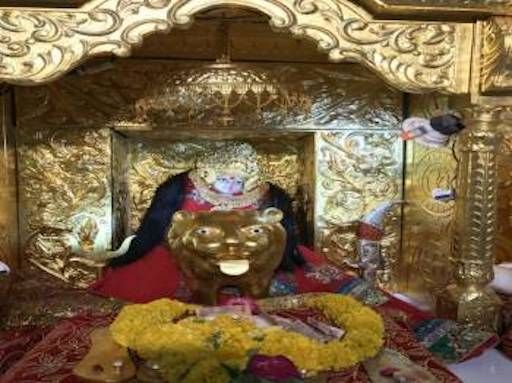
Sacred shrine of Goddess Amba inside Ambaji Temple.
Spiritual Significance of Ambaji Temple
Ambaji Temple holds great spiritual importance for devotees who worship Shakti. Many people visit the temple to pray for peace, prosperity, and happiness.
One of the most unique features of this temple is the absence of a statue of the goddess. Instead, the sacred Shree Visa Yantra is worshipped in the sanctum. This yantra is carved on a marble base and is believed to hold powerful spiritual energy.
Only temple priests can clearly view the yantra during rituals. However, devotees offer prayers and perform darshan from outside the sanctum area.
Because of this unique tradition, Ambaji Temple is different from many other Hindu temples. Devotees believe that sincere prayers offered here bring blessings, protection, and positive energy.
Architecture of Ambaji Temple
The architecture of Ambaji Temple reflects traditional temple design of Gujarat. The temple complex is built mainly with white marble, which gives it a clean and beautiful appearance.
The temple’s shikhara (tower) is decorated with gold plating and intricate carvings. The temple walls and pillars feature detailed stone work that reflects skilled craftsmanship.
The peaceful environment and simple structure of the temple create a spiritual atmosphere for devotees. Many visitors spend time in prayer and meditation within the temple complex.
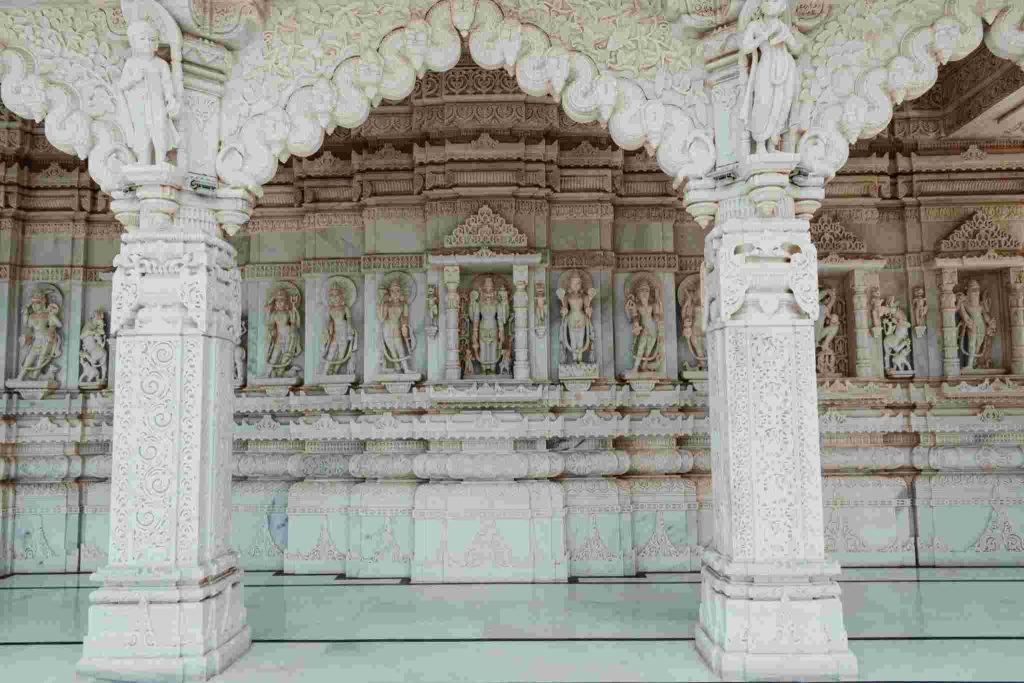
Beautiful marble carvings and pillars inside Ambaji Temple in Gujarat.
Ambaji Temple Darshan Timings
Devotees can visit Ambaji Temple throughout the year. However, the temple follows specific darshan timings for daily rituals and prayers.
General Darshan Timings
- Temple Opening: 7:00 AM
- Morning Aarti: 7:30 AM
- Rajbhog Darshan: 12:00 PM
- Evening Aarti: 7:00 PM
- Temple Closing: 9:00 PM
During festivals and special occasions, the timings may change slightly due to the large number of visitors.
Major Festivals Celebrated at Ambaji Temple
Several religious festivals are celebrated at Ambaji Temple with great devotion and enthusiasm.
Navratri
The festival of Navratri is one of the biggest celebrations at Ambaji Temple. During these nine days, thousands of devotees visit the temple to worship Goddess Amba.
The entire town comes alive with devotional music, Garba dance, and special temple rituals.
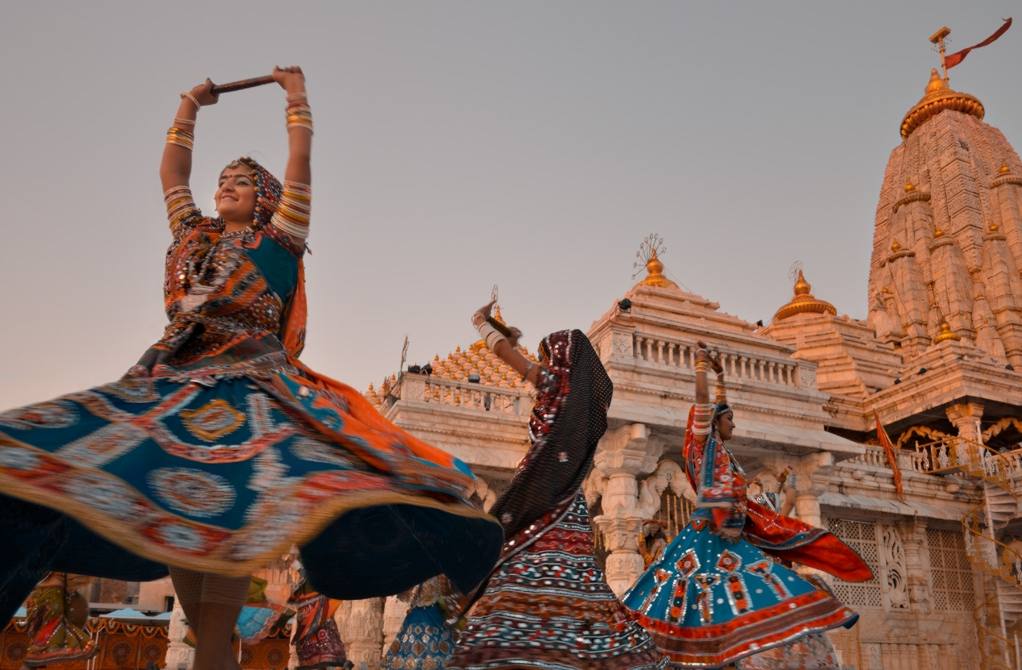
Traditional Garba dance celebrations during Navratri at Ambaji Temple.
Bhadarvi Poonam Fair
Another major event is the Bhadarvi Poonam fair. During this festival, lakhs of pilgrims walk long distances to reach Ambaji Temple. This tradition shows the deep devotion people have for Goddess Amba.
How to Reach Ambaji Temple
Ambaji Temple is well connected by road, rail, and air, making it accessible for pilgrims from across India.
By Air
The nearest airport is Sardar Vallabhbhai Patel International Airport, which is about 180 km from the temple.
By Train
The nearest railway stations are:
- Abu Road Railway Station – about 22 km
- Palanpur Railway Station – about 65 km
By Road
Regular buses and taxis operate from nearby cities like Ahmedabad, Palanpur, and Mount Abu.
Best Time to Visit Ambaji Temple
The temple can be visited throughout the year. However, the most pleasant time to visit is between October and March when the weather is comfortable.
Many devotees prefer visiting during Navratri because the temple celebrations are grand during this period. However, the temple also becomes very crowded during festivals.
FAQs About Ambaji Temple
1. Where is Ambaji Temple located?
Ambaji Temple is located in Banaskantha district of Gujarat near the Gujarat–Rajasthan border.
2. Why is Ambaji Temple famous?
The temple is famous because it is one of the 51 Shakti Peethas and is dedicated to Goddess Amba.
3. What is special about Ambaji Temple?
Unlike many temples, Ambaji Temple does not have an idol. Devotees worship the sacred Shree Visa Yantra.
4. What is Gabbar Hill?
Gabbar Hill is a sacred hill near Ambaji Temple believed to be the original place where Goddess Amba appeared.
5. Which is the nearest railway station to Ambaji Temple?
Abu Road Railway Station is the closest railway station, located about 22 km from the temple.


Leave A Comment