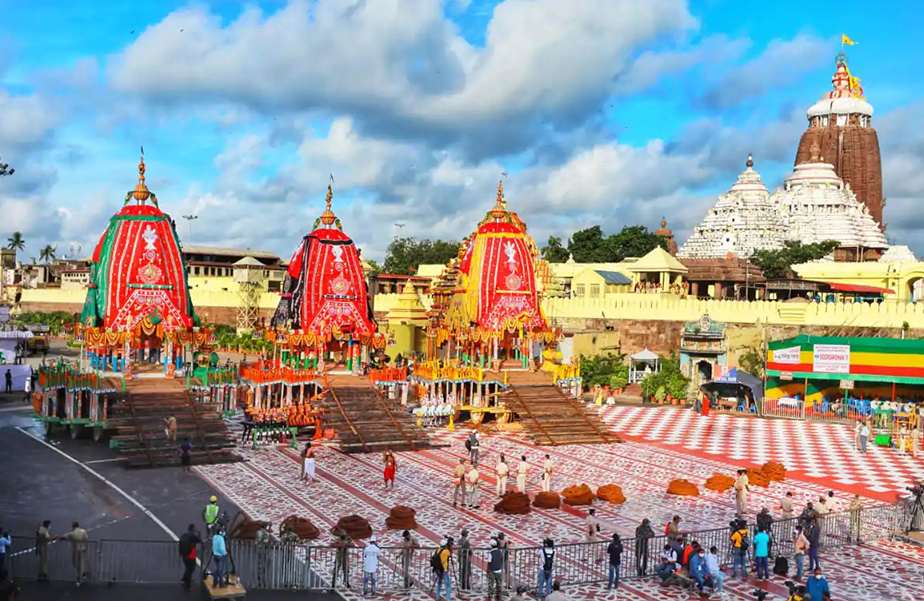
The Jagannath Temple in Puri stands as one of India’s most sacred and culturally powerful pilgrimage sites. Located on the eastern coast of Odisha, this ancient temple is dedicated to Lord Jagannath, a unique and inclusive form of Lord Vishnu worshipped alongside his siblings, Balabhadra and Subhadra. Revered as one of the Char Dham pilgrimage destinations, the temple represents devotion, tradition, and spiritual unity.
Spiritual Significance of Jagannath Temple
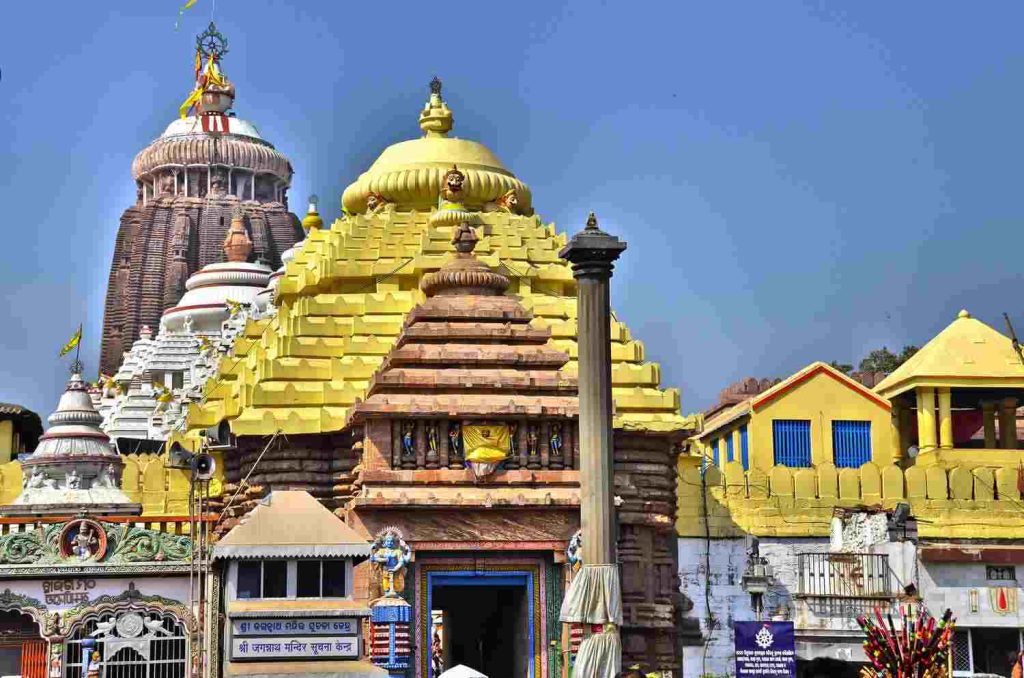
The sacred Jagannath Temple in Puri, Odisha, featuring the golden sanctum and iconic temple spire, one of the four Char Dham pilgrimage sites.
Jagannath Temple holds a special place in Hindu spirituality because it emphasizes equality and universal devotion. Lord Jagannath is believed to be the “Lord of the Universe,” symbolizing compassion beyond caste, creed, or region. Unlike most Hindu temples, the deities here are worshipped in wooden form, reflecting tribal influences merged with classical Hindu philosophy.
For devotees, a visit to Jagannath Puri is considered spiritually transformative. It is believed that Lord Jagannath personally grants moksha (liberation) to those who seek his blessings with sincere devotion.
Mythological Origins and Legends
According to ancient legends, King Indradyumna of Malwa was divinely guided to establish the worship of Lord Jagannath. The sacred idols were crafted by the divine architect Vishvakarma, who appeared as an old carpenter and imposed a condition that he must work undisturbed. When the door was opened prematurely, the unfinished wooden forms of the deities were revealed—forms that are worshipped to this day.
This legend explains the distinctive large eyes and unfinished limbs of the Jagannath idols, symbolizing the divine beyond physical perfection.
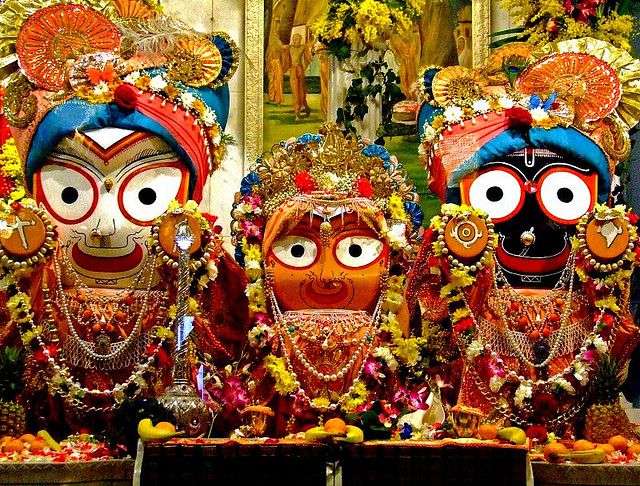
The sacred wooden idols of Lord Jagannath, Lord Balabhadra, and Goddess Subhadra worshipped at the Jagannath Temple, Puri.
Architecture and Temple Complex
Jagannath Temple is an architectural masterpiece built in the Kalinga style. The towering main spire (shikhara) rises approximately 65 meters and dominates the skyline of Puri. The temple complex includes several mandapas (halls), sacred kitchens, and subsidiary shrines.
One of the most fascinating aspects is the temple flag atop the shikhara, which is changed daily and appears to flutter against the wind—an enduring mystery for visitors.
Unique Rituals and Daily Worship
Daily worship at Jagannath Temple follows elaborate and ancient rituals:
- Mangala Aarti (early morning awakening of the deities)
- Mailam (changing of ceremonial attire)
- Bhoga offerings, including the famous Mahaprasad
- Sandhya Aarti (evening prayers)
- Bada Sinhara (night rituals before rest)
The temple kitchen is considered the largest in the world, preparing food for thousands of devotees every day using traditional earthen pots stacked vertically over wood fire.
Rath Yatra: The Grand Chariot Festival
The world-famous Rath Yatra is the most significant festival associated with Jagannath Temple. During this annual event, the deities are taken out of the temple in massive wooden chariots and pulled by devotees through the streets of Puri.
This festival symbolizes the Lord stepping out to bless all, including those who are unable to enter the temple. Rath Yatra attracts millions of pilgrims and visitors from across the globe.
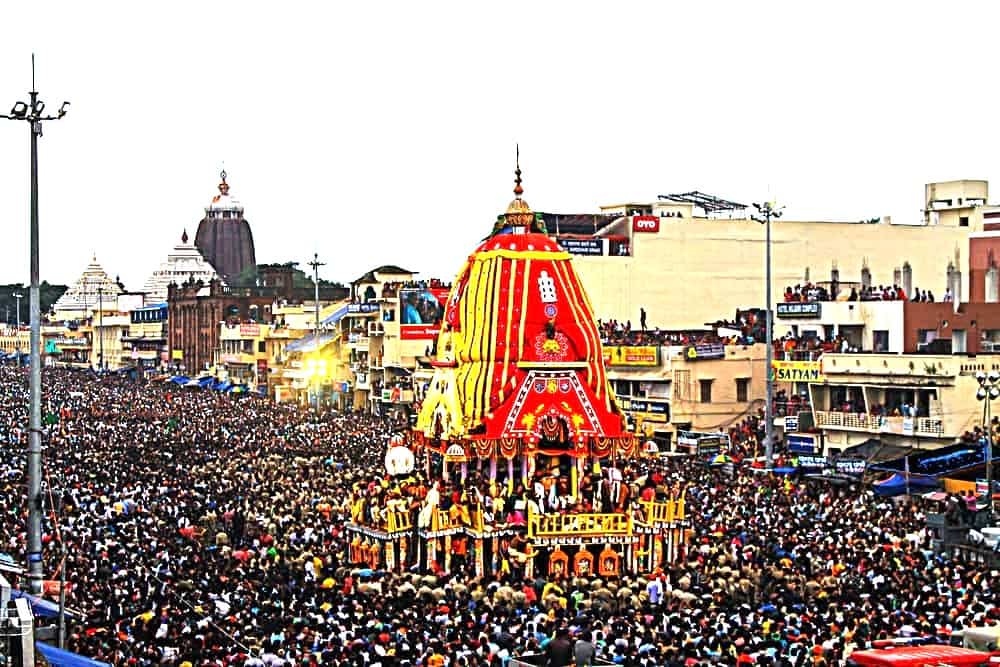
The iconic Rath Yatra of Puri, where Lord Jagannath’s massive chariot is pulled by devotees in a sea of faith and devotion.
Mahaprasad: Sacred Food of Jagannath
Mahaprasad holds immense religious importance. Unlike regular temple offerings, Mahaprasad can be consumed by everyone together, regardless of social background. Devotees believe that partaking in Mahaprasad removes spiritual impurities and strengthens devotion.
It is traditionally eaten while seated on the ground, emphasizing humility and equality before the divine.
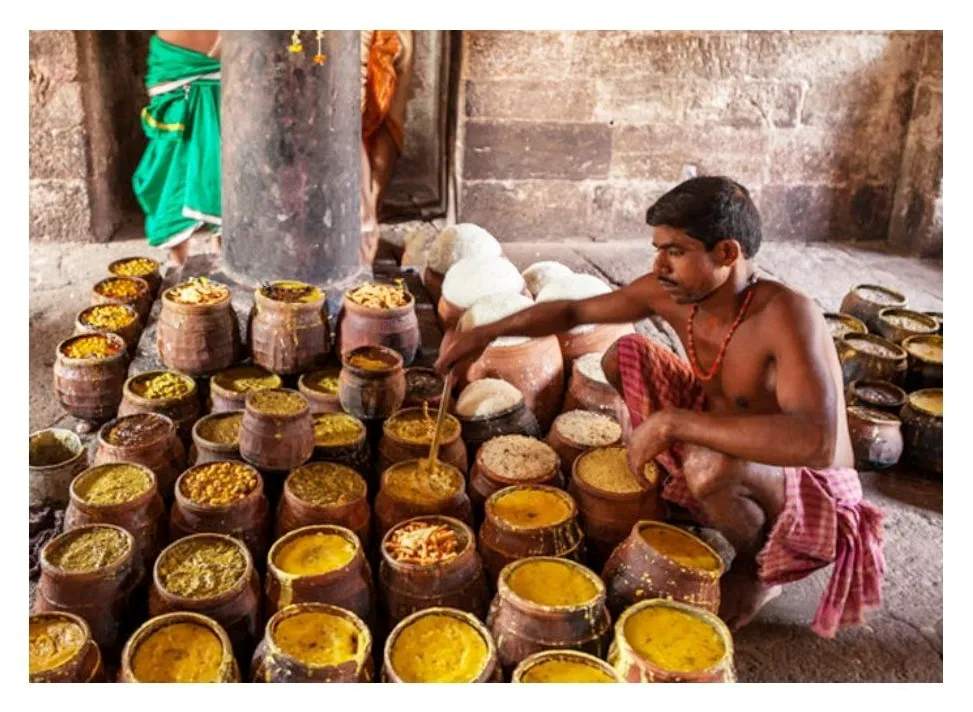
Mahaprasad being prepared in the sacred temple kitchen of Jagannath Temple, Puri, following ancient rituals.
How to Reach Jagannath Temple Puri
- By Air: Bhubaneswar Airport (about 60 km away)
- By Train: Puri Railway Station is well-connected to major cities
- By Road: Regular buses and taxis operate from Bhubaneswar and Cuttack
Best Time to Visit
The ideal time to visit Jagannath Temple is between October and February, when the weather is pleasant. Rath Yatra season (June–July) is spiritually vibrant but extremely crowded. Summer months can be hot and humid.
Rules and Dress Code
Visitors are expected to dress modestly. Traditional attire is encouraged, and photography inside the temple premises is strictly prohibited. Non-Hindus are generally not allowed inside the sanctum, though they can explore surrounding areas.
Puri Jagannath Temple Speciality
The Jagannath Temple is special for its unique blend of devotion, tradition, and inclusiveness. Unlike most Hindu temples, the deities—Lord Jagannath, Balabhadra, and Subhadra—are worshipped in wooden forms, symbolizing the living, ever-changing nature of life. One of the temple’s greatest distinctions is Mahaprasad, sacred food cooked in earthen pots and shared equally by all devotees, breaking barriers of caste and status.
Another remarkable feature is the Rath Yatra, where the deities come out of the temple to bless everyone, allowing even those who cannot enter the sanctum to have darshan. The temple’s rituals follow an ancient and detailed Niti system, preserved for centuries without interruption. Together, these traditions make the Puri Jagannath Temple not just a place of worship, but a powerful symbol of equality, devotion, and living faith.
FAQs About Jagannath Temple Puri
1. Who is Lord Jagannath?
Lord Jagannath is a form of Lord Vishnu, worshipped as the universal lord along with his siblings Balabhadra and Subhadra.
2. Is Jagannath Temple part of the Char Dham?
Yes, Jagannath Puri is one of the four sacred Char Dham pilgrimage sites.
3. What is special about Jagannath idols?
The deities are made of wood and are ritually replaced during the Nabakalebara ceremony.
4. Can devotees eat Mahaprasad inside the temple?
Mahaprasad is consumed outside the main sanctum in designated areas.
5. Why is Rath Yatra important?
Rath Yatra represents divine accessibility, allowing everyone to receive the Lord’s blessings.
Conclusion
Jagannath Temple Puri is not merely a place of worship—it is a living tradition that reflects devotion, inclusivity, and timeless faith. From its sacred rituals and legendary festivals to its spiritual philosophy, the temple continues to inspire millions. A visit to Puri is a journey into the heart of India’s devotional heritage, where faith transcends boundaries and the divine feels deeply personal.
Jai Jagannath.
Leave A Comment