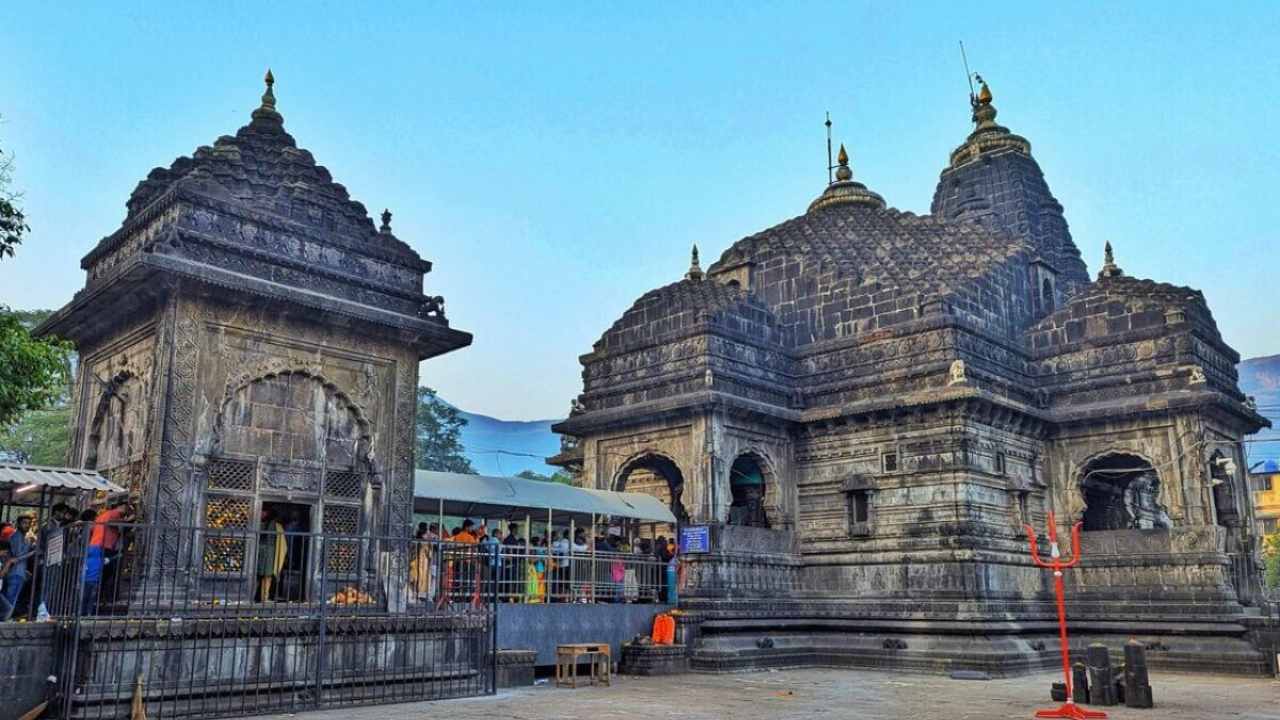
Located at the foothills of the majestic Brahmagiri Hills, near Nashik, the Trimbakeshwar Temple is one of the most revered pilgrimage destinations in India. This ancient temple is dedicated to Lord Shiva and is home to one of the twelve sacred Jyotirlingas. Deeply rooted in mythology, ritual traditions, and sacred geography, Trimbakeshwar holds a unique spiritual position in Shaivism.
Why Trimbakeshwar Jyotirlinga Is Unique
The Trimbakeshwar Jyotirlinga is unlike any other Jyotirlinga in India. The Shiva Lingam here represents the Trimurti—Brahma, Vishnu, and Shiva—symbolized through three distinct faces on the Lingam. This rare form signifies creation, preservation, and destruction, making Trimbakeshwar spiritually profound.
Another major significance of this temple is that it is believed to be the origin of the sacred River Godavari. The river begins its journey from the Brahmagiri hills, adding immense spiritual importance to the region.
Mythological and Spiritual Significance
According to ancient legends, Sage Gautama performed severe penance in this region. Pleased by his devotion, Lord Shiva caused the River Godavari to flow here to purify the land. Shiva then manifested as Trimbakeshwar Jyotirlinga, blessing the sage and sanctifying the area.
Spiritually, Trimbakeshwar is considered one of the most powerful temples for performing remedial rituals such as Narayan Nagbali, Kaal Sarp Shanti, and Pitru Dosha Nivaran. Devotees believe these rituals help remove ancestral debts, planetary afflictions, and karmic obstacles.
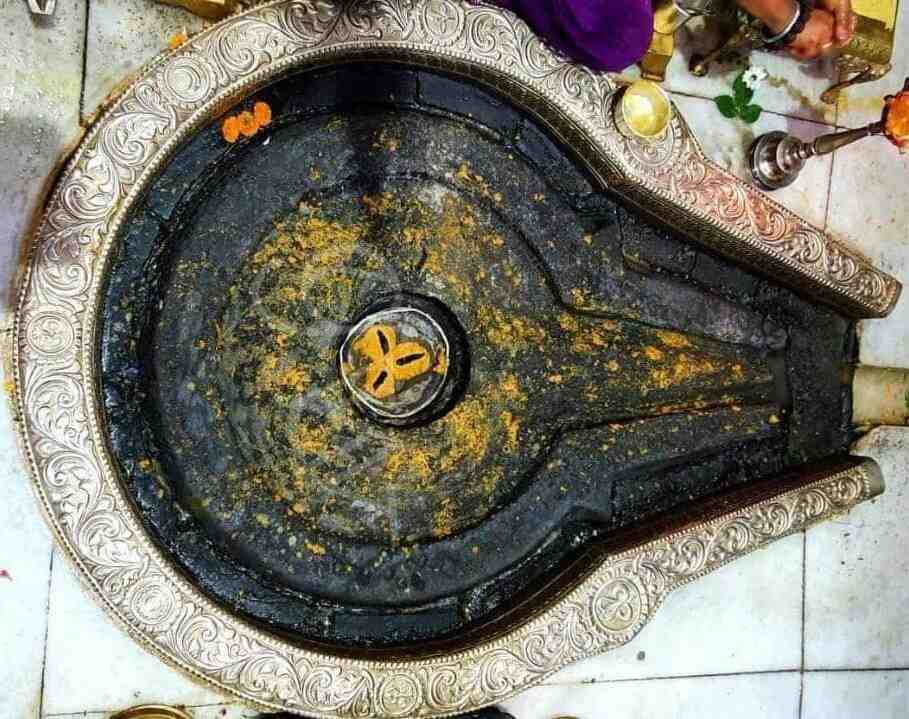
Trimbakeshwar Jyotirlinga – the rare three-faced form of Lord Shiva at Trimbakeshwar Temple
History and Architecture
The present structure of the Trimbakeshwar Temple was built in the 18th century by Peshwa Nana Saheb. Constructed using black basalt stone, the temple follows the traditional Hemadpanthi architectural style, known for its sturdy design and intricate carvings.
The temple complex also includes the sacred Kushavarta Kund, where devotees take a ritual bath before entering the temple, especially when performing ancestral rites.
Temple Timings & Daily Puja Schedule
The Trimbakeshwar Temple follows a structured daily worship schedule. Below are the commonly followed darshan and puja timings:
- 05:30 AM – Temple opens for darshan
- 07:00 AM – 08:30 AM – Morning Puja / Brahma Puja (special worship at the inner shrine)
- 10:45 AM – 12:30 PM – Mid-day Puja / Mahadev Puja
- 01:00 PM – Afternoon special puja on select days (pre-booked rituals)
- 04:30 PM – Shiva Golden Crown / special ritual on selected days
- 07:00 PM – 08:30 PM – Evening Puja / Vishnu Puja and Aarti
- 09:00 PM – Temple closes for the night
Note: Special rituals may not be conducted daily. It is advisable to check availability in advance.
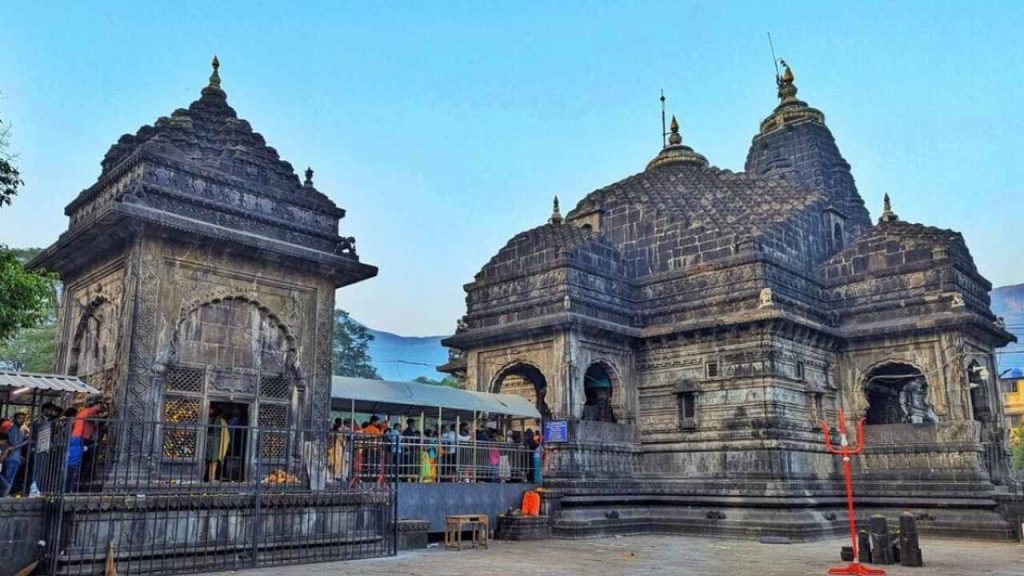
Trimbakeshwar Shiva Temple, Nashik – the sacred Jyotirlinga and birthplace of the River Godavari
How to Reach Trimbakeshwar Temple
By Air
The nearest airport is Ozar Airport (Nashik), about 40 km away. Mumbai International Airport is around 180 km and offers better connectivity. Taxis and buses are available from both locations.
By Train
Nashik Road Railway Station is the nearest major railhead, well connected to Mumbai, Pune, Delhi, and other cities. From the station, taxis and state transport buses regularly operate to Trimbakeshwar.
By Road
Trimbakeshwar is well connected by road to Nashik and Mumbai. Maharashtra State Transport buses, private cabs, and self-drive routes are easily available.
Local Access
Vehicles are restricted near the temple premises. Visitors need to walk a short distance through the town streets to reach the main entrance.
Best Time to Visit
The temple can be visited throughout the year. However, October to March offers pleasant weather. The holy month of Shravan and festivals like Mahashivratri witness heavy crowds and intense devotional energy. Early morning hours are best for peaceful darshan.
Places to Visit Near Trimbakeshwar Temple
After darshan at Trimbakeshwar Temple, you can explore several spiritually and naturally rich places nearby:
- Brahmagiri Hill – The origin point of the Godavari River and a sacred trekking spot.
- Kushavarta Kund – A holy water tank where pilgrims perform ancestral rituals.
- Anjaneri Hills – Believed to be the birthplace of Lord Hanuman, surrounded by scenic landscapes.
- Nashik – Visit Panchavati, Ram Kund, and other sacred sites linked to the Ramayana.
- Sula Vineyards – A popular spot for relaxation and vineyard views, offering a contrast to spiritual travel.
These places can be comfortably covered in 1–2 days and together offer a balanced mix of spirituality, history, and nature.
For More Details: Click Here
FAQs About Trimbakeshwar Temple
1. Why is Trimbakeshwar Jyotirlinga special?
It uniquely represents the Trimurti—Brahma, Vishnu, and Shiva—in one Lingam.
2. What rituals is Trimbakeshwar famous for?
Narayan Nagbali, Kaal Sarp Shanti, and Pitru Dosha rituals.
3. What are the temple timings?
The temple opens at 5:30 AM and closes around 9:00 PM.
4. Is there a dress code?
Yes, modest and traditional attire is mandatory for all devotees.
5. Can women enter the temple?
Women can enter the temple premises, but entry into the inner sanctum is restricted.
Conclusion
The Trimbakeshwar Temple is not just a Jyotirlinga shrine—it is a powerful spiritual center where divine energy, sacred rituals, and ancient traditions come together. As the birthplace of the River Godavari and a sacred seat of Lord Shiva, Trimbakeshwar offers devotees spiritual purification, peace, and transformation.
A pilgrimage to Trimbakeshwar is a journey into faith, devotion, and timeless wisdom.

Leave A Comment