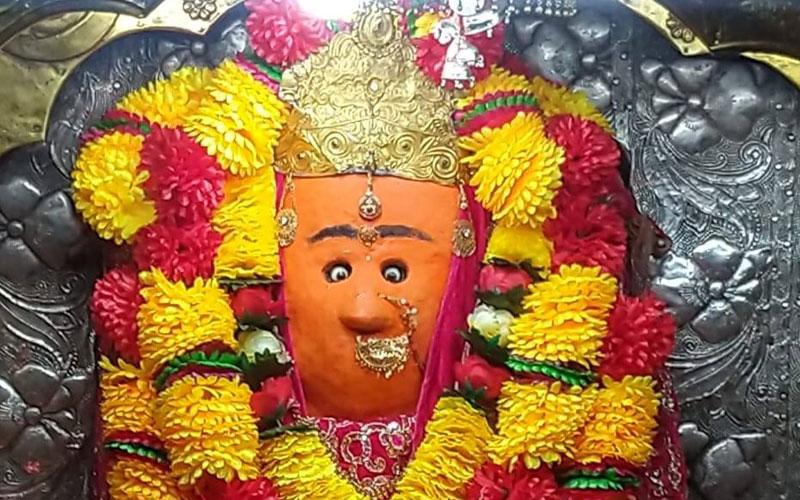
The Fierce Shakti Shrine of Protection, Power, and Liberation
Nestled amid the serene Dhauladhar mountain ranges of Himachal Pradesh, Chamunda Devi Temple stands as a powerful symbol of divine energy and spiritual transformation. Dedicated to Goddess Chamunda—one of the fiercest manifestations of Shakti—the temple attracts devotees, spiritual seekers, and history enthusiasts throughout the year. While the surrounding landscape offers calm and beauty, the deity worshipped here represents strength, destruction of evil, and ultimate liberation.
Spiritual Significance of Chamunda Devi
Goddess Chamunda embodies the raw and transformative energy of the Divine Mother. She is revered as the slayer of the demons Chanda and Munda, from whom she derives her name. Unlike benevolent forms of the Goddess, Chamunda represents the force that annihilates ignorance, ego, fear, and negative energies.
Moreover, devotees believe that worshipping Chamunda Devi grants protection from unseen forces, relief from deep-rooted fears, and liberation from cycles of suffering. As a result, tantrics, yogis, and spiritual aspirants have revered this shrine for centuries.
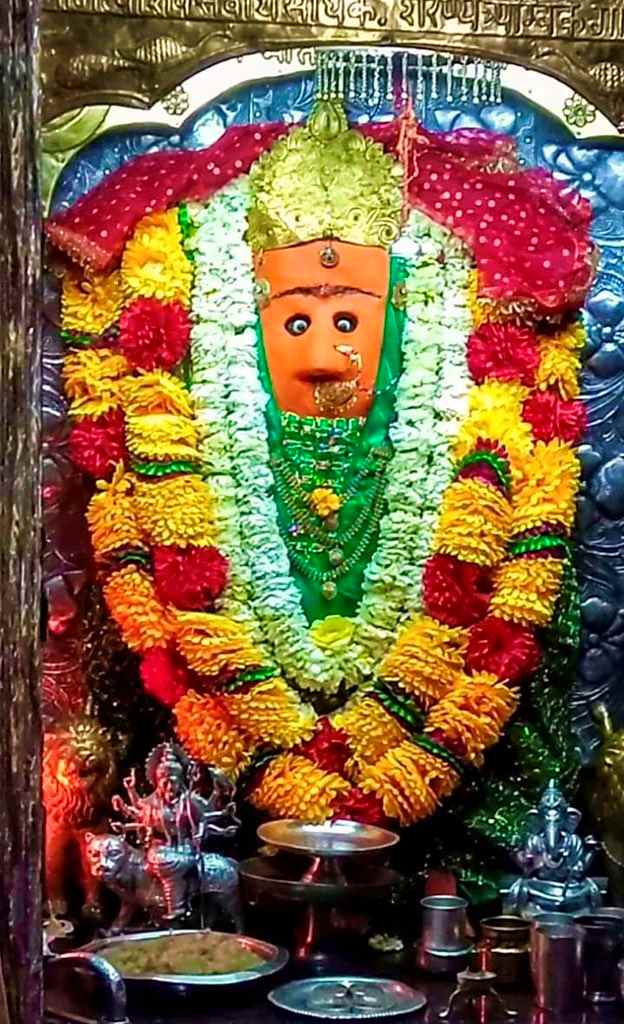
Sacred idol of Maa Chamunda Devi beautifully decorated with garlands at Chamunda Devi Temple, Himachal Pradesh.
Mythological Background
According to Hindu scriptures, the demons Chanda and Munda unleashed terror across the three worlds. When the gods sought help, Goddess Durga created Chamunda from her own fury. With unmatched ferocity, Chamunda destroyed the demons and restored cosmic balance.
Additionally, many legends associate the temple site with ancient cremation grounds (Shmashana), which further amplifies its tantric and spiritual importance. Even today, the aura of the temple reflects this deep mythological legacy.
Historical Overview
The present-day Chamunda Devi Temple was established in 1762 CE by Raja Umed Singh of Chamba. However, the idol of the Goddess is believed to be much older and was originally worshipped at a different location.
Later, the deity was ceremoniously relocated to the banks of the Baner River, where the temple now stands. Over time, the shrine evolved into one of the most prominent Shakti temples in Himachal Pradesh.
Temple Architecture and Setting
Architecturally, the temple follows traditional North Indian temple design, marked by a simple yet spiritually intense sanctum. Inside the garbhagriha, the idol of Chamunda Devi is depicted as skeletal and fearsome, adorned with garlands and ritual ornaments.
Furthermore, the temple complex includes:
- A Shiva temple, emphasizing the inseparable link between Shiva and Shakti
- A Yagna Shala for sacred fire rituals
- Open courtyards offering breathtaking views of the Dhauladhar ranges
Together, these elements create a balanced environment of devotion, nature, and introspection.
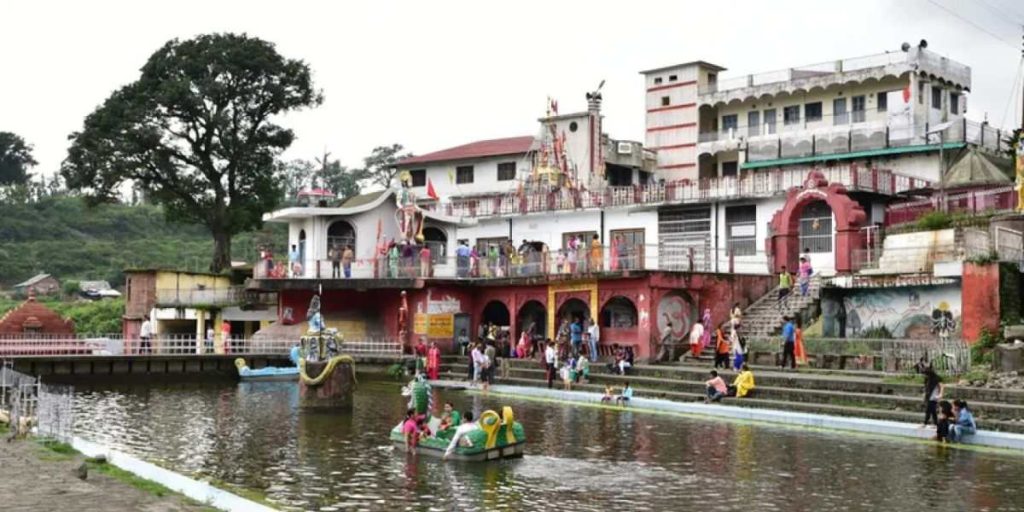
Devotees gathered at the ghat near Chamunda Devi Temple for prayers and spiritual rituals.
Chamunda Devi as a Shakti Peetha
Although Chamunda Devi Temple is not always listed among the classical 51 Shakti Peethas, many traditions consider it a highly potent Shakti Kendra. Tantric practices, ancestral rituals, and Maha Rudra Yajnas performed here hold special spiritual merit.
Additionally, the proximity of Lord Shiva’s presence enhances the temple’s spiritual vibrations, making it a revered destination for both Shaiva and Shakta followers.
Major Festivals and Rituals
Several festivals bring the temple alive with devotion and sacred energy:
Navratri
During Navratri, the temple witnesses thousands of devotees offering prayers, coconuts, red cloth, and lamps to the Goddess.
Durga Ashtami & Kali Puja
These days are especially significant, as Chamunda Devi is worshipped in her fiercest form.
Daily Aarti
Morning and evening aartis resonate with powerful chants, creating a deeply immersive spiritual experience.
Best Time to Visit Chamunda Devi Temple
The ideal time to visit the temple is March to October, when the weather remains pleasant and the surrounding landscape flourishes with greenery. Winters, though quieter, offer a more introspective and peaceful darshan experience.
How to Reach Chamunda Devi Temple
- By Air: Gaggal Airport (Dharamshala) – approx. 25 km
- By Rail: Pathankot Railway Station – approx. 90 km
- By Road: Well-connected by road from Palampur, Dharamshala, and Kangra
Regular buses and taxis make the temple easily accessible.
Why Devotees Visit Chamunda Devi
Devotees visit Chamunda Devi Temple to:
- Seek protection from negative forces
- Overcome fear, illness, and inner conflicts
- Attain spiritual awakening and strength
- Perform ancestral and tantric rituals
As a result, the temple holds a special place among spiritually intense shrines of North India.
Frequently Asked Questions (FAQs)
1. Who is Goddess Chamunda?
Goddess Chamunda is a fierce form of Devi Durga, known for destroying the demons Chanda and Munda and symbolizing ultimate शक्ति (Shakti).
2. Where is Chamunda Devi Temple located?
The temple is located near Palampur in Kangra district, Himachal Pradesh, on the banks of the Baner River.
3. Is Chamunda Devi Temple a Shakti Peetha?
While not universally listed among the 51 Shakti Peethas, it is considered a powerful Shakti shrine with strong tantric significance.
4. What is the best time to visit the temple?
March to October is ideal due to pleasant weather, though Navratri is the most spiritually vibrant period.
5. Are special rituals performed at Chamunda Devi Temple?
Yes, Navratri pujas, yagnas, ancestral rites, and daily aartis are regularly performed.
6. Can families visit Chamunda Devi Temple?
Absolutely. Despite the fierce form of the Goddess, the temple welcomes devotees of all ages.
Final Thoughts
Chamunda Devi Temple is not just a place of worship—it is a center of transformation, courage, and spiritual awakening. Surrounded by majestic mountains and ancient legends, the temple invites devotees to confront fear, embrace strength, and surrender to the supreme power of Shakti.
Whether you visit as a pilgrim, seeker, or traveler, the energy of Chamunda Devi leaves an indelible mark on the soul.

Leave A Comment