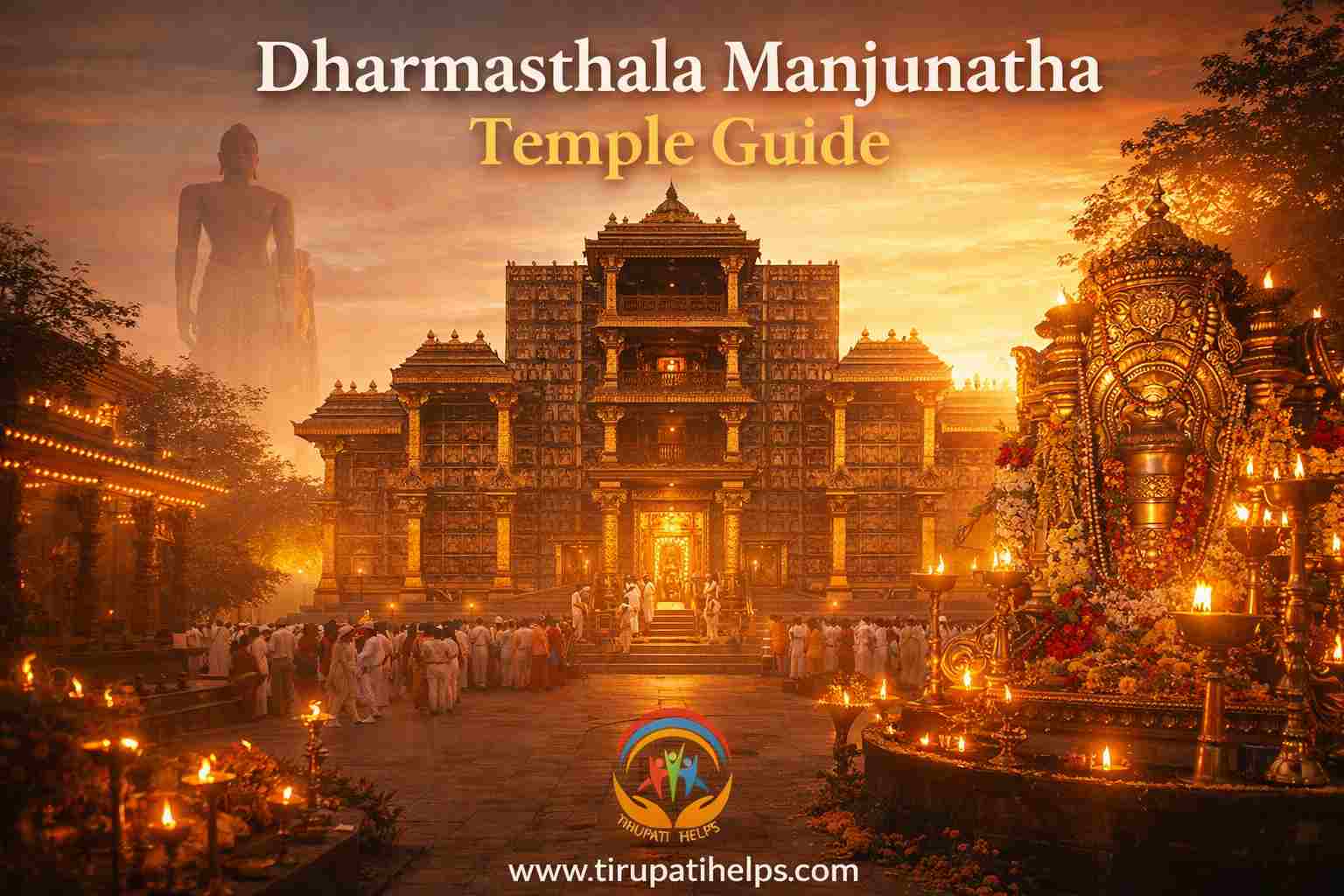
If you are looking for a peaceful yet powerful spiritual destination in South India, Dharmasthala is a must-visit. Located in Karnataka, Dharmasthala Manjunatha Temple is not just a religious site; rather, it is a symbol of harmony, service, and devotion.
Interestingly, this temple welcomes people from all religions. As a result, it stands as a shining example of unity and faith.
Historical Significance
Dharmasthala has a history of over 800 years. Initially, it was a small religious center. However, over time, it developed into one of the most important pilgrimage sites in India.
Moreover, the temple administration is handled by the Heggade family, who follow Jain traditions. At the same time, Hindu priests perform the rituals. Therefore, this unique combination makes Dharmasthala truly special.
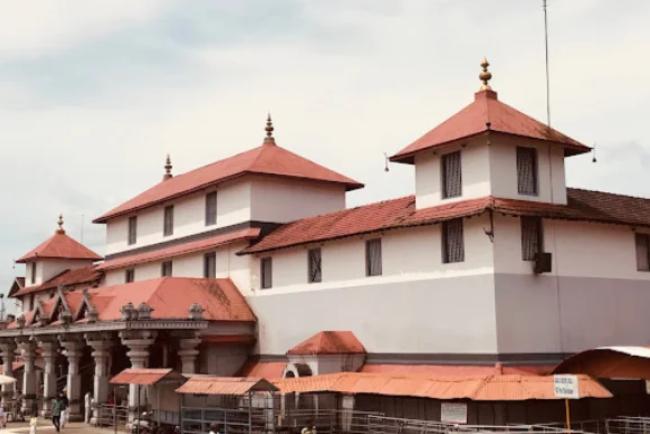
Traditional architecture of Dharmasthala Manjunatha Temple in Karnataka
Architecture & Temple Experience
The temple reflects traditional South Indian architecture. Although it is not overly grand like some temples, its simplicity creates a divine atmosphere.
Inside the temple:
- The Shiva Linga of Lord Manjunatha is worshipped
- The sanctum feels calm and spiritually powerful
- Oil lamps and chants enhance the experience
As you enter, you will immediately feel a sense of calm and devotion.
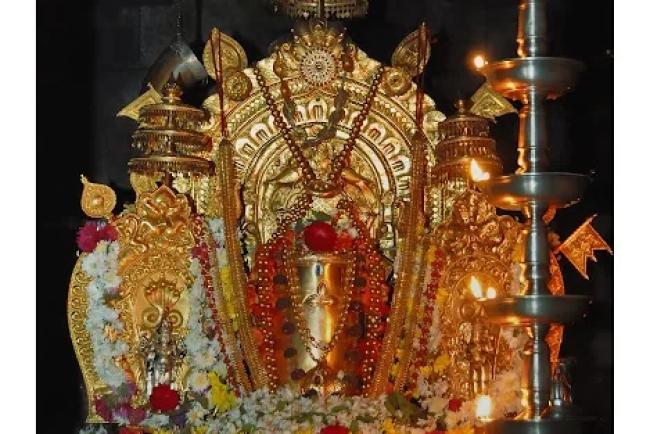
Sacred Shiva Linga of Lord Manjunatha adorned with flowers and lamps
Unique Traditions of Dharmasthala
Annaprasada (Free Meals)
One of the biggest highlights is the free food service. Every day, thousands of devotees are served meals.
Importantly:
- Food is completely free
- No discrimination is practiced
- Everyone sits and eats together
Because of this, Dharmasthala is also known for seva (selfless service).
Dharma & Justice System
Apart from religious activities, Dharmasthala is known for resolving disputes. In fact, many people come here seeking justice and peaceful solutions.
Thus, the temple promotes both spirituality and social responsibility.
Festivals Celebrated
Dharmasthala becomes even more vibrant during festivals.
Major Festivals:
- Laksha Deepotsava – Thousands of lamps light up the temple
- Mahashivaratri – Night-long prayers and devotion
- Rathotsava – Grand chariot procession
During these festivals, the energy and devotion reach another level.
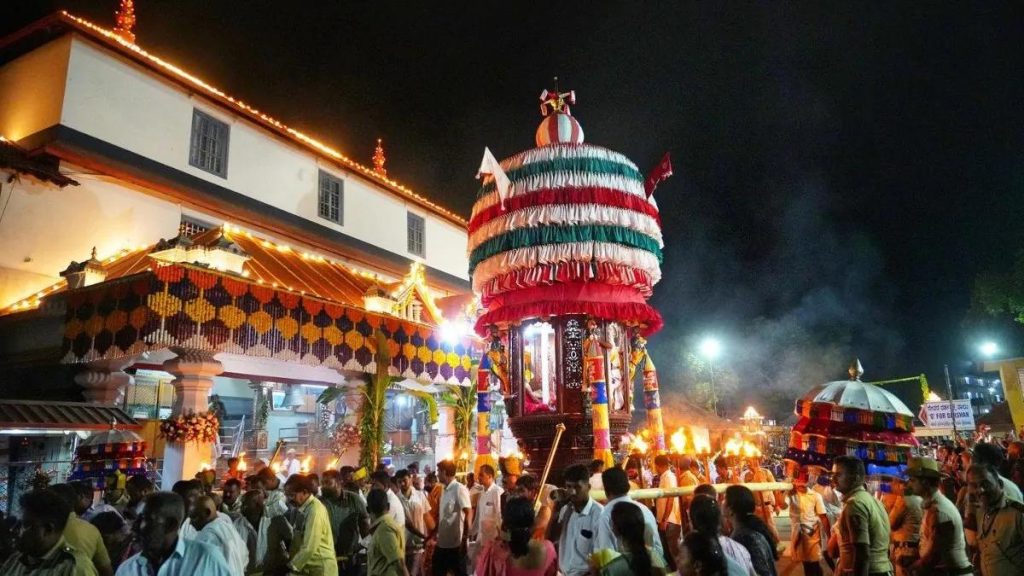
Devotees participating in the grand Rathotsava festival at Dharmasthala
How to Reach Dharmasthala
Reaching Dharmasthala is quite convenient.
By Air
The nearest airport is Mangalore (around 75 km)
By Train
You can reach nearby stations like:
- Mangalore
- Ujire
By Road
Additionally, buses and taxis are easily available from:
- Bangalore
- Mangalore
- Mysore
Therefore, traveling here is smooth and accessible.
Accommodation Options
Fortunately, Dharmasthala offers plenty of stay options.
You can choose from:
- Free temple guest houses
- Budget lodges
- Private hotels
However, during festivals, it is better to book in advance.
Best Time to Visit
Although the temple is open throughout the year, the best time is:
- October to March → Pleasant weather
- Festival periods → More spiritual vibe
On the other hand, monsoon travel may be slightly difficult.
Nearby Attractions
While visiting Dharmasthala, you should also explore nearby places.
For example:
- Bahubali Statue – A massive monolithic statue
- Manjusha Museum – Cultural and historical artifacts
- Netravati River – Peaceful and sacred
Thus, your trip becomes both spiritual and exploratory.
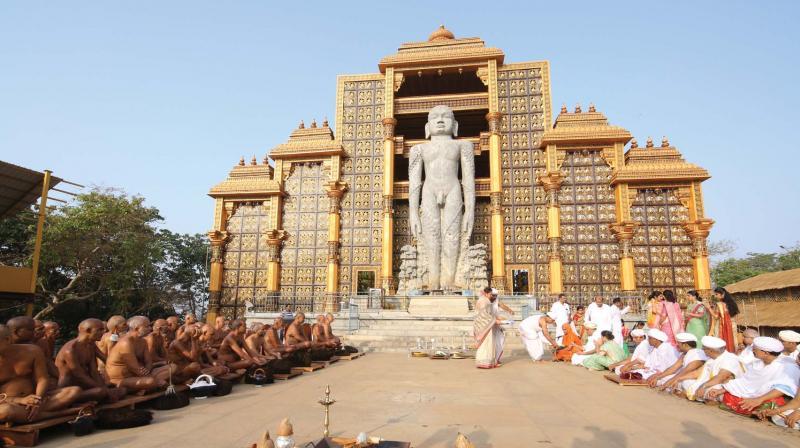
Majestic Bahubali statue at Dharmasthala – a symbol of peace and renunciation
Travel Tips
Before visiting, keep these tips in mind:
- Wear traditional or modest clothing
- Visit early to avoid crowds
- Follow temple rules strictly
- Do not carry cameras inside
By planning properly, your visit will be smooth and fulfilling.
Conclusion
In conclusion, Dharmasthala Manjunatha Temple is more than just a temple. It represents faith, equality, and service.
Whether you are a devotee or a traveler, you will definitely feel a deep connection here. Therefore, visiting Dharmasthala is not just a trip—it is a spiritual experience.
FAQs
1. Why is Dharmasthala famous?
Dharmasthala is famous for Lord Manjunatha, free meals, and religious harmony.
2. Is food really free in Dharmasthala?
Yes, free meals are served daily to all visitors.
3. What is the dress code?
Visitors should wear modest and traditional clothing.
4. How long does darshan take?
Usually, it takes 1–3 hours depending on the crowd.
5. Can we book sevas online?
Yes, sevas can be booked through the official website.
6. Is accommodation available?
Yes, both free and paid accommodations are available.

Leave A Comment