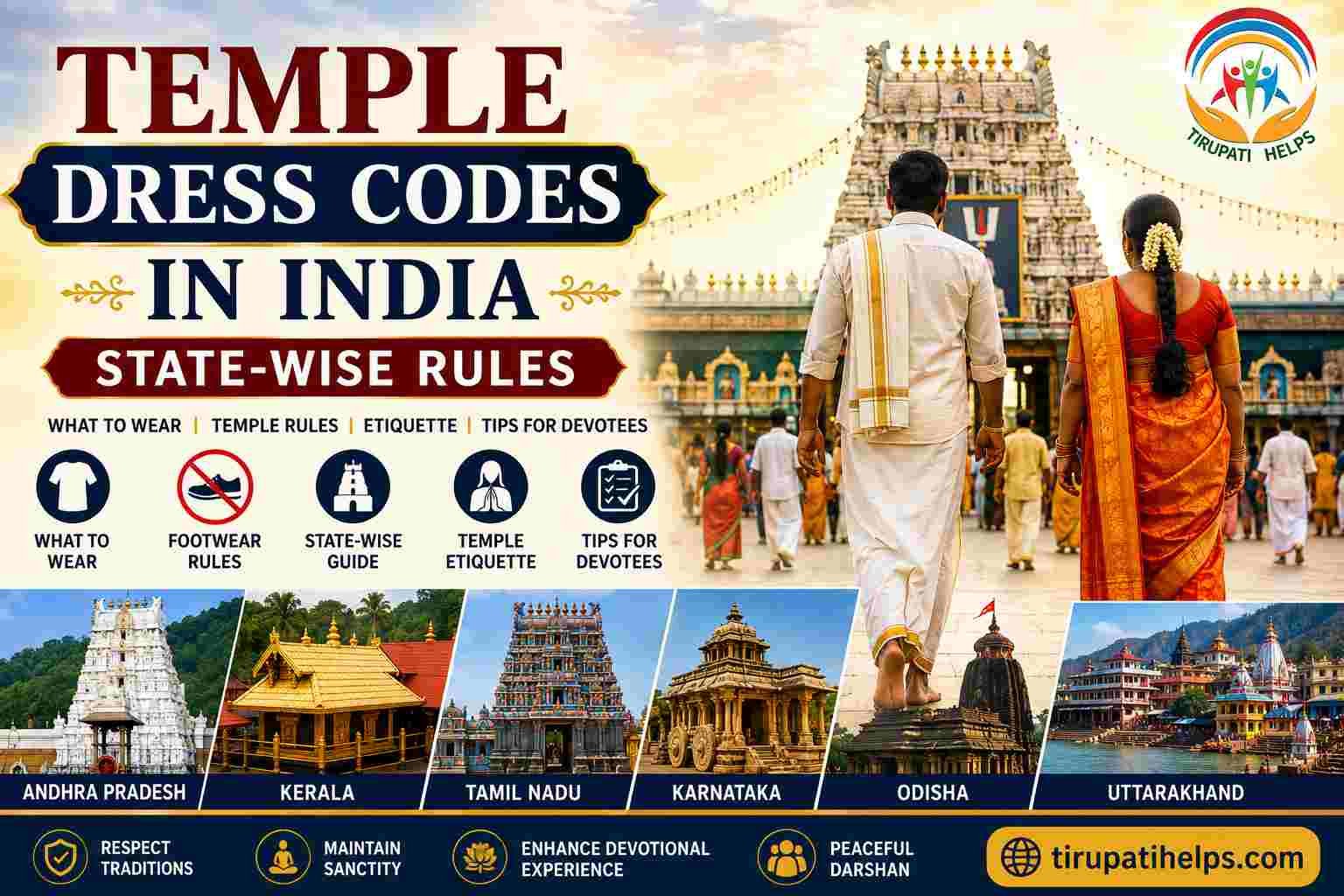
Temple Dress Codes in India – State-wise Rules Every Devotee Should Know
India is home to thousands of ancient temples, each preserving unique traditions and customs that have been followed for centuries. While every temple welcomes devotees with devotion and faith, many temples also enforce specific dress codes to maintain the sanctity of the temple premises.
If you’re planning a pilgrimage or temple tour, understanding the temple dress code in India can save you from inconvenience at the entrance. Some temples allow traditional clothing only, while others simply expect visitors to dress modestly.
In this comprehensive guide, we’ll explain the dress code rules followed by major temples across different Indian states, along with useful tips to help you prepare for a peaceful darshan.
Why Do Indian Temples Have Dress Codes?
Temple dress codes are not meant to discriminate against visitors. Instead, they help preserve the spiritual atmosphere and centuries-old traditions associated with worship.
Most temples encourage devotees to:
- Wear clean and modest clothing
- Avoid revealing outfits
- Respect local customs
- Maintain the sanctity of the temple
- Participate in worship with humility
Traditional Indian attire is generally preferred because it reflects cultural values and respect for the deity.
General Temple Dress Code Guidelines
Although every temple has its own rules, the following guidelines are accepted almost everywhere.
For Men
- Dhoti
- Kurta
- Pajama
- White shirt
- Traditional veshti
- Full-length trousers (in many temples)
Avoid:
- Shorts
- Sleeveless shirts
- Torn jeans
- Gym wear
For Women
- Saree
- Salwar Kameez
- Churidar
- Long Kurti with leggings
- Half Saree
- Traditional ethnic wear
Avoid:
- Short skirts
- Sleeveless tops (where prohibited)
- Transparent clothing
- Ripped jeans
- Very tight outfits
Footwear
Footwear is not allowed inside Hindu temples.
Most temples provide footwear counters where visitors can safely deposit their shoes before entering.
State-wise Temple Dress Code Rules
Andhra Pradesh
Tirumala Sri Venkateswara Temple
One of India’s most visited temples follows a traditional dress code.
Men
- Dhoti
- Kurta
- Pyjama
- Shirt with dhoti
Women
- Saree
- Half Saree
- Churidar with Dupatta
- Salwar Kameez
Shorts, mini skirts, sleeveless dresses, and western party wear are discouraged.
Srikalahasti Temple
Traditional attire is preferred.
Visitors wearing decent Indian clothing usually have no issues entering the temple.
Telangana
Yadadri Lakshmi Narasimha Swamy Temple
Recommended attire includes:
Men
- Dhoti
- Kurta
- Full pants
Women
- Saree
- Salwar Suit
- Churidar
Revealing outfits should be avoided.
Tamil Nadu
Tamil Nadu houses some of India’s oldest temples, where traditional attire is highly respected.
Meenakshi Amman Temple
Traditional clothing is encouraged.
Visitors should avoid:
- Shorts
- Mini skirts
- Sleeveless clothing
Ramanathaswamy Temple, Rameswaram
Simple traditional Indian wear is recommended.
Many devotees also wear clothes suitable for performing holy baths before entering the temple.
Kerala
Kerala temples generally follow the strictest dress codes in India.
Guruvayur Temple
Men:
- Mundu (Dhoti)
- No shirts inside certain areas
Women:
- Saree
- Salwar Kameez
- Set Mundu
Jeans and western clothing may not be permitted in some sections.
Sree Padmanabhaswamy Temple
Strict traditional dress code.
Men:
- Dhoti only
- Shirts must be removed before entering the sanctum
Women:
- Saree
- Traditional Kerala dress
- Long skirts with appropriate covering
Dhoti rental facilities are available near the temple.
Sabarimala Temple
Pilgrims usually wear:
- Black, blue or saffron traditional clothing
- Dhoti
- Towel around shoulders
Most devotees follow the 41-day vratham before visiting.
Karnataka
Kukke Subramanya Temple
Traditional attire is recommended.
Men:
- Dhoti
- Shirt
Women:
- Saree
- Churidar
- Salwar Suit
Dharmasthala Manjunatha Temple
Traditional Indian clothing is preferred.
Many pilgrims wear white dhotis and sarees during special poojas.
Odisha
Jagannath Temple, Puri
Visitors are expected to wear respectful traditional clothing.
Avoid:
- Shorts
- Sleeveless clothing
- Beachwear
Since Puri is a coastal town, pilgrims should carry separate modest clothing if visiting after the beach.
Maharashtra
Siddhivinayak Temple
No strict traditional dress code exists.
However, visitors should wear decent and modest clothing suitable for worship.
Shirdi Sai Baba Temple
Traditional clothing is appreciated but not mandatory.
Clean, respectful attire is sufficient.
Uttar Pradesh
Kashi Vishwanath Temple
Traditional attire is preferred.
Devotees should avoid:
- Shorts
- Sleeveless tops
- Torn jeans
Ayodhya Ram Mandir
Visitors are encouraged to wear modest Indian clothing.
The temple administration advises devotees to avoid revealing western outfits.
Uttarakhand
Kedarnath Temple
Due to the cold climate, pilgrims should wear:
- Warm jackets
- Full-length trousers
- Traditional clothing if possible
Comfort and modesty are both important.
Badrinath Temple
Woollen clothing is essential because of low temperatures.
Traditional Indian attire remains the preferred choice for worship.
Tips for Foreign Tourists Visiting Indian Temples
If you’re visiting India from abroad, you don’t necessarily need expensive traditional clothing.
Simple, modest outfits are usually acceptable.
Good choices include:
- Full-length trousers
- Long skirts
- Kurtas
- Scarves
- Covered shoulders
- Closed or modest footwear outside temple premises
Many famous temples also rent dhotis and shawls near the entrance.
Things You Should Never Wear Inside a Temple
Avoid wearing:
- Shorts
- Mini skirts
- Sleeveless tops (where prohibited)
- Swimwear
- Ripped jeans
- Transparent clothing
- Offensive printed T-shirts
- Hats or caps inside the sanctum (where prohibited)
Always follow instructions displayed by the temple authorities.
Additional Temple Etiquette Tips
Apart from following the dress code, remember these important etiquette rules:
- Remove footwear before entering.
- Switch mobile phones to silent mode.
- Do not touch idols unless permitted.
- Respect photography restrictions.
- Stand patiently in queues.
- Avoid loud conversations.
- Follow instructions from temple staff.
- Keep the temple premises clean.
Final Thoughts
Temple dress codes in India are rooted in tradition, respect, and spirituality rather than fashion. While rules vary from one temple to another, dressing modestly and respectfully ensures a smooth and meaningful darshan experience.
Before visiting any famous temple, it is always a good idea to check the latest guidelines issued by the temple administration, especially during festivals and special occasions. By respecting local customs and traditions, devotees can enjoy a peaceful pilgrimage while preserving the sacred atmosphere of these revered places.
Frequently Asked Questions (FAQs)
1. Is there a dress code for all temples in India?
No. Every temple has its own guidelines. However, modest and traditional clothing is generally preferred across most temples.
2. Can I wear jeans to Indian temples?
Some temples allow plain full-length jeans, while others—especially in Kerala—may require traditional attire such as a dhoti or saree.
3. Which Indian temples have the strictest dress codes?
Temples like Tirumala, Guruvayur, Sree Padmanabhaswamy, Sabarimala, and certain temples in Kerala have stricter dress regulations.
4. Are foreigners allowed inside Indian temples?
Yes, many temples welcome foreign visitors, provided they follow the temple’s dress code and etiquette. However, a few temples may restrict entry based on religious customs.
5. Can I wear leggings inside a temple?
Yes, leggings are generally acceptable when paired with a long kurti or traditional top that provides appropriate coverage.

Leave A Comment