
Konark Sun Temple is one of India’s most famous historical monuments and an architectural masterpiece located in Odisha. Built in the 13th century, this UNESCO World Heritage Site is dedicated to Surya, the Sun God. Known for its grand stone carvings, giant chariot-shaped structure, and rich cultural heritage, the temple attracts tourists, photographers, history lovers, and devotees from around the world.
Popularly called the “Black Pagoda,” this temple stands as a symbol of ancient Indian craftsmanship and engineering brilliance.
History of Konark Sun Temple
This Temple was built around 1250 CE by King Narasimhadeva I of the Eastern Ganga Dynasty. The temple was constructed to celebrate military victories and honor the Sun God.
The name “Konark” comes from two Sanskrit words:
- Kona meaning corner
- Arka meaning sun
The temple was designed as a massive chariot of the Sun God moving across the sky. Historical records suggest that the temple once had a huge magnetic structure at the top, which created many legends among sailors traveling through the Bay of Bengal.
Over time, the temple suffered damage due to invasions, natural disasters, and weather conditions. Although the main sanctum collapsed centuries ago, much of the temple complex still survives and continues to amaze visitors.
In 1984, UNESCO declared Konark Sun Temple a World Heritage Site because of its cultural and architectural importance.
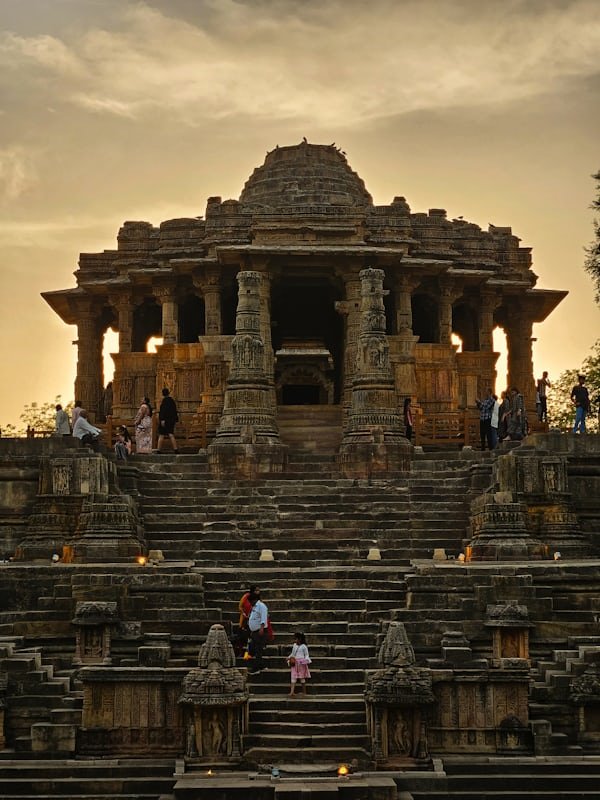
Architecture of Konark Sun Temple
The architecture of this temple is considered one of the finest examples of Kalinga architecture in India.
Chariot-Shaped Design
The temple is designed as a gigantic stone chariot with:
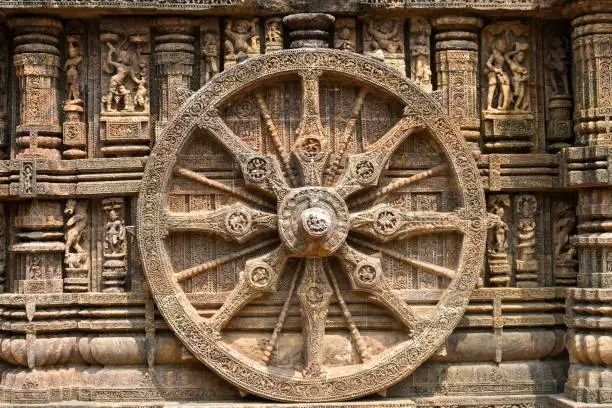
- 24 beautifully carved wheels
- Seven stone horses
- Massive stone platforms and pillars
The seven horses symbolize the seven days of the week, while the 24 wheels represent the 24 hours of the day.
The wheels are one of the temple’s biggest attractions. These wheels also function as sundials and can accurately indicate time based on the position of sunlight.
Beautiful Stone Carvings
The walls of the temple are filled with detailed sculptures showing:
- Dancers and musicians
- Animals and birds
- Royal life scenes
- Mythological stories
- Spiritual symbols
The carvings display the extraordinary skill of ancient Indian artisans. Every section of the temple contains intricate artistic details that reflect Odisha’s rich cultural traditions.
The temple also includes symbolic sculptures representing human emotions, daily life, and spiritual beliefs.
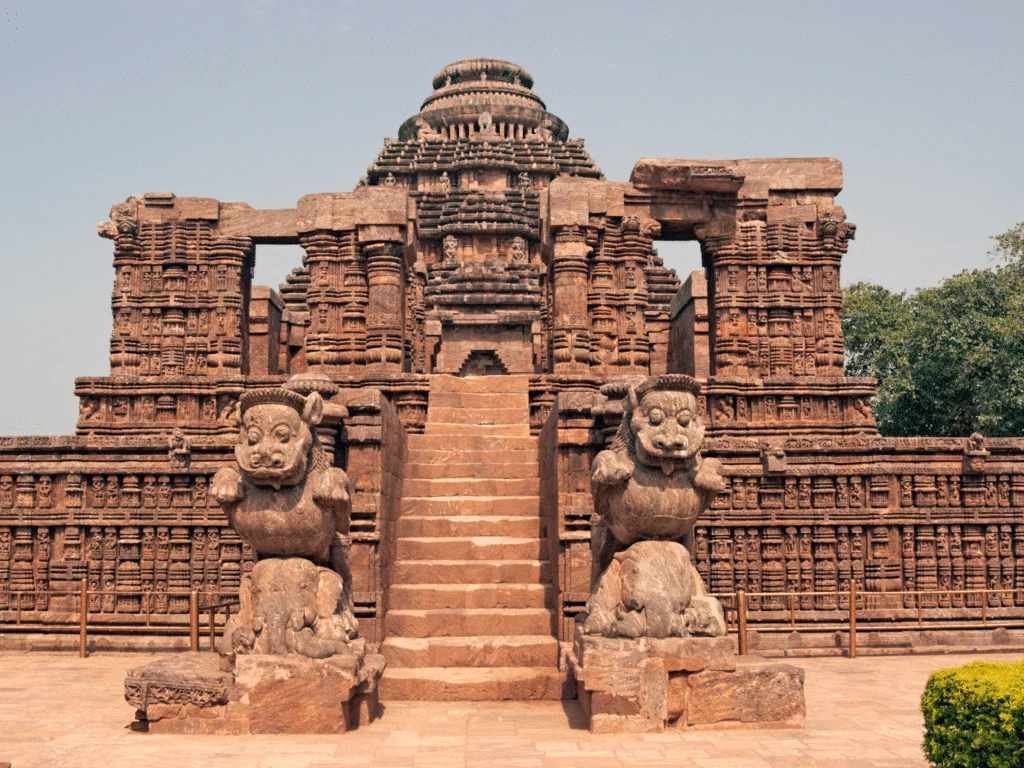
Main Attractions in the Temple Complex
Natya Mandap
The Natya Mandap or dance hall was used for classical dance performances dedicated to the Sun God. It remains one of the most photographed sections of the complex.
Jagamohana
This assembly hall is the best-preserved structure of the temple. Its massive pyramid-shaped roof and carved walls attract visitors from around the world.
Konark Museum
The ASI museum near the temple displays ancient sculptures, stone carvings, and archaeological remains discovered around the temple site.
Chandrabhaga Beach
Located close to Konark, Chandrabhaga Beach is famous for its peaceful atmosphere and beautiful sunrise views.
Religious and Cultural Importance
The temple is dedicated to Surya, the Sun God, who was worshipped widely in ancient India. People believed Sun worship could bring health, prosperity, and spiritual strength.
Konark is also famous for the annual Konark Dance Festival, where classical dancers from across India perform against the backdrop of the illuminated temple.
Thousands of pilgrims and tourists visit the temple during festivals and special occasions every year.
Best Time to Visit Konark Sun Temple
The best time to visit this temple is between October and February when the weather is pleasant.
Ideal Visiting Hours
- Early morning for sunrise photography
- Evening for cooler temperatures and sightseeing
Summer months can be very hot and humid, so winter is recommended for comfortable travel.
Konark Sun Temple Timings
- Opening Time: 6:00 AM
- Closing Time: 8:00 PM
Visitors usually spend around 2–3 hours exploring the temple complex.
Entry Fee
Indian Visitors
- ₹40 per person
Foreign Tourists
- ₹600 per person
Children below 15 years can enter free of cost.
How to Reach Konark Sun Temple
By Air
The nearest airport is Biju Patnaik International Airport located about 65 km away.
By Train
The nearest railway station is in Puri, around 35 km from Konark.
By Road
Konark is well connected by road to Bhubaneswar, Puri, and Cuttack. Buses and taxis are easily available.
Travel Tips for Visitors
- Wear comfortable footwear for walking.
- Carry water bottles and sunscreen.
- Visit early morning to avoid crowds.
- Hire a local guide for detailed historical information.
- Keep cameras charged for photography.
Nearby Places to Visit
You can also explore nearby attractions such as:
- Jagannath Temple
- Lingaraja Temple
- Dhauli Shanti Stupa
FAQs About Konark Sun Temple
Why is Konark Sun Temple famous?
This temple is famous for its chariot-shaped architecture, detailed stone carvings, and UNESCO World Heritage status.
Who built Konark Sun Temple?
The temple was built by King Narasimhadeva I of the Eastern Ganga Dynasty.
Why is it called the Black Pagoda?
European sailors called it the Black Pagoda because of its dark appearance from the sea.
What is special about the temple wheels?
The 24 stone wheels act as sundials and symbolize the 24 hours of the day.
Is photography allowed inside the temple?
Yes, photography is allowed for visitors.
What is the best time to visit Konark?
October to February is considered the best season to visit.
Conclusion
The Konark Sun Temple is a timeless treasure of Indian history, culture, and architecture. Its magnificent stone carvings, unique chariot design, and spiritual importance make it one of the must-visit destinations in Odisha.
Whether you are a history enthusiast, traveler, photographer, or spiritual seeker, Konark offers a memorable experience filled with beauty and heritage.

Leave A Comment