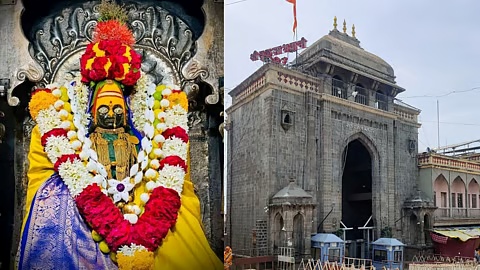
The Tulja Bhavani Temple in Tuljapur, Maharashtra, is one of the most sacred Shakti Peethas in India. Dedicated to Goddess Bhavani, a fierce and compassionate form of Goddess Durga, this temple attracts millions of devotees every year. Revered as the Kuldevi (family deity) of the legendary Maratha ruler Chhatrapati Shivaji Maharaj, the temple holds immense spiritual and historical significance.
Historical Significance of Tulja Bhavani Temple
Tulja Bhavani Temple is believed to have been built in the 12th century during the reign of the Yadava dynasty. However, references to the deity are found in ancient Puranic texts, suggesting the shrine’s existence long before the medieval period.
According to legend:
- Goddess Bhavani manifested to destroy the demon Matanga.
- She is considered an incarnation of Goddess Durga who protects her devotees from evil.
- The temple is one of the 51 Shakti Peethas, where it is believed that a part of Goddess Sati fell.
The temple gained prominence during the Maratha Empire. Chhatrapati Shivaji Maharaj was a devoted follower of Tulja Bhavani and is believed to have received a divine sword (Bhavani Talwar) from the goddess.
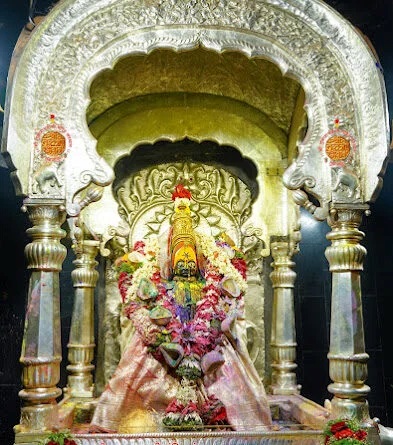
Divine darshan of Goddess Tulja Bhavani adorned with vibrant garlands and traditional ornaments.
Architecture of Tulja Bhavani Temple
The temple architecture reflects the Hemadpanthi style, characterized by stone masonry without mortar.
Key Architectural Highlights:
- Massive stone gateway known as “Mahadwar”
- Sacred water tanks – Gomukh Tirth and Kallol Tirth
- Garbhagriha (sanctum sanctorum) housing the idol
- Intricate carvings on pillars and walls
The idol of Goddess Bhavani is carved from black stone and stands about 3 feet tall. The deity is depicted with eight arms holding various weapons, symbolizing protection and power.
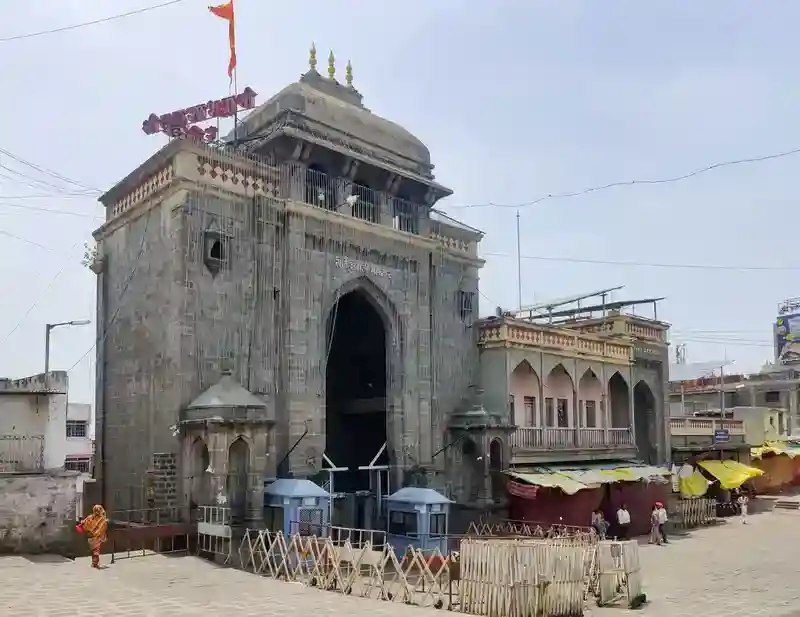
Grand stone entrance of Tulja Bhavani Temple, one of Maharashtra’s revered Shakti Peethas.
Spiritual Importance & Shakti Peeth Status
Tulja Bhavani Temple is counted among the sacred Shakti Peethas of India. Devotees believe:
- The goddess fulfills wishes related to health, success, and protection.
- She blesses warriors and leaders with courage and wisdom.
- Families worship her as their ancestral deity.
The temple is especially significant for devotees from Maharashtra and Karnataka.
Major Festivals Celebrated
1. Navratri Festival
Navratri is the grandest celebration at Tulja Bhavani Temple. Thousands of devotees gather for special rituals, decorations, and cultural programs.
2. Dussehra
Dussehra marks the victory of good over evil and holds special importance because of the temple’s connection with Shivaji Maharaj.
3. Chaitra Navratri
Another important festival celebrated with equal devotion and grandeur.
During festivals, the temple remains open for extended hours to accommodate the rush of pilgrims.
Daily Pooja & Rituals
The temple follows a strict daily ritual schedule:
- Kakad Aarti (Early Morning Aarti)
- Abhishekam
- Alankar Pooja
- Madhyana Aarti
- Shej Aarti (Night Aarti)
Special pujas can be booked by devotees for personal prayers and family rituals.
Darshan Timings & Entry Details
- Opening Time: Around 4:00 AM
- Closing Time: Around 9:30–10:00 PM
- Timings may vary during festivals.
There are separate queues for:
- General Darshan
- Special Darshan
- Senior Citizens
It is advisable to visit early morning to avoid long waiting times.
How to Reach Tulja Bhavani Temple
By Air
Nearest Airport: Solapur Airport (limited connectivity)
Major Airport: Pune International Airport
By Train
Nearest Railway Station: Solapur Railway Station
By Road
Tuljapur is well-connected by road from:
- Solapur (approx. 45 km)
- Pune (approx. 300 km)
- Hyderabad (approx. 300 km)
Regular buses and taxis are available.
Best Time to Visit
- October to March – Pleasant weather
- Navratri Season – For spiritual grandeur (expect heavy crowd)
Avoid peak summer months due to high temperatures.
Travel Tips for Devotees
- Wear modest and traditional attire.
- Keep footwear outside temple premises.
- Follow temple queue system.
- Book accommodation in advance during festivals.
- Carry water and essentials if visiting during peak season.
Frequently Asked Questions (FAQs)
1. Is Tulja Bhavani Temple a Shakti Peeth?
Yes, it is considered one of the sacred Shakti Peethas where a part of Goddess Sati is believed to have fallen.
2. Why is Tulja Bhavani famous?
The temple is famous for being the Kuldevi of Chhatrapati Shivaji Maharaj and for its powerful Shakti Peeth status.
3. What is the best time for darshan?
Early morning during Kakad Aarti is ideal for peaceful darshan.
4. Are special darshan tickets available?
Yes, special entry options are usually available, especially during peak seasons.
5. How long does darshan take?
On normal days, it may take 1–2 hours. During festivals, waiting time can extend to several hours.
6. Is photography allowed inside the temple?
Photography is generally prohibited inside the sanctum area.
7. Are accommodations available near the temple?
Yes, multiple lodges, dharmashalas, and hotels are available near the temple premises.
Conclusion
Tulja Bhavani Temple is not just a religious site but a symbol of strength, devotion, and Maharashtra’s rich spiritual heritage. Whether you seek blessings, historical insight, or cultural experience, a visit to this divine shrine offers a deeply transformative journey.
For devotees and travelers alike, Tuljapur remains a beacon of faith where Goddess Bhavani continues to inspire courage, protection, and unwavering devotion.
Leave A Comment