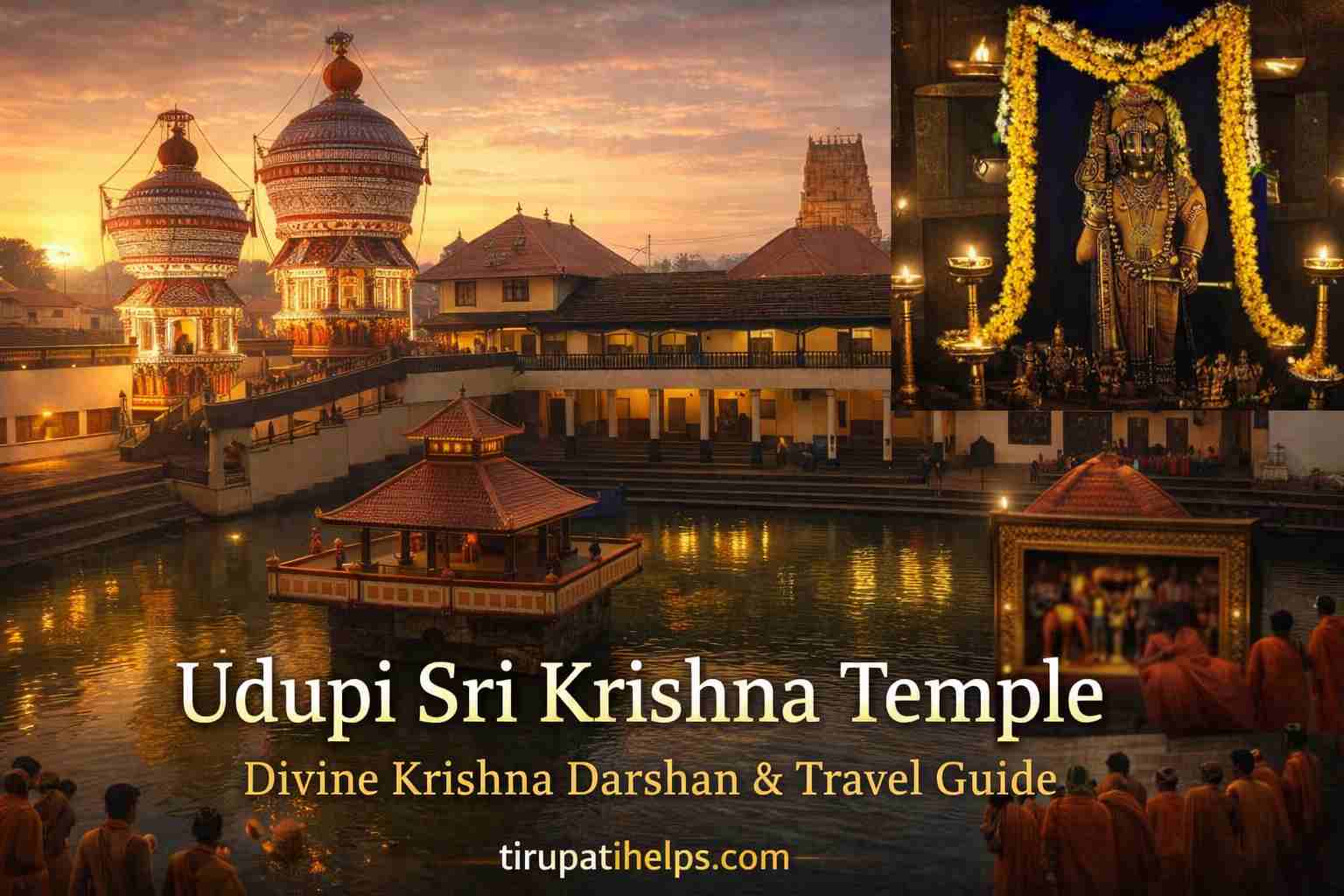
Nestled in the serene coastal town of Udupi, the Udupi Sri Krishna Temple is one of the most revered pilgrimage sites in South India. Dedicated to Lord Krishna, this temple is not just a spiritual destination but a symbol of devotion, tradition, and cultural richness.
What makes this temple unique is its deep-rooted connection to the Dvaita philosophy, its centuries-old rituals, and the famous tradition of viewing the deity through a small window called Kanakana Kindi. Whether you’re a devotee, traveler, or culture enthusiast, visiting this sacred temple offers a deeply enriching experience.
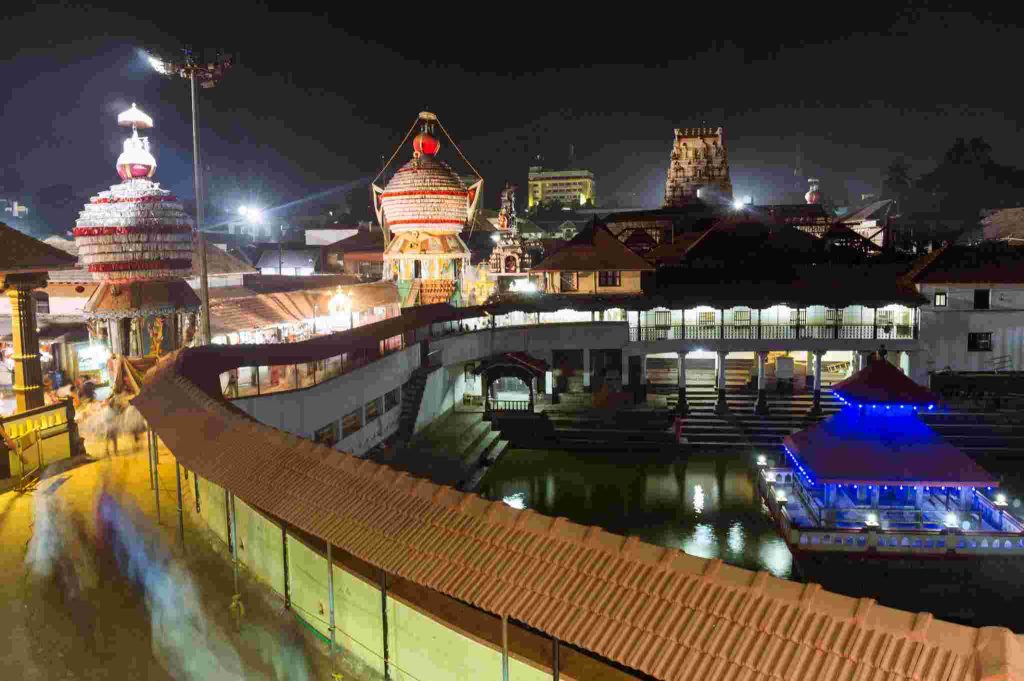
Udupi Krishna Temple glowing beautifully during nighttime
History & Significance
The temple was established in the 13th century by the great saint and philosopher Madhvacharya, the founder of the Dvaita Vedanta school of philosophy.
According to legend, the idol of Lord Krishna was discovered by Madhvacharya inside a lump of gopichandana (sacred clay) from a shipwreck near the coast. He installed the idol in Udupi, and since then, it has become a major center of Krishna worship.
The temple is also closely associated with Kanakadasa, a devotee who was not allowed to enter the temple due to social barriers. Miraculously, it is believed that the idol of Krishna turned to face him through a small window — now known as Kanakana Kindi, symbolizing equality and devotion beyond caste.
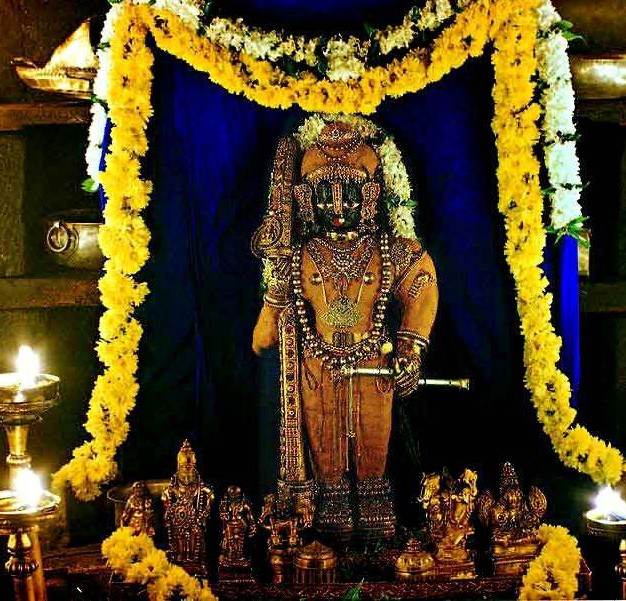
Divine idol of Lord Krishna adorned with flowers and ornaments at Udupi Temple
Unique Features of Udupi Krishna Temple
Unlike most temples, devotees do not see the idol directly from the front. Instead, darshan is offered through a small silver-plated window with nine holes—a truly unique spiritual experience.
Ashta Mathas – The Eight Monasteries
The temple is managed by eight monasteries called the Ashta Mathas, established by Madhvacharya’s disciples. These mathas take turns (every two years) to manage the temple rituals in a system known as Paryaya.
This rotational system ensures that traditions are preserved with discipline and devotion.
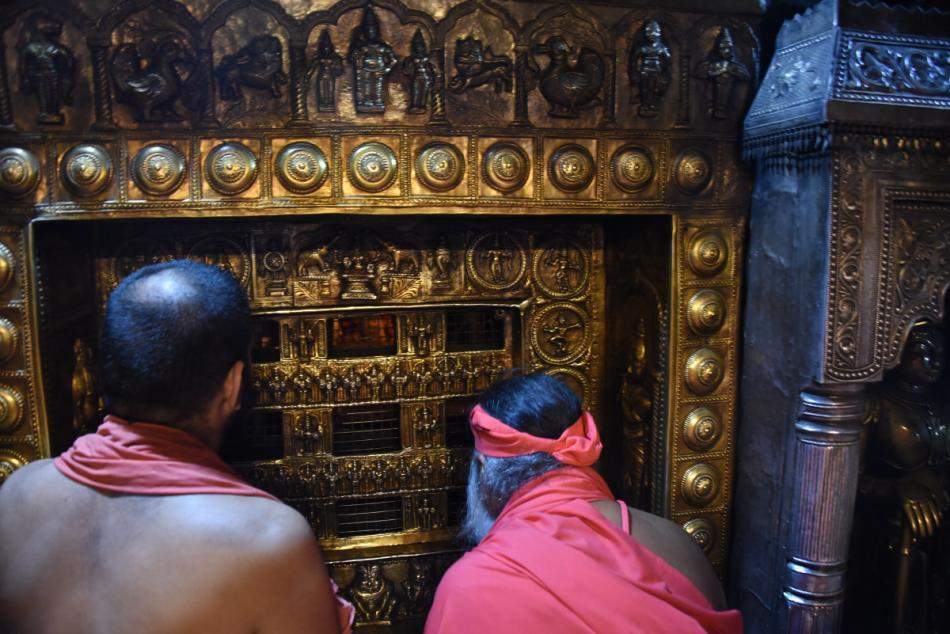
Devotees seeking blessings through the divine Kanakana Kindi at Udupi
Free Prasadam (Anna Dana)
One of the most heartwarming aspects of the temple is the free meal service (Anna Dana) provided to thousands of devotees daily. The food is simple, sattvic, and served with devotion—making it a spiritual experience in itself.
Festivals Celebrated
The temple comes alive during festivals, attracting devotees from across the country:
- Krishna Janmashtami – Celebrates the birth of Lord Krishna with grand rituals and cultural programs
- Makara Sankranti – Marked with special poojas and festivities
- Rathotsava (Chariot Festival) – A vibrant procession with decorated chariots
- Paryaya Festival – A grand event held once every two years when temple management is handed over to another matha
Each festival reflects the temple’s deep cultural roots and devotion.
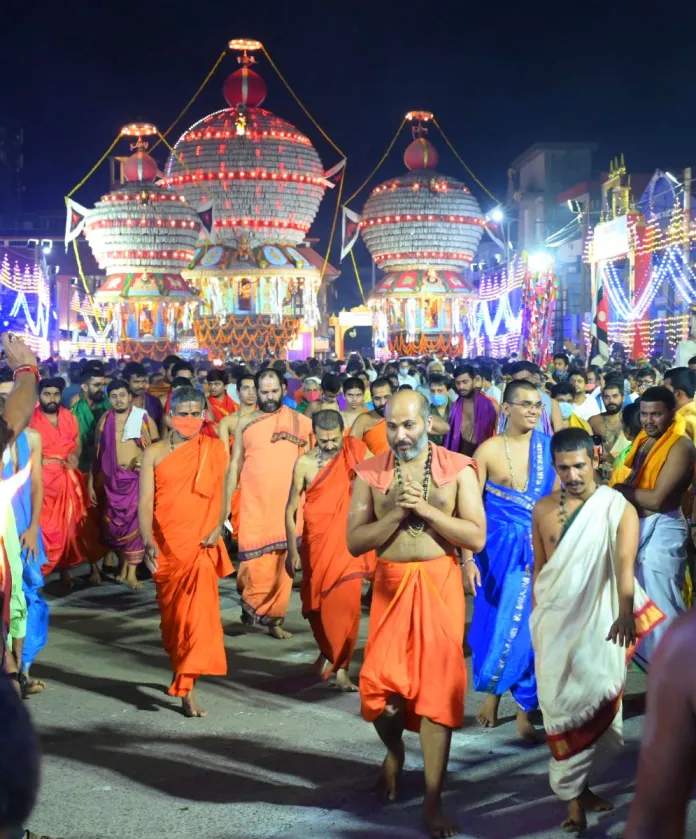
Grand Paryaya festival procession at Udupi Krishna Temple
Temple Timings & Darshan Details
- Morning: 4:00 AM – 10:00 AM
- Evening: 5:00 PM – 9:00 PM
Darshan timings may vary during festivals and special occasions, so it’s advisable to check locally before visiting.
How to Reach Udupi Sri Krishna Temple
By Train
Udupi has its own railway station connected to major cities like Mangalore, Bangalore, and Mumbai.
By Air
The nearest airport is Mangalore International Airport, located about 60 km away.
By Road
Udupi is well-connected by road, with regular buses from cities like Bangalore and Mangalore.
Where to Stay
Udupi offers a range of accommodations from budget lodges to comfortable hotels. Many devotees prefer staying in guesthouses run by the temple or nearby mathas for a more spiritual ambiance.
What to Eat in Udupi
Udupi is famous worldwide for its vegetarian cuisine. Don’t miss trying:
- Udupi Sambar
- Masala Dosa
- Temple-style meals (prasadam)
- Filter Coffee
The food here reflects simplicity, purity, and tradition.
Nearby Attractions
While visiting the temple, explore nearby attractions:
- Malpe Beach – A serene beach perfect for sunsets
- St. Mary’s Island – Famous for its unique basalt rock formations
- Kaup Beach & Lighthouse – A scenic coastal spot
- Manipal – A vibrant university town nearby
Travel Tips for Devotees
- Dress modestly as per temple norms
- Visit early morning to avoid crowds
- Maintain silence and respect temple traditions
- Try the free prasadam meal
- Avoid carrying mobile phones inside (restrictions may apply)
Why You Should Visit Udupi Sri Krishna Temple
The Udupi Sri Krishna Temple is more than just a place of worship—it is a spiritual journey that connects you with devotion, history, and culture. From the unique darshan through Kanakana Kindi to the warmth of free meals served with love, every moment here feels divine.
Whether you are seeking peace, blessings, or a deeper understanding of Indian traditions, this temple offers an unforgettable experience.
FAQs About Udupi Sri Krishna Temple
1. Why is Udupi Krishna Temple famous?
The temple is famous for its unique Kanakana Kindi darshan, its association with Madhvacharya, and its rich spiritual traditions.
2. Can we see the idol directly?
No, devotees view the idol through a window called Kanakana Kindi.
3. Is free food available in the temple?
Yes, the temple provides free meals (Anna Dana) to all devotees daily.
4. What is the best time to visit?
The best time is between October and March when the weather is pleasant.
5. Are non-Hindus allowed inside?
Non-Hindus may not be allowed inside the sanctum, but they can view from outside areas.
6. What is the Paryaya festival?
It is a biennial festival where temple management rotates among the Ashta Mathas.
7. Is photography allowed inside the temple?
Photography is generally restricted inside the temple premises.
Leave A Comment