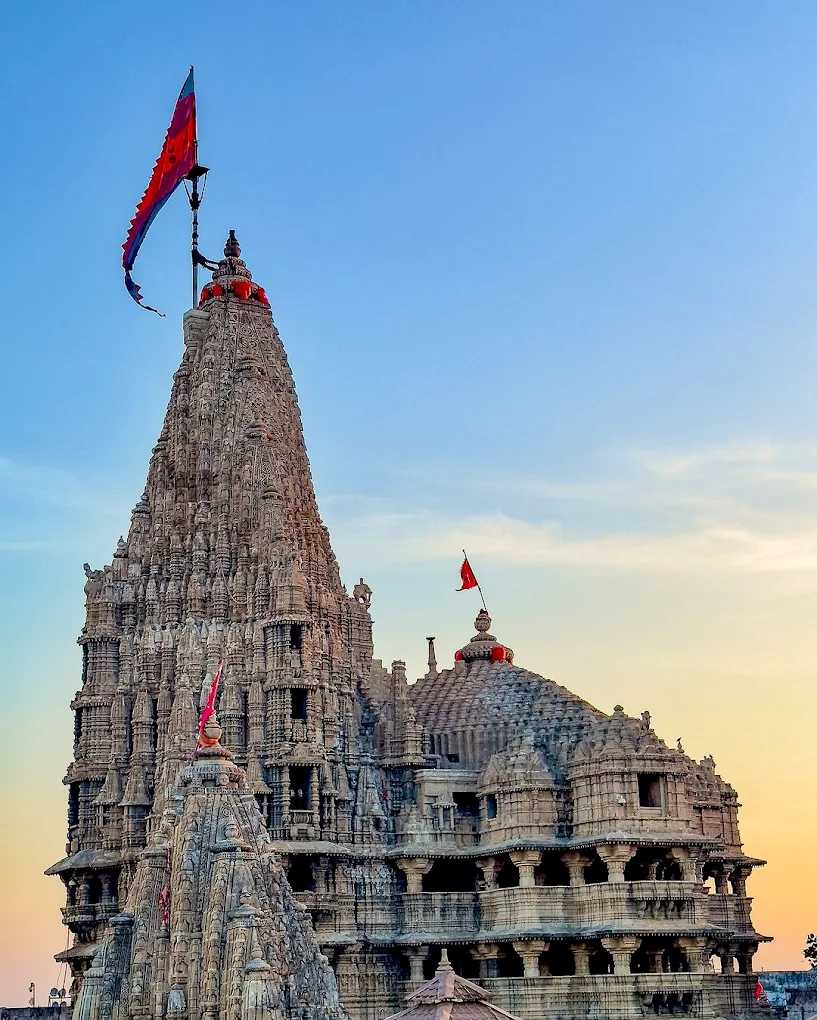
The Dwarkadhish Temple is one of Hinduism’s most revered pilgrimage sites and a cornerstone of the Char Dham Yatra. Located in the ancient city of Dwarka in Gujarat, this majestic temple is dedicated to Lord Krishna in his royal form as Dwarkadhish, the King of Dwarka. Standing near the Arabian Sea, the temple represents devotion, divine governance, and spiritual liberation.
Dwarkadhish Temple attracts millions of devotees every year. Pilgrims visit not only for darshan but also to experience the sacred legacy of Lord Krishna’s earthly kingdom.
Spiritual Significance of Dwarkadhish Temple
Dwarkadhish Temple holds immense importance in Vaishnavism. It marks the place where Lord Krishna ruled after leaving Mathura. Devotees believe that worshipping Krishna here helps overcome worldly attachments and strengthens devotion.
The temple is also one of the four Char Dhams, along with Badrinath, Puri, and Rameshwaram. Completing the Char Dham Yatra is believed to cleanse karmic burdens and guide the soul toward moksha.
Moreover, Dwarkadhish symbolizes Krishna not as a child or cowherd, but as a divine ruler, teaching devotees how to live responsibly while remaining spiritually detached.
Mythology and Historical Background
According to Hindu scriptures, Dwarka was a magnificent city built by Lord Krishna after he migrated from Mathura. Ancient texts describe Dwarka as a prosperous coastal kingdom filled with divine architecture.
Legend states that after Krishna’s departure from the earthly realm, the city submerged into the sea. However, the spiritual presence of Dwarka remained intact. Archaeological findings near the coast support references to an ancient submerged settlement, strengthening the city’s legendary status.
The present temple structure is believed to have been rebuilt several times over centuries due to natural calamities and invasions. Despite this, the temple continues to preserve its sacred traditions and rituals.
Architecture and Temple Design
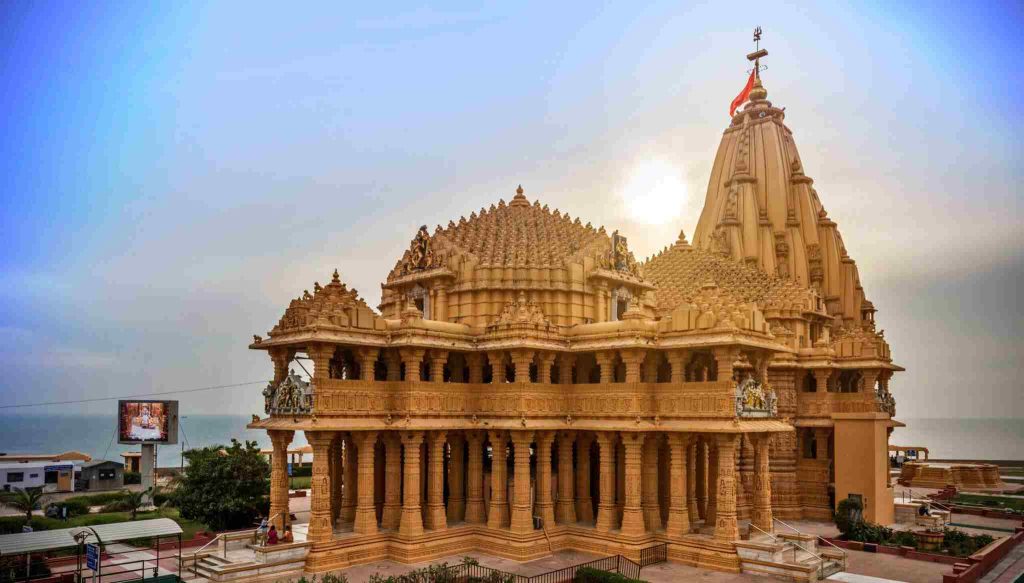
Dwarkadhish Temple, Dwarka – The majestic coastal shrine of Lord Krishna and a key Char Dham pilgrimage site
Dwarkadhish Temple reflects classic Chalukya-style architecture. The temple rises nearly five stories high and is supported by intricately carved pillars and stone walls. Its towering shikhara is crowned with a massive flag that changes several times daily.
Inside the sanctum, the black stone idol of Lord Krishna stands in a regal posture. The idol is adorned with jewels, silks, and floral decorations during daily rituals.
The temple complex also houses smaller shrines dedicated to deities such as Balarama, Subhadra, and Rukmini, enhancing the spiritual atmosphere.
Daily Rituals and Worship Practices
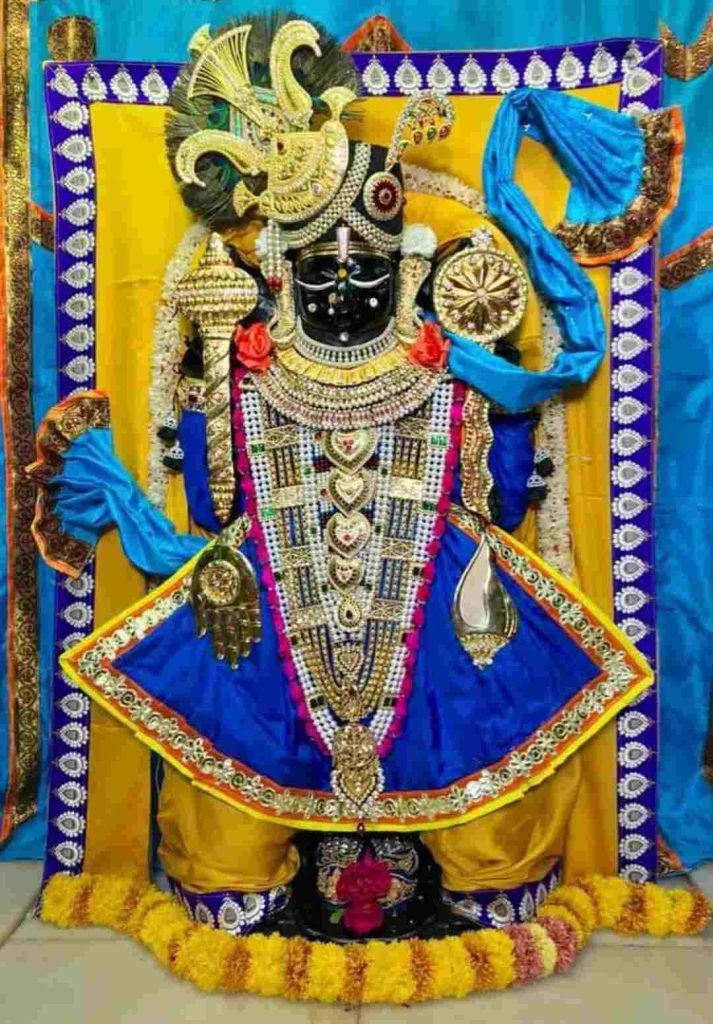
Shri Dwarkadhish (Lord Krishna) beautifully decorated in royal attire at Dwarkadhish Temple, Dwarka
Temple worship follows ancient Vaishnava traditions. Each day begins with Mangla Aarti, followed by Abhishek, Shringar, Bhog offerings, and multiple aartis throughout the day.
The flag hoisting ritual is especially significant. Devotees believe that offering a new flag fulfills wishes and brings divine blessings.
During festivals, the temple comes alive with devotional singing, processions, and elaborate decorations, offering a deeply immersive spiritual experience.
Dwarkadhish Temple and the Char Dham Yatra
Dwarkadhish Temple represents the western direction in the Char Dham Yatra. Pilgrims often visit Dwarka to seek Krishna’s blessings for balance, leadership, and devotion.
Unlike Himalayan temples, Dwarka’s coastal setting symbolizes stability and spiritual grounding. Together, the four Char Dhams represent a complete spiritual journey across India’s sacred geography.
Best Time to Visit Dwarkadhish Temple
The temple remains open throughout the year. However, October to March offers pleasant weather for pilgrims. Summers can be hot, while monsoons bring humidity and occasional travel disruptions.
Major festivals like Janmashtami and Sharad Purnima attract large crowds, making them ideal for devotees seeking vibrant celebrations.
How to Reach Dwarkadhish Temple
Dwarka is well connected by road and rail. The nearest airport is Jamnagar, while Dwarka railway station connects the city with major towns in Gujarat and beyond. Regular buses and taxis operate from nearby cities.
FAQs About Dwarkadhish Temple
1. Who is worshipped at Dwarkadhish Temple?
Lord Krishna is worshipped here as Dwarkadhish, the divine King of Dwarka.
2. Is Dwarkadhish Temple part of the Char Dham Yatra?
Yes, it represents the western dham of the Char Dham pilgrimage.
3. Is photography allowed inside the temple?
Photography is generally restricted inside the sanctum to maintain sanctity.
4. What is the significance of the temple flag?
Offering a flag is considered highly auspicious and symbolic of surrender to Lord Krishna.
5. Can senior citizens visit the temple comfortably?
Yes, the temple is accessible, though crowds during festivals may require assistance.
6. Are special pujas available for devotees?
Yes, special pujas can be performed as per temple guidelines and schedules.
7. Is there a dress code for visitors?
There is no strict dress code, but modest and respectful attire is encouraged.
Conclusion
Dwarkadhish Temple is not just a place of worship—it is a living reminder of Lord Krishna’s divine leadership, wisdom, and compassion. Standing by the Arabian Sea, the temple invites devotees to balance spiritual devotion with worldly responsibility.
Whether visited as part of the Char Dham Yatra or as a standalone pilgrimage, Dwarkadhish Temple offers a profound journey into faith, history, and timeless devotion.
Jai Dwarkadhish.

Leave A Comment