The Badrinath Temple is one of the most revered pilgrimage sites in Hinduism and a vital part of the sacred Char Dham Yatra. Located in the Garhwal Himalayas of Uttarakhand, along the banks of the Alaknanda River, this ancient shrine is dedicated to Lord Vishnu, worshipped here as Badri Narayan. Surrounded by snow-clad mountains, serene valleys, and crisp mountain air, Badrinath stands as a powerful symbol of devotion, peace, and divine grace.
For centuries, devotees have undertaken the arduous journey to Badrinath seeking spiritual purification, blessings, and inner awakening.
Spiritual Significance of Badrinath
Badrinath occupies a unique position in Vaishnavism. According to tradition, Lord Vishnu performed intense penance at this sacred spot for the welfare of humanity. To protect him from the harsh Himalayan climate, Goddess Lakshmi is believed to have taken the form of a Badri (wild berry) tree, giving the place its name—Badrinath.
Pilgrims believe that darshan at Badrinath helps cleanse sins, balance karmic burdens, and guide the soul toward moksha, or liberation. The temple is also counted among the 108 Divya Desams, the most sacred Vishnu temples mentioned in Vaishnava scriptures.
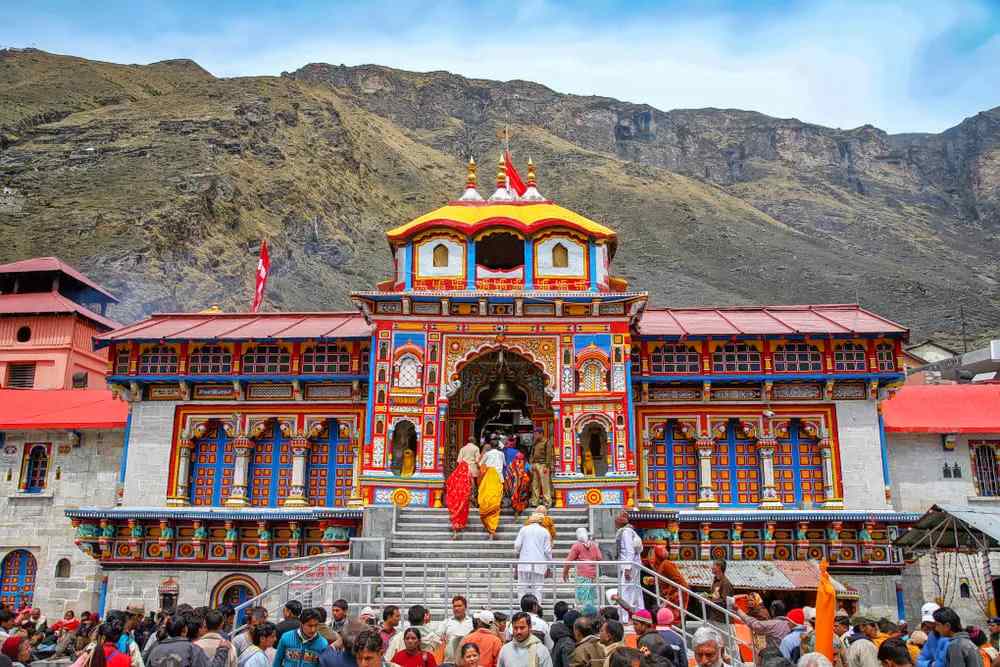
Badrinath Temple, the sacred Char Dham shrine of Lord Vishnu in the Garhwal Himalayas
Mythological Background and History
Ancient legends connect Badrinath with sages such as Narada and Narayana, who meditated in this region. The black stone idol of Lord Vishnu enshrined in the temple is believed to have been discovered in the Alaknanda River at Narad Kund.
In the 8th century, the philosopher-saint Adi Shankaracharya revived Badrinath as a major pilgrimage center. He restored temple worship and established monastic traditions that continue to guide rituals and religious practices today.
Architecture and Temple Complex
The Badrinath Temple showcases classic North Indian temple architecture, featuring a brightly colored façade and a gold-gilded cupola. Inside the sanctum, the black stone idol of Lord Vishnu sits in a meditative posture, accompanied by sacred figures such as Narada and Uddhava.
The temple complex also includes smaller shrines dedicated to deities like Kubera, Garuda, and Narada. The sound of Vedic chants and the steady rhythm of daily rituals create a deeply spiritual atmosphere.
Sacred Hot Springs: Tapt Kund and Narad Kund
Before entering the temple, pilgrims traditionally bathe in Tapt Kund, a natural hot water spring believed to possess healing and purifying properties. The contrast between the warm waters and the cold mountain air symbolizes spiritual cleansing.
Nearby Narad Kund holds special significance as the spot where the sacred idol of Lord Vishnu was discovered, making it an essential stop for devotees.
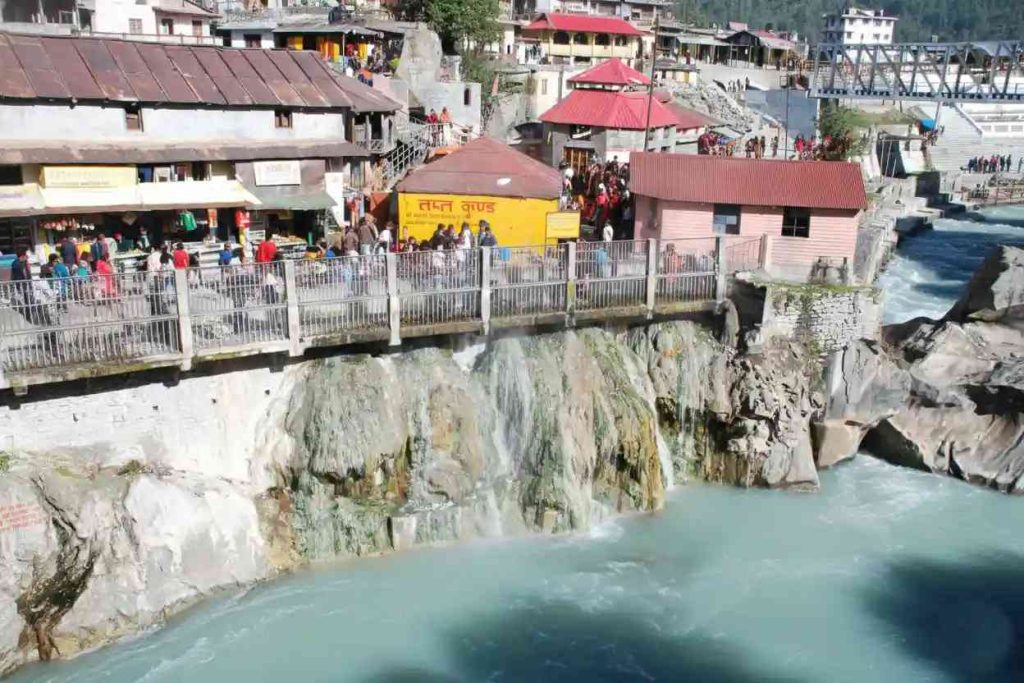
Tapt Kund hot water spring near Badrinath Temple with pilgrims bathing beside the Alaknanda River
Daily Rituals and Worship
Daily worship at Badrinath follows ancient Vaishnava traditions and includes:
- Abhishekam with holy water and offerings
- Alankar Puja, adorning the deity
- Bhog, sacred food offerings
- Aarti, performed at fixed times
Traditionally, priests from the Nambudiri community of Kerala conduct the rituals, reflecting a harmonious blend of northern and southern spiritual traditions.
Badrinath Temple’s Unique Role in Three Pilgrimage Circuits
Badrinath holds a rare distinction—it is the only temple in India that belongs to three major pilgrimage circuits.
1. Char Dham Yatra (Pan-India Circuit)
Badrinath is one of the four sacred dhams, along with Dwarka, Puri, and Rameshwaram. Together, these shrines represent spiritual unity across India’s four directions.
2. Chota Char Dham (Himalayan Circuit)
Within Uttarakhand, Badrinath forms part of the Chota Char Dham along with Yamunotri, Gangotri, and Kedarnath. This pilgrimage emphasizes devotion through penance and endurance in the Himalayas.
3. Panch Badri (Five Vishnu Shrines)
Badrinath is the principal shrine among the Panch Badri temples—Badrinath, Yogdhyan Badri, Bhavishya Badri, Vriddha Badri, and Adi Badri—each honoring different manifestations of Lord Vishnu.
This unique overlap makes Badrinath a spiritual bridge connecting North, South, East, and West India.
Badrinath Temple Opening and Closing Dates – 2026
The opening and closing of Badrinath Temple are decided through traditional rituals and astrological calculations.
How Dates Are Announced
- The opening date is declared annually on Maha Shivratri
- The closing date is announced around Vijayadashami (Dussehra)
Expected Yatra Season – 2026
- Tentative Opening: Late April or early May 2026
- Tentative Closing: Late October or early November 2026
Exact dates will be officially announced on Maha Shivratri 2026.
During winter, the idol of Lord Vishnu is ceremonially moved to Joshimath, where worship continues until the temple reopens.
How to Reach Badrinath Temple
- By Air: Jolly Grant Airport, Dehradun
- By Train: Haridwar or Rishikesh
- By Road: Well-connected via Joshimath; helicopter services operate during the yatra season
Best Time to Visit
The best time to visit Badrinath is May–June and September–October, when weather conditions are favorable and routes are accessible. The temple remains closed during winter due to heavy snowfall.
The presiding deity of Badrinath Temple is Lord Vishnu, worshipped here in his divine form as Badri Narayan.
FAQ’S
1. What makes Badrinath Temple one of the holiest shrines in India?
Badrinath Temple is revered because it is dedicated to Lord Vishnu and is part of multiple major pilgrimage circuits, making it spiritually significant across India.
2. In which form is Lord Vishnu worshipped at Badrinath?
At Badrinath, Lord Vishnu is worshipped as Badri Narayan, seated in a meditative posture.
3. Is Badrinath Temple accessible throughout the year?
No, the temple remains open only during the summer and early autumn months due to heavy snowfall in winter.
4. Why does the temple close during winter?
Extreme snowfall and harsh weather conditions make the region inaccessible, which is why the temple closes for safety reasons.
5. Where are the temple rituals performed during the winter closure?
During winter, the idol of Lord Vishnu is ceremonially shifted to Joshimath, where worship continues until reopening.
6. How is the opening date of Badrinath Temple decided?
The opening date is determined based on religious traditions and astrological calculations and is announced on Maha Shivratri each year.
7. Can first-time pilgrims comfortably visit Badrinath?
Yes, with proper planning, acclimatization, and medical precautions, first-time visitors can complete the pilgrimage smoothly.
8. What is the importance of taking a dip in Tapt Kund?
Bathing in Tapt Kund is believed to purify the body and mind before entering the temple, preparing devotees for darshan.
9. Is Badrinath suitable for elderly pilgrims?
Senior citizens can visit Badrinath using road access or helicopter services, provided health conditions are considered.
10. What type of clothing is recommended for visitors?
Warm, layered clothing is recommended, even during summer, due to sudden weather changes in the Himalayas.
Conclusion
The Badrinath Temple is far more than a pilgrimage destination—it is a sacred journey into devotion, discipline, and divine connection. Whether visited as part of the Char Dham Yatra or as an individual pilgrimage, Badrinath leaves a lasting spiritual impression on every seeker.
Jai Badri Vishal.
Leave A Comment