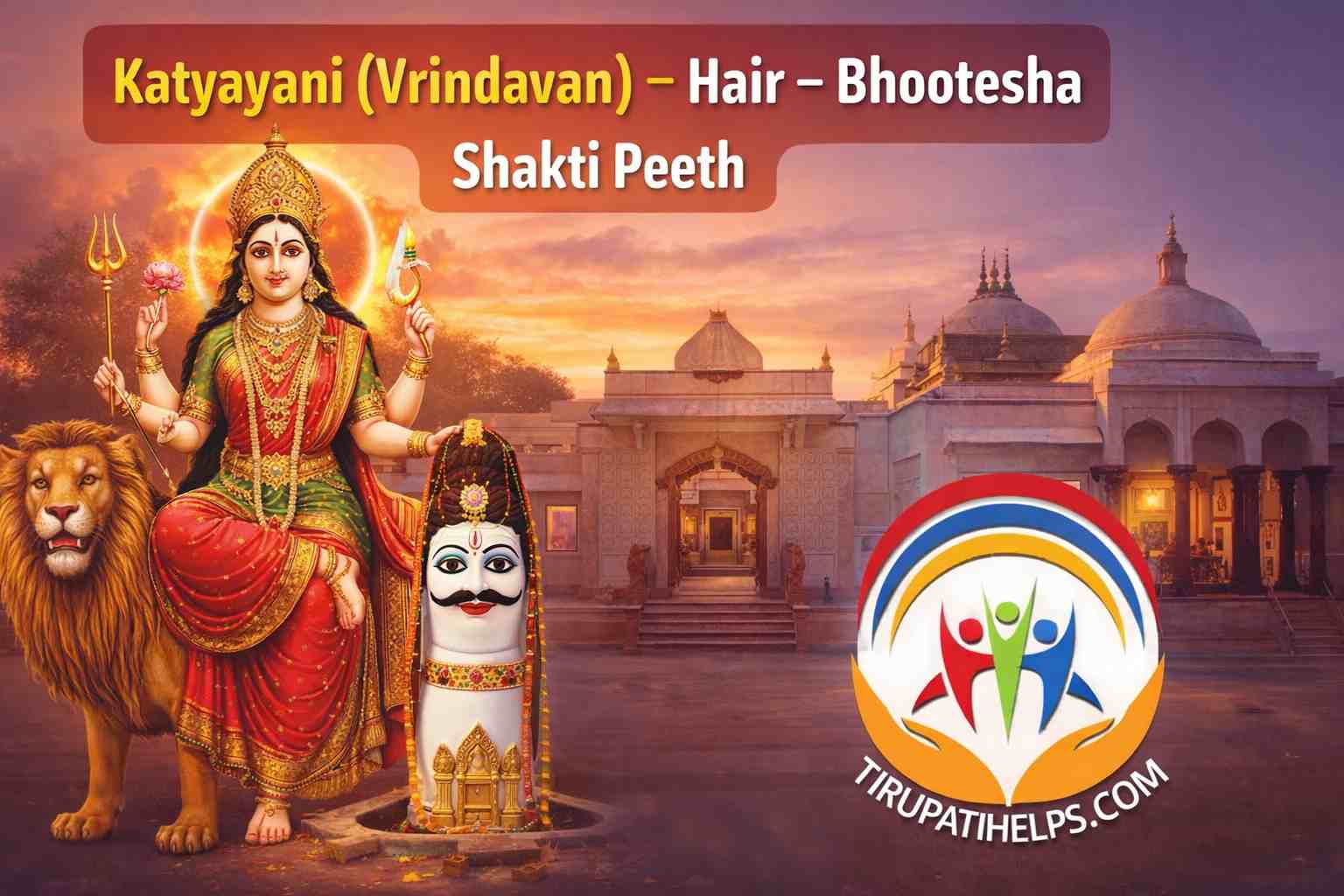
A Sacred Confluence of Divine Feminine Power and Krishna Bhakti
India’s spiritual landscape is dotted with powerful Shakti Peethas—holy sites where parts of Goddess Sati’s body are believed to have fallen during the cosmic grief of Lord Shiva. Among these sacred locations, Katyayani Shakti Peeth in Vrindavan holds a special place. This temple is deeply revered not only as a Shakti Peeth but also as a spiritual bridge connecting the worship of Goddess Durga and the divine love of Lord Krishna.
It is believed that Goddess Sati’s hair (kesh) fell at this sacred spot, making it a center of immense feminine energy. The presiding deity here is Goddess Katyayani, while Bhootesha (a form of Lord Shiva) is worshipped as the Bhairava.
Mythological Significance of Katyayani Shakti Peeth
The origin of this Shakti Peeth traces back to the ancient tale of Sati and Shiva. After Sati self-immolated in protest against her father Daksha’s insult to Shiva, a grief-stricken Shiva carried her body across the universe. To restore cosmic balance, Vishnu used his Sudarshan Chakra to dismember Sati’s body, and the parts fell at various locations—forming the Shakti Peethas.
At Vrindavan, it is believed that Sati’s hair fell, symbolizing feminine grace, beauty, and strength. Hair, in Hindu symbolism, represents vitality and divine energy—making this Peeth spiritually powerful for devotees seeking inner strength and blessings.
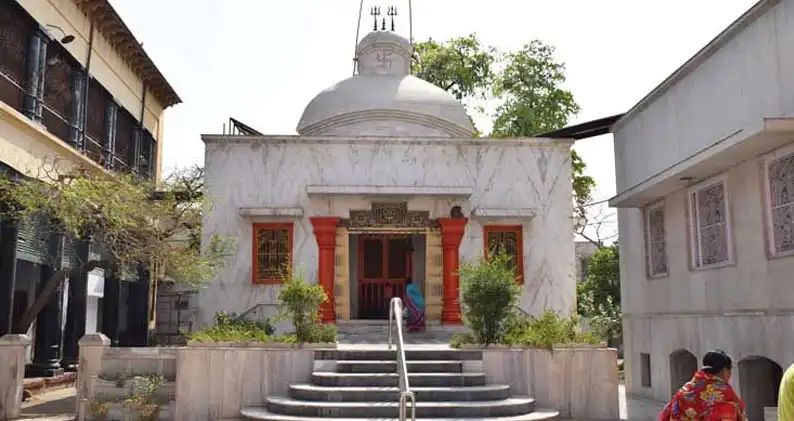
Entrance of Katyayani Temple in Vrindavan, a divine center of Shakti worship
Goddess Katyayani – The Divine Feminine Force
Katyayani is one of the nine forms of Goddess Durga, worshipped especially during Navaratri. She is known as the warrior goddess, representing courage, righteousness, and protection from evil forces.
In the context of Vrindavan, Katyayani holds even deeper significance. According to the Bhagavata Purana, the Gopis (female devotees of Lord Krishna) worshipped Goddess Katyayani to attain Lord Krishna as their husband. This ritual is famously known as the Katyayani Vrata.
Thus, this temple uniquely blends Shakti worship and Krishna devotion, making it one of the rare spiritual sites where both energies coexist harmoniously.
Bhootesha Bhairava – The Guardian Deity
Every Shakti Peeth is associated with a Bhairava, a fierce form of Lord Shiva who protects the sacred site. At Katyayani Peeth, the Bhairava is Bhootesha, a powerful manifestation of Shiva.
Devotees often visit both the Katyayani temple and the nearby Bhooteshwar Mahadev Temple to complete their pilgrimage. Worshipping Bhootesha is believed to remove negative energies, fears, and spiritual obstacles.
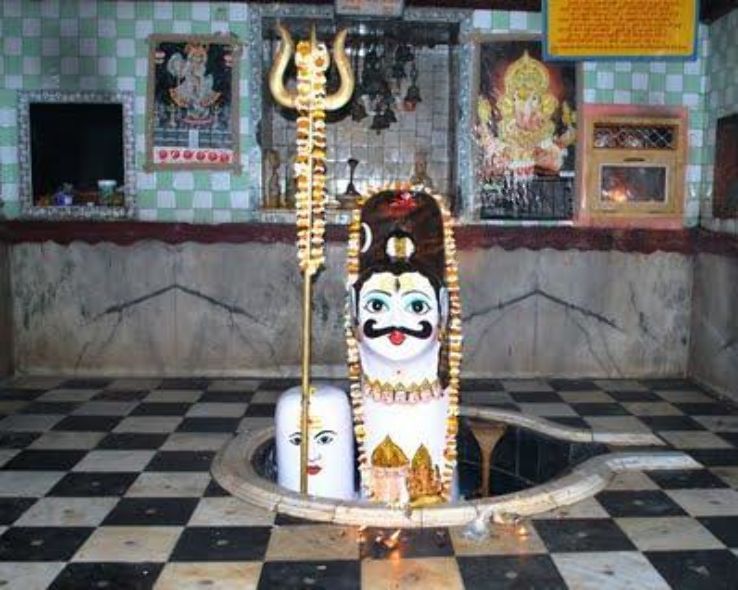
Sacred Bhootesha Bhairava Shivling inside the temple, symbolizing divine protection and spiritual शक्ति
Spiritual Importance and Benefits of Visiting
Visiting Katyayani Shakti Peeth is considered highly auspicious for:
- Marriage and Relationships: Young women pray here for a suitable life partner, following the tradition of the Gopis.
- Inner Strength: The temple radiates Shakti energy, empowering devotees emotionally and spiritually.
- Protection from Negativity: With Bhootesha guarding the Peeth, it is believed to ward off evil influences.
- Fulfillment of Desires: Devotees offer prayers with deep faith to seek blessings for their wishes.
The temple becomes especially vibrant during Navaratri, when thousands of devotees gather to worship Goddess Katyayani.
Architecture and Temple Atmosphere
The Katyayani temple in Vrindavan is relatively simple yet spiritually charged. Unlike grand temples, its charm lies in its serene and devotional ambiance.
- Traditional North Indian temple architecture
- Peaceful surroundings filled with chants and bhajans
- Proximity to sacred Yamuna ghats enhances spiritual experience
The divine aura of Vrindavan itself—known as the playground of Lord Krishna—adds an unmatched devotional depth to the visit.
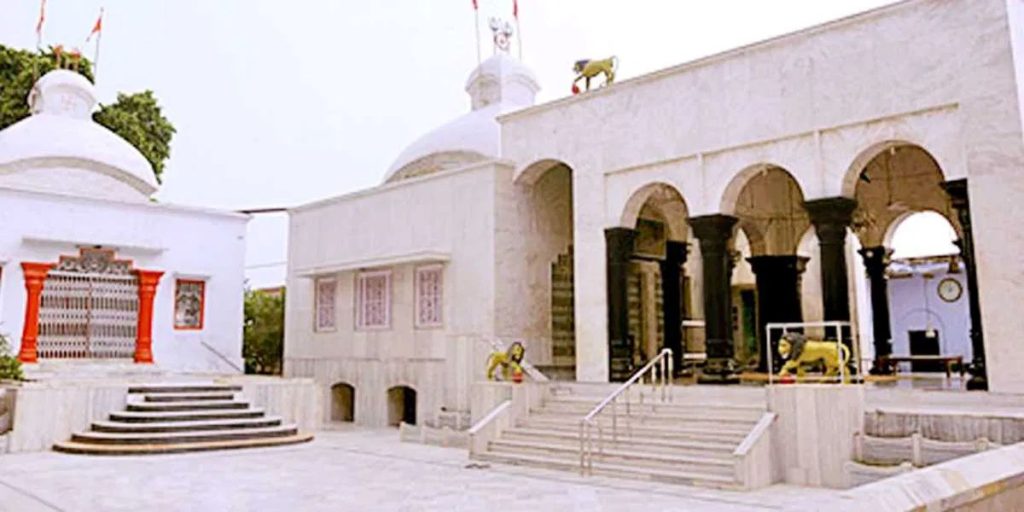
Serene view of Katyayani Mandir complex in Vrindavan, a sacred Shakti Peeth
How to Reach Katyayani Shakti Peeth
- Location: Vrindavan, Uttar Pradesh
- Nearest Railway Station: Mathura Junction (approx. 12 km)
- Nearest Airport: Agra / Delhi
- Easily accessible by road via taxis, buses, and auto-rickshaws
Vrindavan is well-connected and visited by pilgrims throughout the year.
Best Time to Visit
- October to March: Pleasant weather for temple visits
- Navaratri Festival: Best time for spiritual energy and celebrations
- Early morning or evening aarti offers a peaceful darshan experience
Nearby Attractions in Vrindavan
While visiting Katyayani Peeth, you can explore:
- Banke Bihari Temple
- Prem Mandir
- ISKCON Vrindavan
- Radha Raman Temple
These temples enhance the spiritual journey and offer a deeper connection with Krishna consciousness.
FAQs About Katyayani Shakti Peeth
1. Why is Katyayani Temple considered a Shakti Peeth?
It is believed that Goddess Sati’s hair fell at this location, making it one of the sacred Shakti Peethas.
2. Who is the Bhairava of this temple?
The Bhairava associated with this Peeth is Bhootesha, a form of Lord Shiva.
3. What is the significance of Katyayani in Vrindavan?
Katyayani is worshipped by the Gopis to attain Lord Krishna, symbolizing divine love and devotion.
4. Can unmarried girls pray here for marriage?
Yes, it is highly believed that praying to Goddess Katyayani helps in finding a suitable life partner.
5. When is the best time to visit the temple?
The best time is during Navaratri and winter months (October–March).
6. Is the temple crowded?
It is moderately crowded, especially during festivals and weekends.
7. How far is it from Mathura?
Approximately 12 km from Mathura Junction.
Leave A Comment