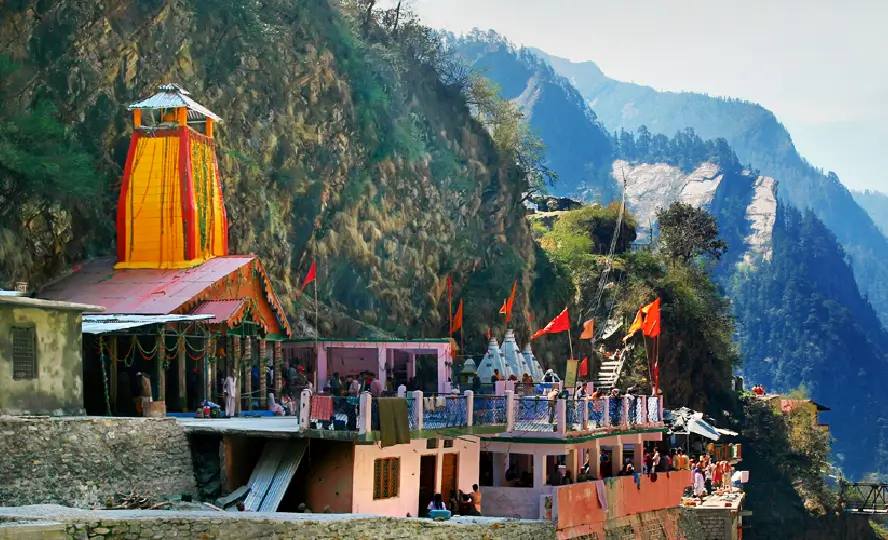
Yamunotri Temple is one of the holiest pilgrimage sites in India and marks the spiritual starting point of the Chota Char Dham Yatra. Dedicated to Goddess Yamuna, the temple stands in the serene Garhwal Himalayas of Uttarakhand. Surrounded by snow-covered peaks, alpine forests, and flowing streams, Yamunotri offers devotees a peaceful blend of devotion and natural beauty.
For pilgrims, visiting Yamunotri is not only a religious duty but also a journey of faith, discipline, and self-discovery.
Spiritual Importance of Yamunotri Temple
Yamunotri holds great significance in Hindu tradition because it represents the divine source of the River Yamuna. Devotees believe that the river purifies sins and protects worshippers from untimely death. Therefore, many pilgrims begin their Char Dham journey at Yamunotri to seek blessings before continuing onward.
Moreover, Goddess Yamuna symbolizes purity, compassion, and strength. Worshipping her at Yamunotri is believed to bring peace, health, and spiritual balance.
Mythological Significance
Several ancient legends surround Yamunotri Temple. According to popular belief, Sage Asit Muni lived in this region and bathed daily in both the Ganga and Yamuna rivers. As he aged, the rivers appeared near his hermitage to bless him. As a result, Yamunotri became known as a divine site of blessings and penance.
Another legend links Goddess Yamuna to Yama, the god of death. Since Yamuna is his sister, devotees believe that worshipping her protects them from fear and suffering related to death.
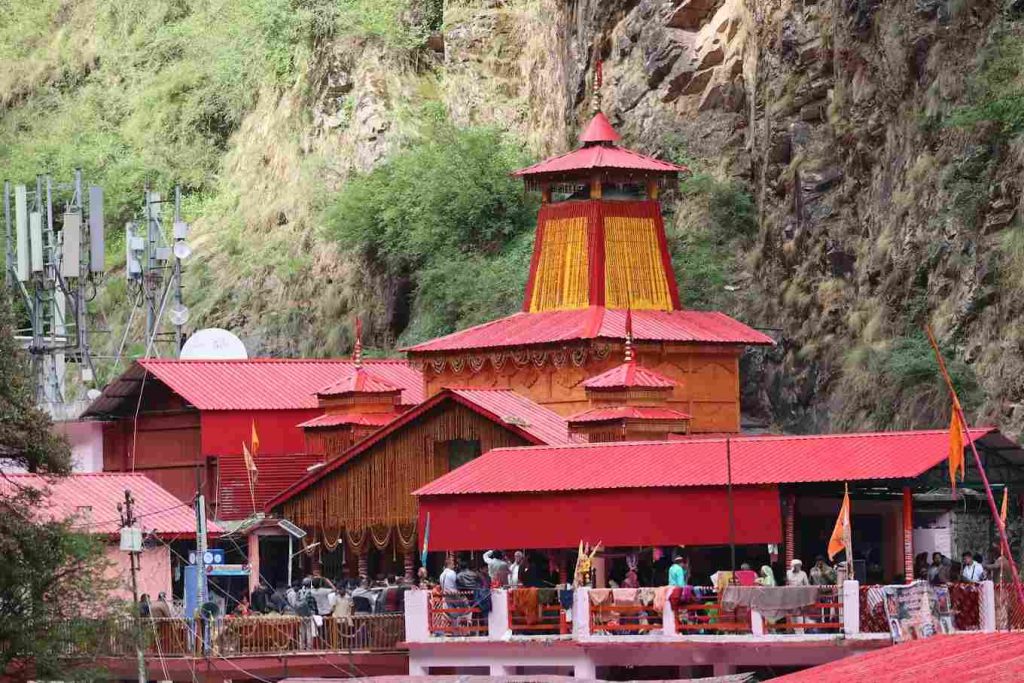
Yamunotri Temple, the sacred origin shrine of River Yamuna in the Garhwal Himalayas
Location and Natural Beauty
Yamunotri Temple is located at an altitude of approximately 3,291 meters in Uttarkashi district, Uttarakhand. The temple lies close to the Bandarpunch mountain range and is surrounded by untouched Himalayan landscapes.
Although the actual source of the Yamuna River lies at the Yamunotri Glacier, the temple remains the main spiritual center. Meanwhile, the region’s fresh air, silence, and scenic views create a deeply calming experience for visitors.
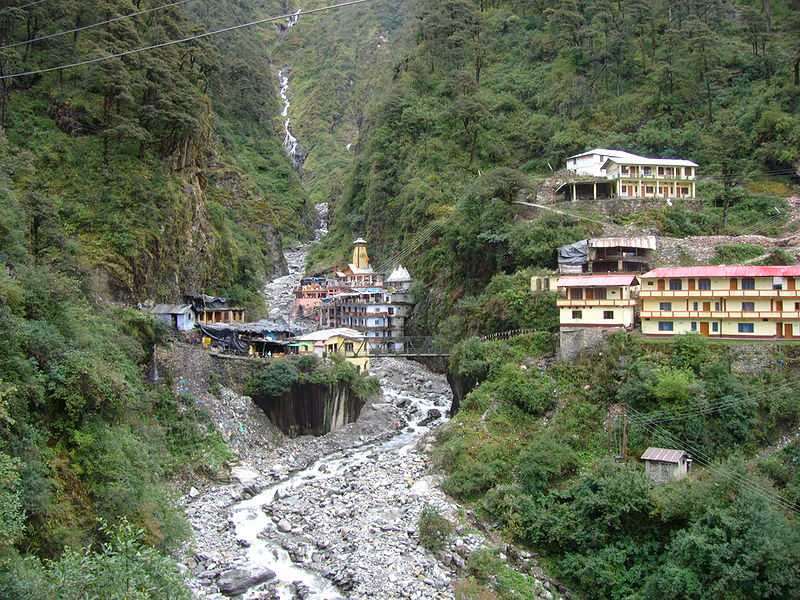
Natural surroundings of Yamunotri Dham with flowing mountain streams and Himalayan greenery
Temple Architecture and Structure
The current Yamunotri Temple structure was built in the 19th century using stone to withstand harsh weather. The architecture follows a simple North Indian style, reflecting humility and devotion rather than grandeur.
Inside the sanctum, devotees worship a black marble idol of Goddess Yamuna. Despite its modest appearance, the temple radiates strong spiritual energy that deeply touches pilgrims.
Sacred Hot Springs and Rituals
One of the most unique features of Yamunotri is its natural hot springs.
Surya Kund
Surya Kund is a boiling hot spring near the temple. Devotees prepare offerings such as rice and potatoes, tie them in cloth, and dip them into the water to cook. Later, they accept the food as sacred prasad.
Divya Shila
Before entering the temple, pilgrims worship Divya Shila, a sacred rock pillar. This ritual symbolizes purification and divine blessing.
Together, these practices create a meaningful spiritual experience.
Trek to Yamunotri Temple
Pilgrims must complete a 6 km trek from Janki Chatti to reach the temple. The path passes through scenic valleys, waterfalls, and forests. Although the trek feels challenging at times, it remains well-maintained and manageable.
For convenience, pilgrims can hire ponies or palkis. Meanwhile, the trek itself teaches patience and devotion, making the journey spiritually rewarding.
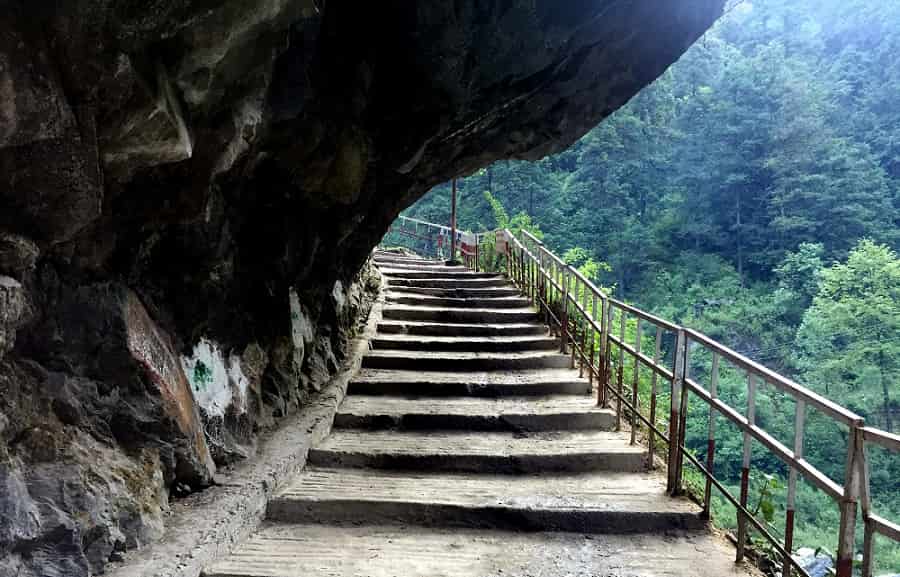
Scenic trekking path leading to Yamunotri Temple through rocky mountain terrain
Opening and Closing of Yamunotri Temple
Yamunotri Temple remains closed during winter due to heavy snowfall.
- Opening: Late April or early May (Akshaya Tritiya)
- Closing: October or November (Yama Dwitiya)
After closure, priests move the idol of Goddess Yamuna to Kharsali village, where worship continues throughout winter.
Best Time to Visit Yamunotri
The best months to visit Yamunotri are:
- May to June for pleasant weather
- September to October for fewer crowds and clear skies
However, pilgrims should avoid the monsoon season because landslides may occur.
How to Reach Yamunotri
- By Air: Jolly Grant Airport, Dehradun
- By Train: Rishikesh or Haridwar
- By Road: Buses and taxis are available up to Janki Chatti
From Janki Chatti, pilgrims must trek to the temple.
Festivals and Celebrations
Yamunotri celebrates festivals like Akshaya Tritiya, Yama Dwitiya, and special Char Dham rituals. During these occasions, the region fills with devotion, chants, and cultural traditions.
Inside Yamunotri Temple
The temple has a mandap for devotees, hot springs (Surya Kund, Gouri Kund) where rice and potatoes are cooked as prasad, and a sacred rock, Divya Shila, is worshipped before the main deity. The sanctum (Garbha Griha) inside the Yamunotri Temple contains the idol of Goddess Yamuna, usually a silver statue or one of black marble, adorned with garlands, with an idol of Ganga close by.
FAQs About Yamunotri Temple
Is Yamunotri part of Char Dham Yatra?
Yes, Yamunotri is the first stop of the Chota Char Dham Yatra.
Who is worshipped at Yamunotri Temple?
Devotees worship Goddess Yamuna.
How long is the Yamunotri trek?
The trek is about 6 km from Janki Chatti.
Can elderly devotees visit Yamunotri?
Yes, ponies and palkis make the journey easier.
Is Surya Kund safe for rituals?
Yes, pilgrims safely prepare prasad under guidance.
Conclusion
Yamunotri Temple offers a powerful spiritual beginning to the Char Dham Yatra. With its sacred legends, pure waters, and Himalayan beauty, the temple guides devotees toward faith and inner peace. Above all, Yamunotri reminds pilgrims that every spiritual journey begins with purity, devotion, and humility.
Jai Maa Yamuna
Leave A Comment