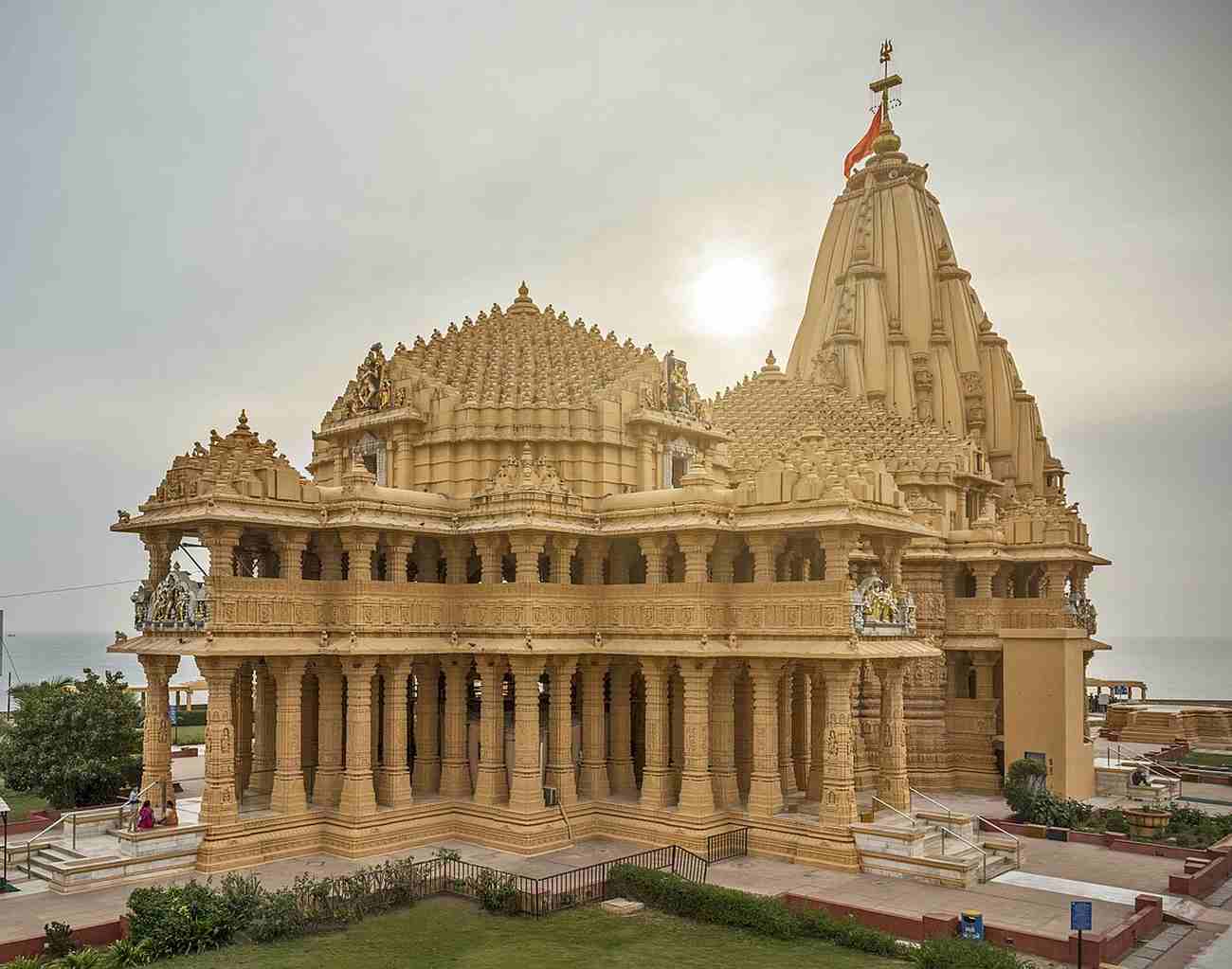
Somnath Jyotirlinga Temple stands as a timeless symbol of faith, resilience, and devotion, overlooking the vast Arabian Sea on the western edge of India. Revered as the first among the 12 Jyotirlingas of Lord Shiva, Somnath is not merely a temple—it is a living testament to spiritual endurance that has risen repeatedly from destruction to glory.
Located in Gujarat’s Gir Somnath district, this sacred shrine attracts millions of devotees each year who seek divine blessings, inner strength, and a deep connection with India’s ancient spiritual heritage.
Why Somnath Is the First Jyotirlinga
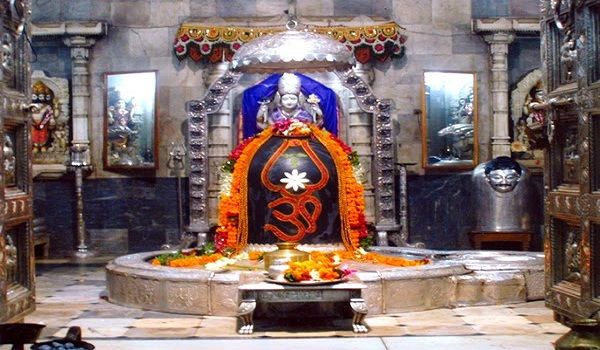
Somnath Jyotirlinga
In Hindu belief, Jyotirlingas represent the infinite, formless light of Lord Shiva. Somnath holds a unique place as the Adi Jyotirlinga, meaning the very first manifestation of Shiva’s divine light on Earth.
Ancient scriptures describe Somnath as the point where time itself began, giving rise to the phrase “Somnath is eternal.” The name “Somnath” translates to “Protector of the Moon”, linking the temple to powerful cosmic symbolism.
Mythological Significance of Somnath Temple
According to legend, Chandra (the Moon God) was cursed to lose his radiance. Seeking redemption, he worshipped Lord Shiva at this very site. Pleased by his devotion, Shiva restored the Moon’s glow, and Chandra built the Somnath temple in gratitude.
This divine episode established Somnath as a place of:
- Renewal and healing
- Liberation from curses and suffering
- Cosmic balance between destruction and creation
Devotees believe prayers offered here help overcome emotional pain, karma, and life obstacles.
A History Written in Stone and Sacrifice
Somnath’s history is unlike any other temple in India. Over centuries, it was destroyed and rebuilt multiple times, yet never erased from spiritual memory.
Key Historical Highlights
- Ancient references appear in Vedic texts, Puranas, and classical literature
- The temple faced repeated invasions due to its wealth and prominence
- Each destruction was followed by rebirth through devotion
- The present structure was reconstructed after India’s independence
The modern Somnath Temple was rebuilt in the Chalukya architectural style, symbolizing India’s spiritual revival and national pride.
Architecture of the Present Somnath Temple
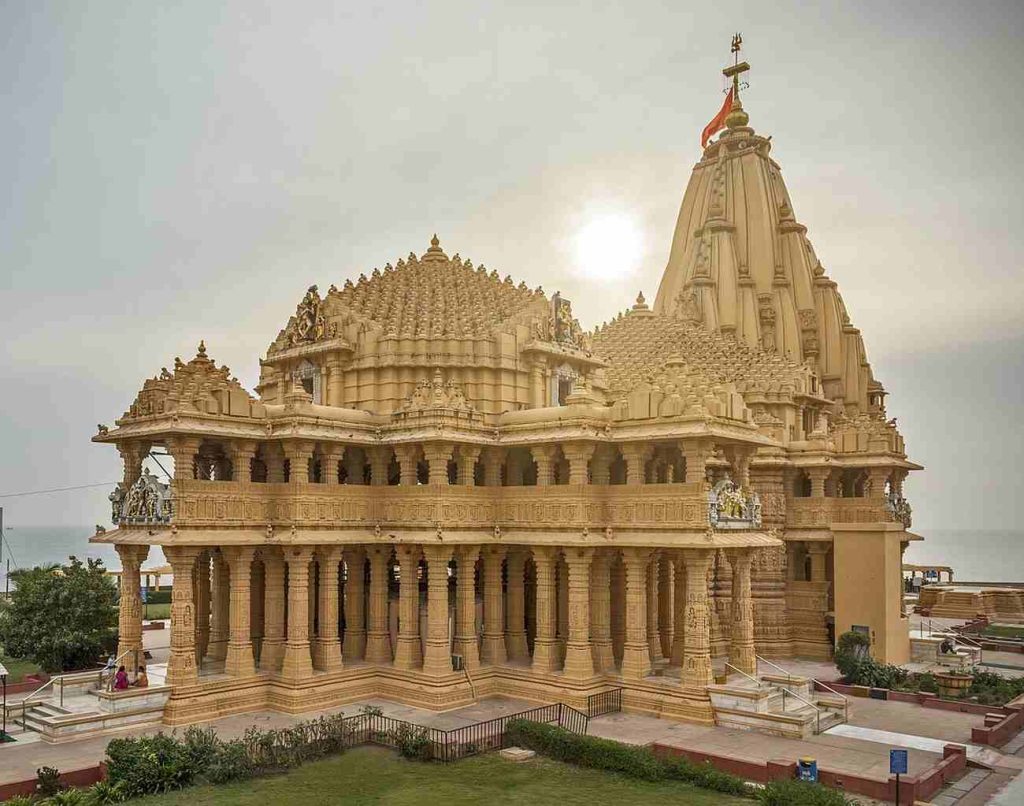
Somnath Jyotirlinga Temple Gujarat
The current Somnath temple is a masterpiece of traditional Hindu temple architecture, designed to reflect grandeur without excess.
Architectural Highlights
- Majestic shikhara rising nearly 50 meters
- Finely carved stone panels depicting mythological scenes
- A large sabha mandap for congregational worship
- The Kalash atop the temple weighs several tons of sacred metal
Facing the endless sea, the temple’s setting enhances the feeling of eternity and divine presence.
Somnath and the Sacred Sea
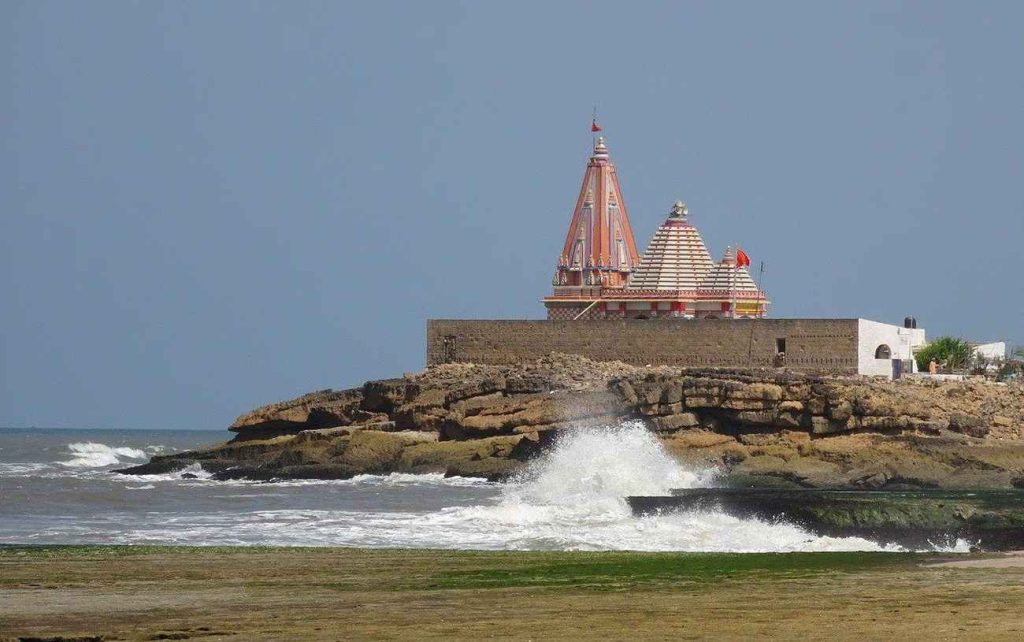
Somnath Jyotirlinga Temple Gujarat overlooking the Arabian Sea
One of Somnath’s most distinctive features is its location by the Arabian Sea. Devotees often take a holy dip in the sea before darshan, believing the waters cleanse sins and negative energies.
There is a traditional belief that no land lies between Somnath and Antarctica, symbolizing an uninterrupted path of cosmic energy flowing from the temple into the ocean.
Somnath Temple Darshan & Aarti Timings
Daily Darshan Timings
- Morning: 6:00 AM – 9:00 PM
- Darshan remains open throughout the day
Aarti Schedule
- Morning Aarti: 7:00 AM
- Afternoon Aarti: 12:00 PM
- Evening Aarti: 7:00 PM
The evening aarti, with the sea breeze and chanting of Vedic hymns, is considered especially divine.
Somnath Light & Sound Show
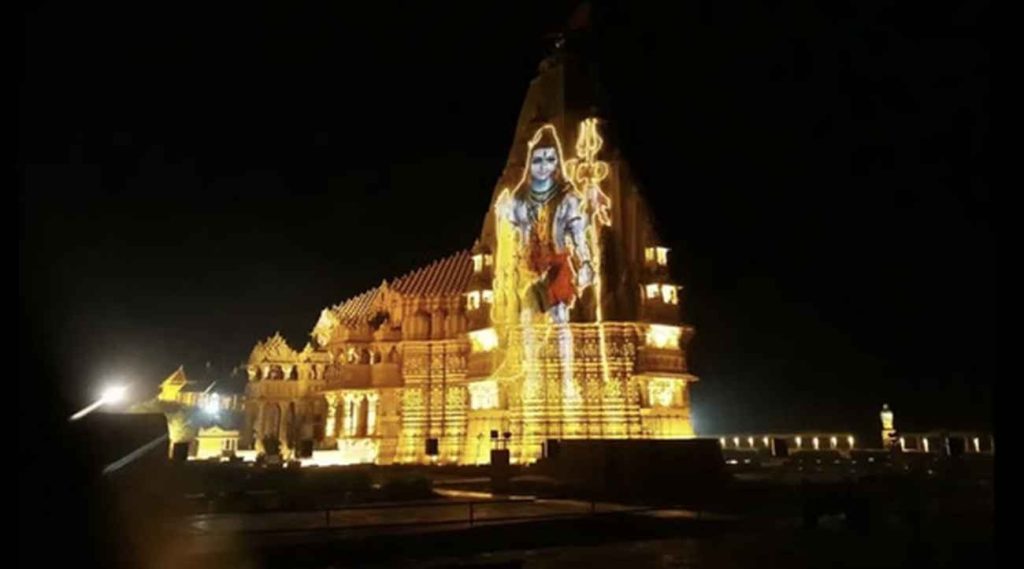
Somnath Temple illuminated during evening aarti
Every evening, the temple complex hosts a light and sound show that narrates Somnath’s spiritual and historical journey. The show beautifully captures the temple’s destruction, resurrection, and eternal significance, making it a must-experience for visitors.
Tickets for the show can be purchased directly at the temple premises after 6:00 PM.
The show runs for approximately 45 minutes. It is a must-watch experience for devotees and tourists visiting Somnath.
Ticket Price:
- Adults: ₹30 – ₹50 (approx.)
Best Time to Visit Somnath Temple
- October to March: Ideal weather for pilgrimage
- April to June: Hot but manageable for early morning visits
- Monsoon: Lush surroundings with fewer crowds
Major Festivals
- Maha Shivaratri – Grand celebrations and heavy footfall
- Shravan Month – Highly auspicious for Shiva devotees
- Kartika Purnima – Spiritual significance and rituals
How to Reach Somnath
By Air: Nearest airport – Diu (approx. 85 km)
By Rail: Somnath Railway Station
By Road: Well-connected to Dwarka, Veraval, Junagadh, and Ahmedabad
Accommodation Near Somnath Temple
- Temple-managed guest houses for pilgrims
- Budget and mid-range hotels in Somnath & Veraval
- Luxury seaside resorts for extended stays
- Advance booking is recommended during festivals
Why Somnath Jyotirlinga Is a Must-Visit
- First and most sacred Jyotirlinga of Lord Shiva
- Unique blend of mythology, history, and sea-side spirituality
- Symbol of faith that survives centuries
- Powerful place for inner healing and renewal
For more details : https://somnath.org/
Frequently Asked Questions (FAQs)
Is Somnath Temple one of the 12 Jyotirlingas?
Yes, it is the first Jyotirlinga of Lord Shiva.
Is photography allowed inside the temple?
Photography is restricted inside the sanctum and main temple area.
How much time is required for darshan?
Around 1–2 hours, more during festivals.
Can senior citizens visit comfortably?
Yes, the temple has wide pathways and seating areas.
Conclusion
Somnath Jyotirlinga Temple is not just a sacred shrine—it is a spiritual chronicle of India itself. From mythological origins to repeated resurrection, Somnath teaches that faith is indestructible. Standing before the ocean with Shiva’s eternal presence, devotees experience peace, humility, and timeless devotion.
A visit to Somnath is not merely a pilgrimage—it is a journey into India’s soul.

Leave A Comment