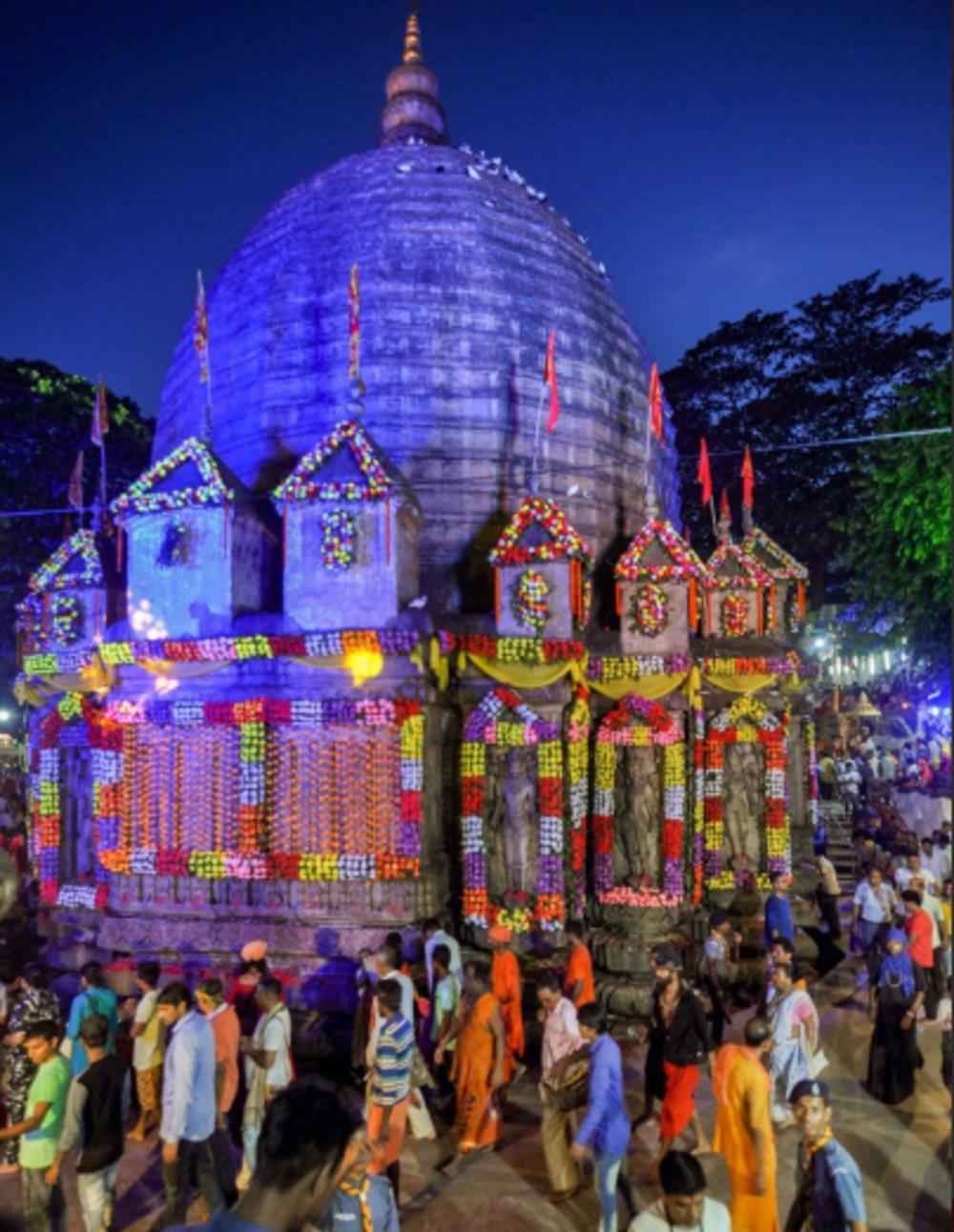
Kamakhya Temple, located atop the Nilachal Hill in Guwahati, Assam, stands as one of the most powerful and mysterious spiritual centers in India. Dedicated to Goddess Kamakhya, the temple represents the divine feminine energy that governs creation, fertility, and life itself. As one of the most revered Shakti Peethas, Kamakhya attracts devotees, Tantric practitioners, and spiritual seekers from across the world.
Unlike many Hindu temples, Kamakhya Temple does not worship a conventional idol. Instead, it honors the primal source of creation, making it spiritually unique and deeply symbolic.
Mythological Significance of Kamakhya Temple
According to Hindu mythology, Kamakhya Temple is associated with the legend of Goddess Sati and Lord Shiva. After Sati sacrificed herself during her father Daksha’s yajna, Lord Shiva carried her body across the universe in grief. To restore cosmic balance, Lord Vishnu cut Sati’s body into pieces using his Sudarshana Chakra.
It is believed that Sati’s womb (yoni) fell at the spot where Kamakhya Temple now stands. Consequently, the temple became one of the most sacred Shakti Peethas, symbolizing feminine creative power rather than physical form.
Unique Form of Worship
Kamakhya Temple differs significantly from most Hindu temples. There is no idol of the goddess inside the sanctum. Instead, devotees worship a naturally formed yoni-shaped stone, kept moist by an underground spring. This representation emphasizes creation, fertility, and the cyclical nature of life.
Moreover, the temple follows strong Shakta traditions and serves as a prominent center for Tantra worship. Many sadhus and Tantric practitioners visit Kamakhya to perform spiritual disciplines and meditation.
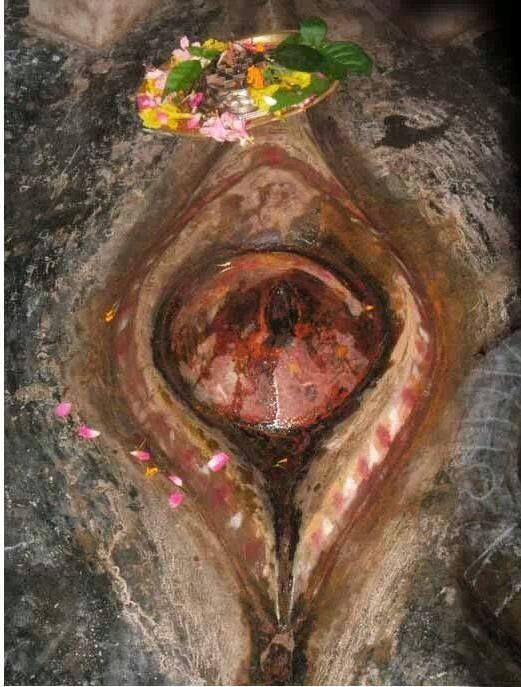
Sacred Yoni stone worshipped inside Kamakhya Temple sanctum in Assam
Ambubachi Mela: Festival of Sacred Fertility
One of the most significant events at Kamakhya Temple is the Ambubachi Mela, held annually in June. This festival marks the symbolic menstrual cycle of Goddess Kamakhya. During this period, the temple remains closed for three days, as devotees believe the goddess rests and the earth renews its fertility.
After the temple reopens, pilgrims gather in large numbers to seek blessings. The festival highlights Kamakhya’s unique connection with natural cycles and feminine power, making it unlike any other religious celebration in India.
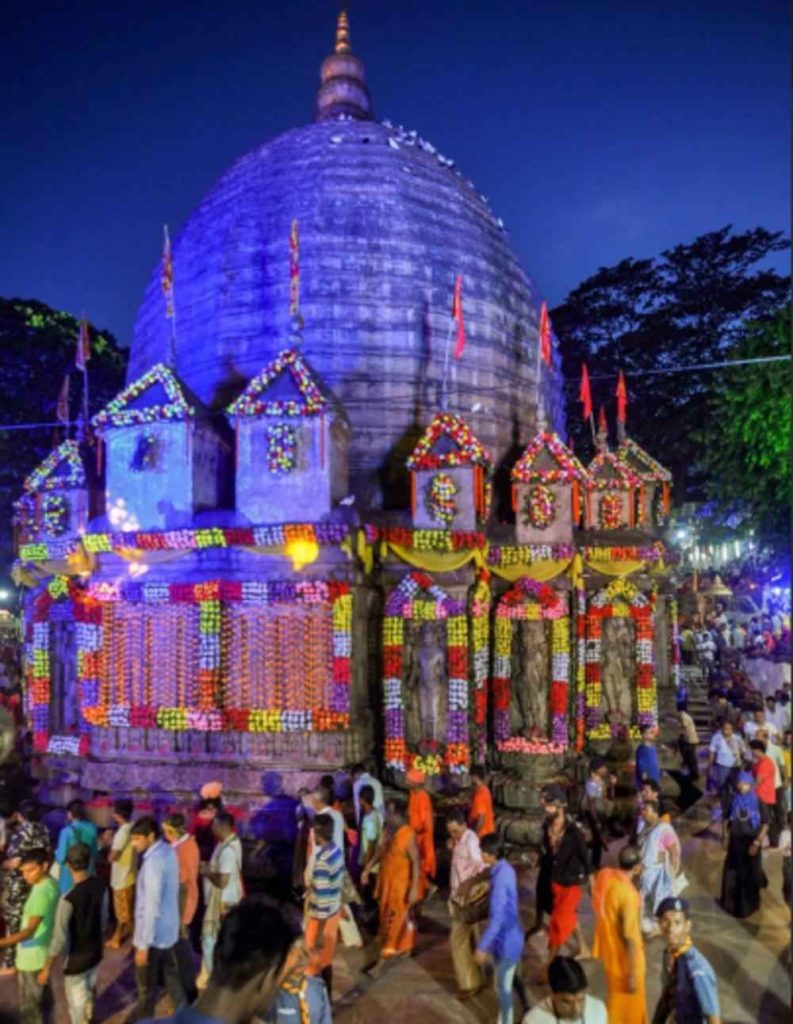
Kamakhya Temple glowing with lights during Ambubachi Mela, Assam’s most sacred Shakti festival.
Architecture and Temple Complex
The present structure of Kamakhya Temple reflects Nilachal-style architecture, featuring a beehive-shaped shikhara with sculpted panels. The temple complex also houses several smaller shrines dedicated to different forms of Shakti and Shiva.
Surrounded by lush greenery and overlooking the Brahmaputra River, the temple offers a serene yet powerful spiritual atmosphere. The blend of nature, mythology, and architecture enhances the overall pilgrimage experience.
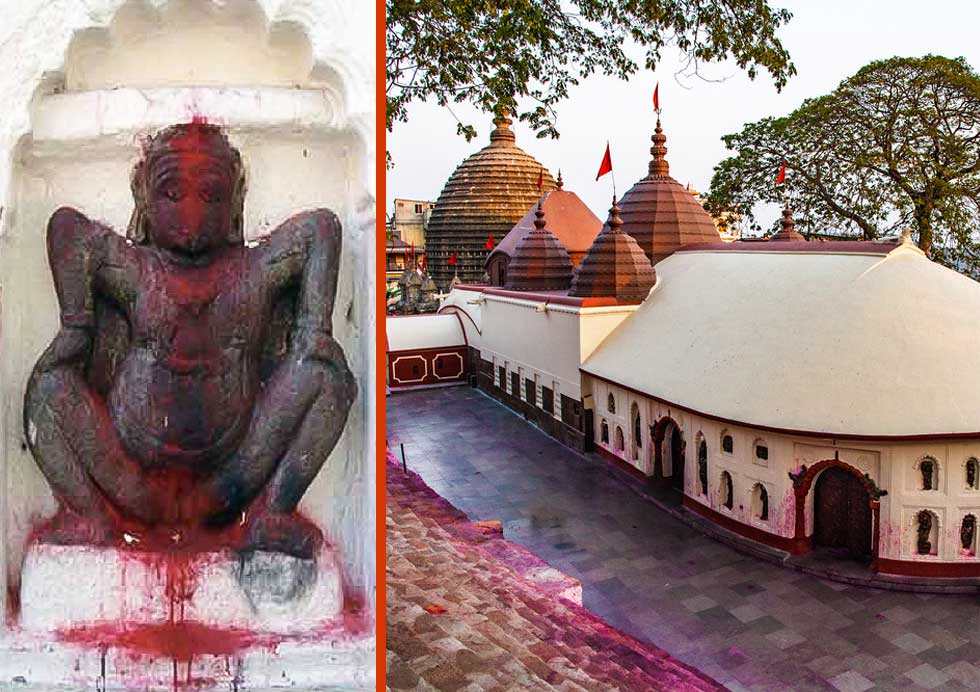
The sacred yoni shrine and the Kamakhya Temple complex, symbolizing divine feminine power in Assam.
Best Time to Visit Kamakhya Temple
The ideal time to visit Kamakhya Temple is between October and April, when the weather remains pleasant. Although Ambubachi Mela draws massive crowds in June, spiritual seekers who wish to witness this rare ritual often plan their visit during this time.
Early morning visits are recommended for a smoother darshan experience, as the temple can get crowded later in the day.
How to Reach Kamakhya Temple
Kamakhya Temple is easily accessible from Guwahati city. It is about 8 km from Guwahati Railway Station and approximately 20 km from Lokpriya Gopinath Bordoloi International Airport. Taxis, auto-rickshaws, and local buses operate regularly to the temple.
Temple Timings
Morning Darshan: 5:30 AM – 1:00 PM
Temple Break: 1:00 PM – 2:30 PM
Prasadam Distribution: 2:30 PM onwards
Temple Closing Time: 6:00 PM
Daily Rituals & Puja Schedule
- 5:30 AM: Sacred Snanam of the Peethasthana
- 6:00 AM: Daily Abhishekam & Puja
- 8:00 AM – 1:00 PM: Sarva Darshan for devotees
- 1:00 PM – 2:30 PM: Temple remains closed
- 2:30 PM: Temple reopens after the break
- 2:30 PM – 5:30 PM: Sarva Darshan resumes
- 5:30 PM: Evening Aarti to the Goddess
- 6:00 PM: Temple closes for the day
Special Pujas Performed at the Temple
The temple conducts several special pujas to address devotees’ spiritual and personal concerns, including:
- Kala Jaadu Puja: Performed to eliminate the effects of negative energies and evil eye
- Vashikaran Puja: Conducted to bring harmony by influencing thoughts in a positive and controlled manner
- Santana Puja (For Childless Couples): Offered to bless couples seeking progeny
- Navagraha Puja: Performed to reduce the malefic effects of planetary positions in one’s horoscope
Frequently Asked Questions (FAQs)
Why is Kamakhya Temple considered a Shakti Peetha?
Kamakhya Temple is a Shakti Peetha because Goddess Sati’s womb is believed to have fallen here, making it a sacred center of feminine creative energy.
Is there an idol inside Kamakhya Temple?
No, the temple does not house a traditional idol. Devotees worship a yoni-shaped stone that represents creation and fertility.
What is Ambubachi Mela and why is it important?
Ambubachi Mela marks the annual menstrual cycle of Goddess Kamakhya. The festival celebrates fertility, renewal, and the natural rhythms of life.
Are Tantric practices performed at Kamakhya Temple?
Yes, Kamakhya Temple is one of the most important Tantric centers in India. Many practitioners visit for spiritual sadhana and meditation.
Can men visit Kamakhya Temple during Ambubachi Mela?
Yes, men can visit the temple during Ambubachi Mela, but darshan inside the sanctum is allowed only after the temple reopens.
Is photography allowed inside the temple?
Photography is strictly prohibited inside the temple premises, although visitors may take photos outside the complex.
What offerings are made to Goddess Kamakhya?
Devotees usually offer flowers, fruits, red cloth, coconuts, and incense as part of traditional rituals.

Leave A Comment