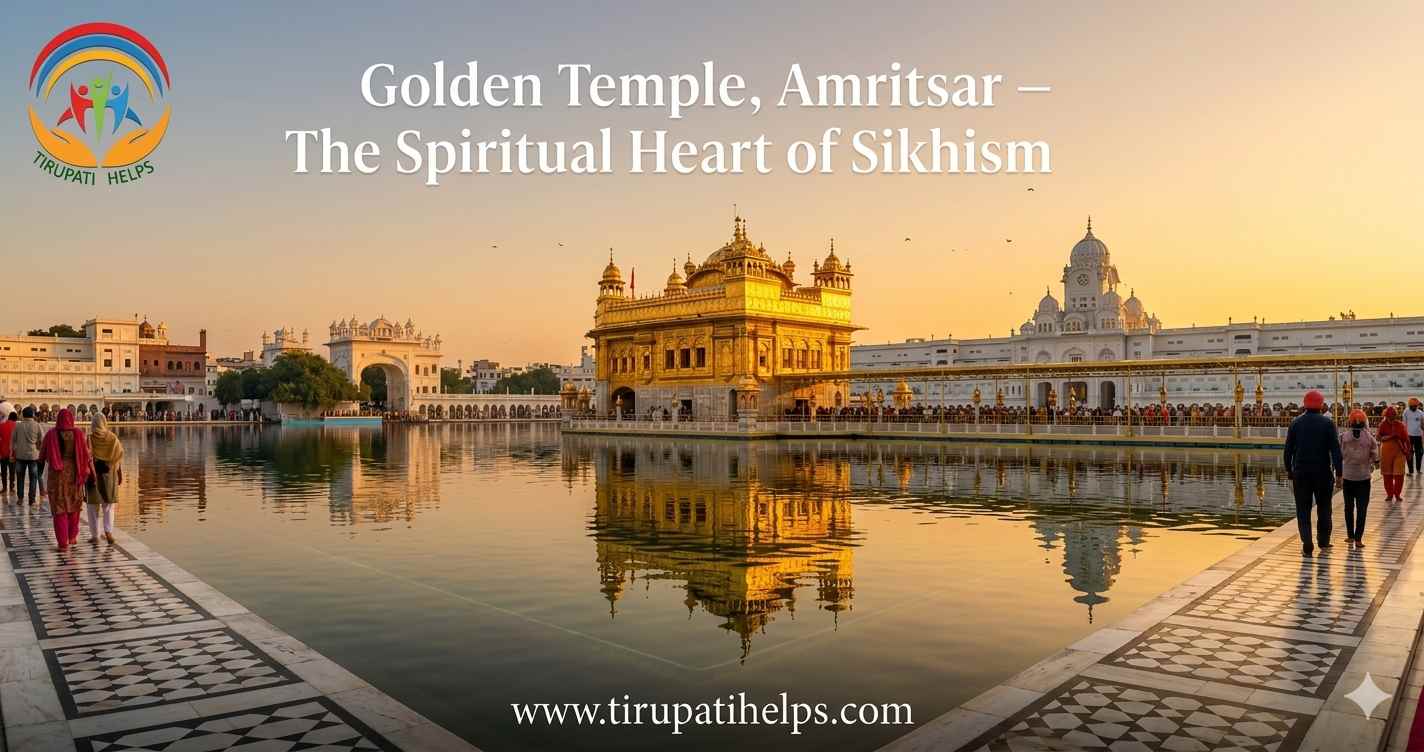
The Golden Temple, also known as Sri Harmandir Sahib, is one of the most sacred and revered religious sites in the world. Located in the vibrant city of Amritsar, this iconic shrine is the spiritual center of Sikhism and attracts millions of devotees and tourists every year.
Famous for its breathtaking golden architecture, peaceful atmosphere, and the spirit of equality and service, the Golden Temple represents the core values of Sikhism — humility, compassion, and devotion to humanity. Whether you visit for religious purposes or cultural exploration, the Golden Temple offers a deeply moving experience that stays with visitors forever.
History of the Golden Temple
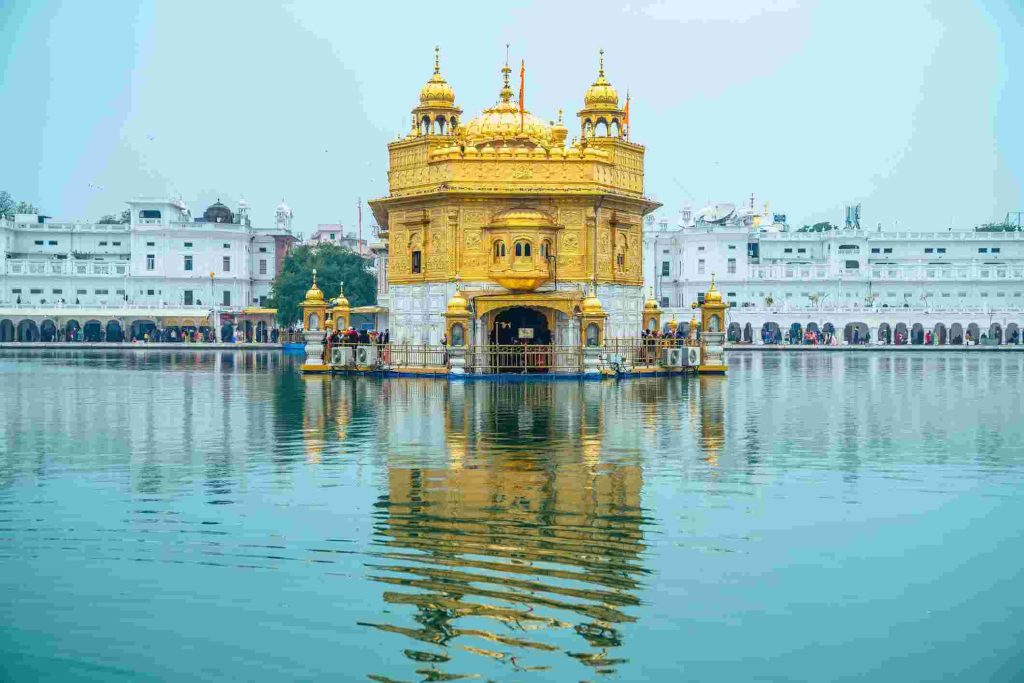
The Golden Temple shining beautifully with its reflection in the sacred Amrit Sarovar.
The history of the Golden Temple dates back to the late 16th century. The foundation of the shrine was laid by Guru Ram Das, the fourth Sikh Guru, who also founded the city of Amritsar. The construction of the temple was later completed by his successor, Guru Arjan Dev, in 1604.
Guru Arjan Dev installed the Guru Granth Sahib inside the temple, establishing it as the central place of worship for Sikhs. Unlike many traditional temples built on elevated platforms, the Golden Temple was deliberately constructed at a lower level. This design symbolizes humility and invites people from all backgrounds and faiths to enter with equality.
Over time, the temple faced several attacks and destruction during invasions. However, it was rebuilt and restored repeatedly by Sikh communities. The temple received its iconic golden appearance during the rule of Maharaja Ranjit Singh, who donated gold to cover the upper structure with gold plating in the early 19th century.
Architecture and Design
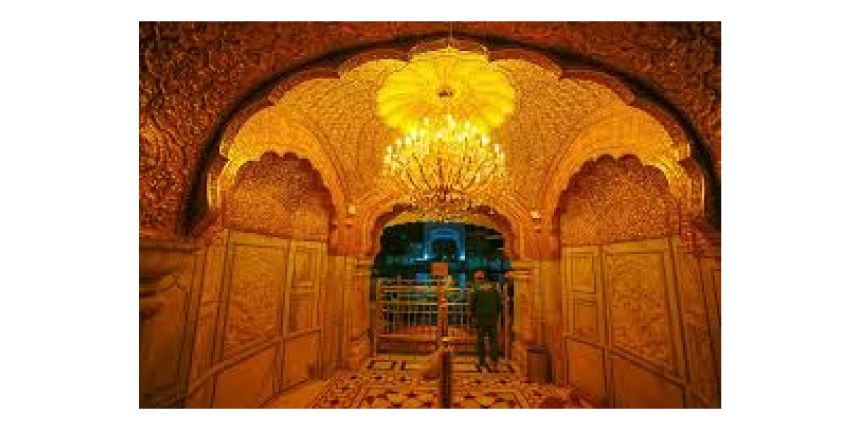
Beautiful golden interior architecture of the Golden Temple in Amritsar showcasing detailed Sikh craftsmanship.
The architecture of the Golden Temple is a beautiful blend of Hindu and Islamic architectural styles, reflecting India’s cultural diversity.
The temple stands in the middle of a sacred water tank called the Amrit Sarovar, which gives the city of Amritsar its name. A narrow marble pathway known as the Guru’s Bridge connects the temple to the main complex.
Key architectural highlights include:
- Gold-plated dome resembling an inverted lotus flower
- Intricate marble carvings and inlay work
- Sacred Amrit Sarovar surrounding the shrine
- Continuous recitation of Gurbani (Sikh hymns)
The reflection of the golden structure in the calm waters of the sarovar creates one of the most mesmerizing views in India, especially at sunrise and night when the temple is beautifully illuminated.
The Langar – World’s Largest Free Community Kitchen
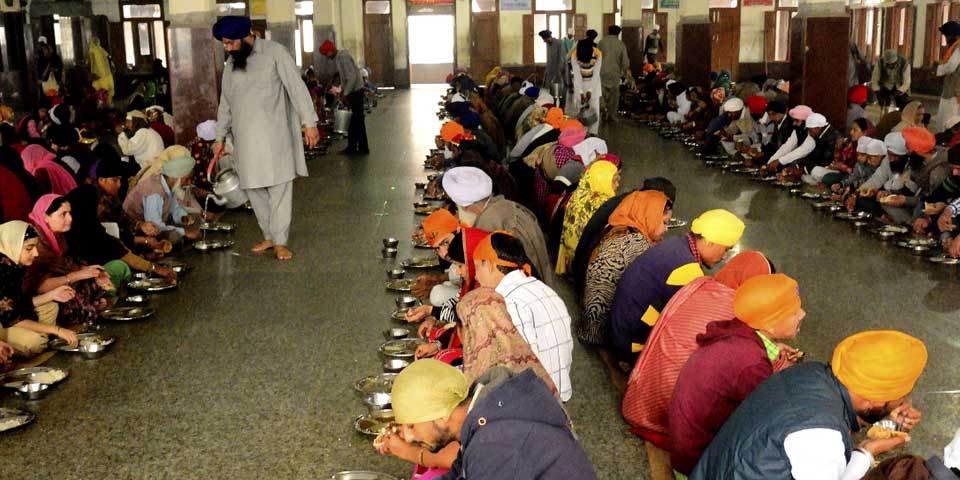
Devotees participating in the free langar meal at the Golden Temple in Amritsar.
One of the most unique and inspiring aspects of the Golden Temple is its Langar, the world’s largest free community kitchen.
Every day, the temple serves free meals to more than 50,000 visitors, regardless of religion, nationality, caste, or social status. On special occasions and festivals, this number can exceed 100,000 people.
The langar system represents the Sikh principle of seva (selfless service) and equality. Volunteers from around the world help cook, serve food, and clean utensils.
Typical langar meals include:
- Dal (lentils)
- Roti (flatbread)
- Sabzi (vegetables)
- Kheer (sweet dessert)
Everyone sits together on the floor to eat, symbolizing equality among all human beings.
Religious Significance
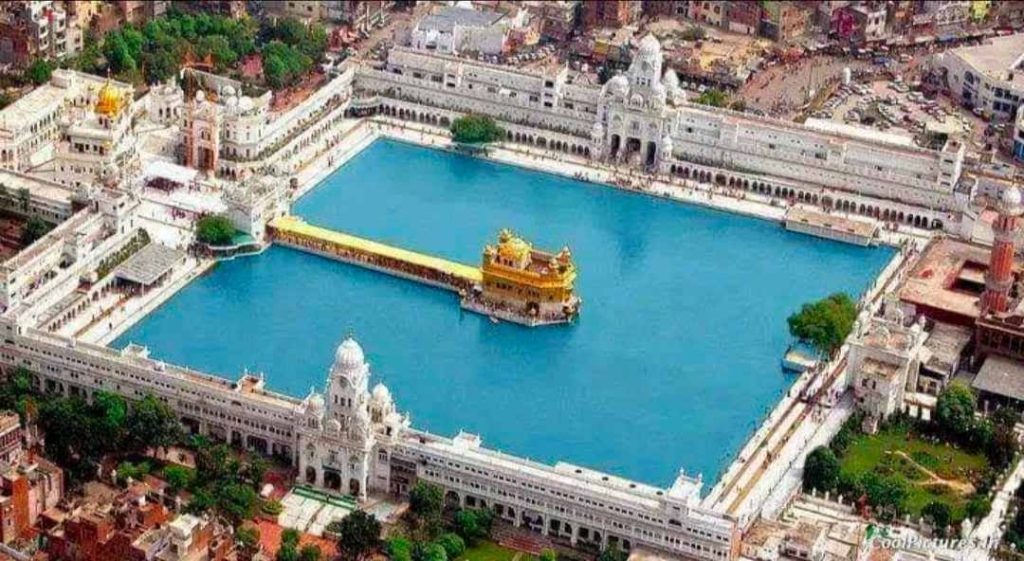
A stunning aerial view of the Golden Temple complex surrounded by the sacred Amrit Sarovar.
The Golden Temple is not just a place of worship but also the spiritual and cultural center of Sikhism.
The temple houses the Guru Granth Sahib, which is treated as the eternal Guru by Sikhs. Throughout the day, sacred hymns called Gurbani are recited continuously, creating a deeply spiritual environment.
Every night, the Guru Granth Sahib is carried in a ceremonial procession from the temple to the Akal Takht, another important structure within the complex.
Major Sikh festivals celebrated here include:
- Vaisakhi
- Guru Nanak Gurpurab
- Diwali
During these occasions, the temple is decorated with lights and attracts massive crowds of devotees.
Best Time to Visit the Golden Temple
The Golden Temple is open 24 hours a day, allowing visitors to experience its spiritual beauty at any time.
However, some of the best times to visit include:
Early Morning (Amrit Vela):
The peaceful atmosphere and morning prayers create a deeply spiritual experience.
Evening and Night:
The temple shines magnificently under lights, and its golden reflection in the sarovar looks magical.
The ideal months to visit Amritsar are October to March, when the weather is pleasant.
Travel Tips for Visitors
If you are planning to visit the Golden Temple, keep these guidelines in mind:
- Cover your head with a scarf or cloth before entering.
- Remove shoes and wash your feet at the entrance.
- Dress modestly out of respect for the sacred place.
- Photography is allowed outside the temple but not inside the sanctum.
- Participate in langar or volunteer for seva if possible.
These practices help maintain the spiritual sanctity of the temple.
Nearby Attractions
While visiting the Golden Temple, you can also explore several famous nearby attractions in Amritsar:
- Jallianwala Bagh
- Wagah Border
- Durgiana Temple
- Partition Museum
These places add cultural and historical depth to your visit.
LOCATION
Contact Person
Sh. Gobind Singh-president
Sikh Gurudwara Prabhantak Committee
01832553950
Email: info[at]sgpc[dot]net
Link
FAQs About Golden Temple, Amritsar
1. Why is the Golden Temple famous?
The Golden Temple is famous for being the holiest shrine of Sikhism, its stunning gold-covered architecture, and the world’s largest free community kitchen (langar).
2. What is the real name of the Golden Temple?
The official name of the Golden Temple is Sri Harmandir Sahib, which means “Temple of God.”
3. Is entry to the Golden Temple free?
Yes, entry to the Golden Temple is completely free for all visitors regardless of religion or nationality.
4. How much gold is used in the Golden Temple?
Approximately 750 kilograms of gold were used to cover the upper structure of the temple.
5. What is the significance of the Sarovar at the Golden Temple?
The sacred pool called Amrit Sarovar is believed to have spiritual healing properties, and many devotees take a holy dip in its waters.
6. What is served in the Golden Temple langar?
The langar usually serves simple vegetarian food such as dal, roti, sabzi, and kheer.
7. Can non-Sikhs visit the Golden Temple?
Yes, people of all religions and backgrounds are welcome to visit the Golden Temple.
Conclusion
The Golden Temple in Amritsar is far more than a beautiful monument. It is a powerful symbol of faith, equality, and selfless service. From its golden architecture and spiritual atmosphere to its inspiring langar tradition, the temple represents the timeless teachings of Sikhism.
A visit to this sacred shrine offers not only religious fulfillment but also a profound lesson in humanity, humility, and unity. Whether you are a pilgrim, traveler, or history enthusiast, the Golden Temple promises an unforgettable experience.
Leave A Comment