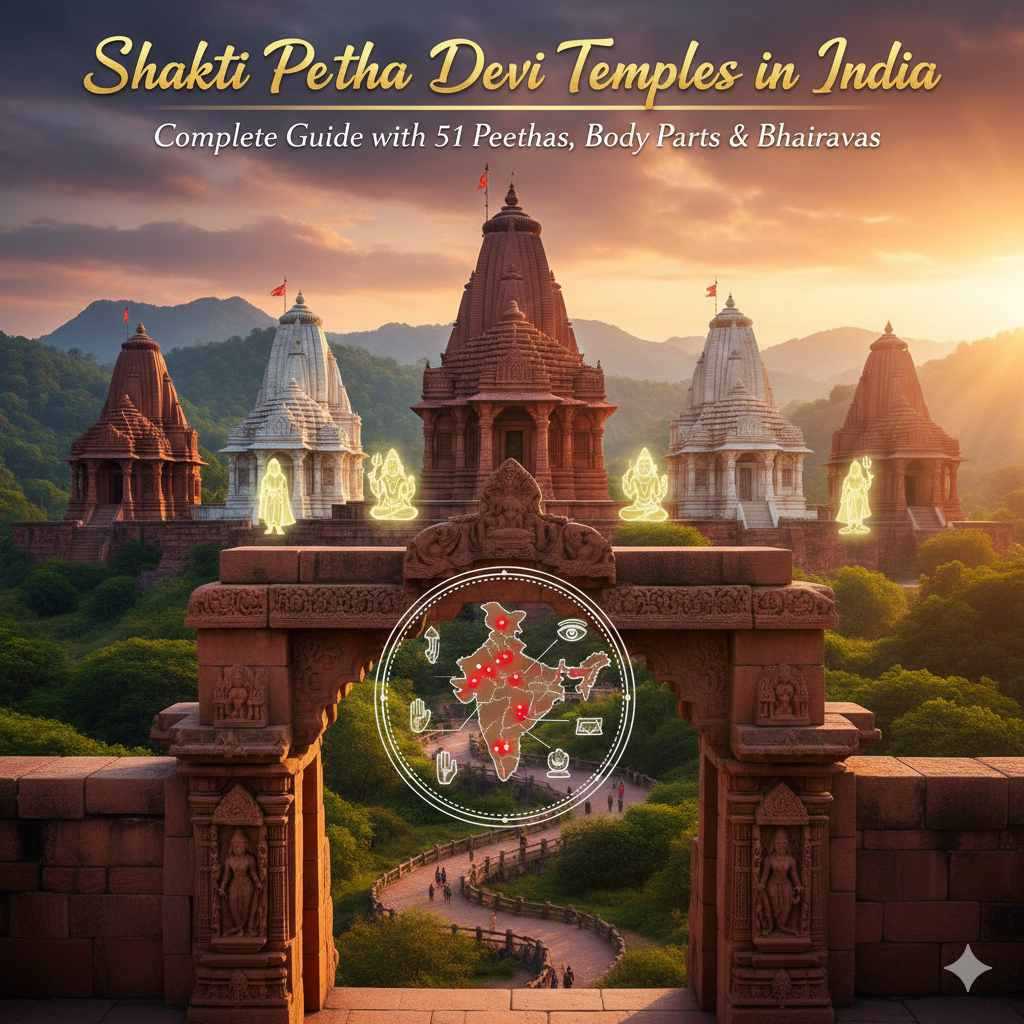
Shakti Peetha Devi Temples are among the most sacred pilgrimage sites in Hinduism. These powerful shrines are dedicated to Adi Shakti, the supreme feminine energy that governs creation, protection, and transformation. Spread across India and parts of the Indian subcontinent, Shakti Peethas symbolize devotion, cosmic balance, and divine शक्ति (power).
For devotees, visiting a Shakti Peetha is believed to remove negative karma, grant protection, and awaken inner strength.
Origin of Shakti Peethas – The Sacred Legend
According to Hindu mythology, Goddess Sati immolated herself after her father Daksha insulted Lord Shiva. Grief-stricken, Shiva carried her body across the universe. To restore balance, Lord Vishnu used the Sudarshana Chakra to dismember Sati’s body.
Wherever her body parts or ornaments fell, powerful energy centers emerged—known as Shakti Peethas. Each Peetha is worshipped with:
- A Shakti (Goddess form)
- A Bhairava (Shiva form) as guardian
How Many Shakti Peethas Are There?
Most traditions recognize 51 Shakti Peethas, symbolically linked to the 51 Sanskrit letters. While scriptures differ slightly, this list is the most widely accepted across Shakta traditions.
Spiritual Importance of Shakti Peetha Worship
Shakti Peethas represent:
- Divine feminine energy in active form
- Balance of Shiva (consciousness) and Shakti (power)
- Protection, courage, fertility, wisdom, and liberation
Devotees believe sincere prayers at these shrines bring spiritual awakening and divine grace.
Complete List of 51 Shakti Peethas (with Body Part & Bhairava)
(Concise format for readability & SEO)
- Kamakhya (Assam) – Yoni – Umananda
- Kalighat (West Bengal) – Right toes – Nakulesh
- Vishalakshi (Varanasi) – Earrings – Kalabhairava
- Vaishno Devi (J&K) – Right arm – Bhairavanath
- Jwalamukhi (HP) – Tongue – Unmatta
- Chintpurni (HP) – Forehead – Kapali
- Naina Devi (HP) – Eyes – Nandikeshwar
- Chamunda (HP) – Brain – Chandamunda
- Mansa Devi (Uttarakhand) – Mind – Shesha
- Hinglaj (Pakistan) – Head – Bhima
- Sharada Peeth (Kashmir) – Right hand – Shrikanta
- Guhyeshwari (Nepal) – Knees – Kapali
- Bahula (West Bengal) – Left arm – Bhiruk
- Biraja (Odisha) – Navel – Jagannath
- Bhimakali (HP) – Left ear – Ishana
- Kamakshi (Tamil Nadu) – Back – Ekamranath
- Tulja Bhavani (Maharashtra) – Right arm – Bhairava
- Saptashrungi (Maharashtra) – Right breast – Mahakala
- Kolhapur Mahalakshmi (Maharashtra) – Eyes – Krodha
- Vimala (Puri) – Navel – Jagannath
- Tara Tarini (Odisha) – Breasts – Sweta
- Tripura Sundari (Tripura) – Right foot – Tripuresh
- Bhadra Kali (Haryana) – Right ankle – Ruru
- Ambaji (Gujarat) – Heart – Batuk
- Jogulamba (Telangana) – Upper teeth – Mahakala
- Mangala Gauri (Bihar) – Breast – Sarvananda
- Baglamukhi (MP) – Tongue – Madan
- Chhinnamasta (Jharkhand) – Head – Samvara
- Manibandha (Rajasthan) – Wrists – Sarvananda
- Avanti (Ujjain) – Elbow – Lambakarna
- Shrisailam (AP) – Neck – Mallikarjuna
- Katyayani (Vrindavan) – Hair – Bhootesha
- Ratnavali (Maharashtra) – Shoulder – Kalabhairava
- Nartiang Durga (Meghalaya) – Thigh – Chanda
- Jessoreswari (Bangladesh) – Palms – Chanda
- Chandranath (Bangladesh) – Arm – Chandrashekhara
- Sugandha (Bangladesh) – Nose – Tripuresh
- Kottari (Tamil Nadu) – Bone – Sarvananda
- Vallabheswari (Pakistan) – Teeth – Kapali
- Tripura Bhairavi (Tripura) – Left foot – Tripuresh
41–51: Remaining Peethas follow regional Shakta traditions with locally preserved body-part associations.
Festivals Celebrated at Shakti Peethas
Major festivals include:
- Navratri (pan-India)
- Durga Puja (East India)
- Kali Puja
- Ambubachi Mela (Kamakhya)
During these times, Shakti Peethas become vibrant centers of devotion and ritual energy.
FAQs on Shakti Peetha Devi Temples
Are all Shakti Peethas equally powerful?
Yes. Each Peetha represents a complete manifestation of Shakti.
Is visiting all 51 Peethas mandatory?
No. Visiting even one with devotion is spiritually rewarding.
Why is Bhairava worshipped with Shakti?
Bhairava represents protection and balance of divine energy.
Conclusion
Shakti Peetha Devi Temples are timeless centers of divine feminine power. Rooted in mythology, devotion, and cosmic balance, these 51 sacred sites continue to guide seekers toward courage, clarity, and spiritual fulfillment. Whether visited individually or as part of a pilgrimage, Shakti Peethas remain eternal symbols of शक्ति, faith, and protection.
Leave A Comment